
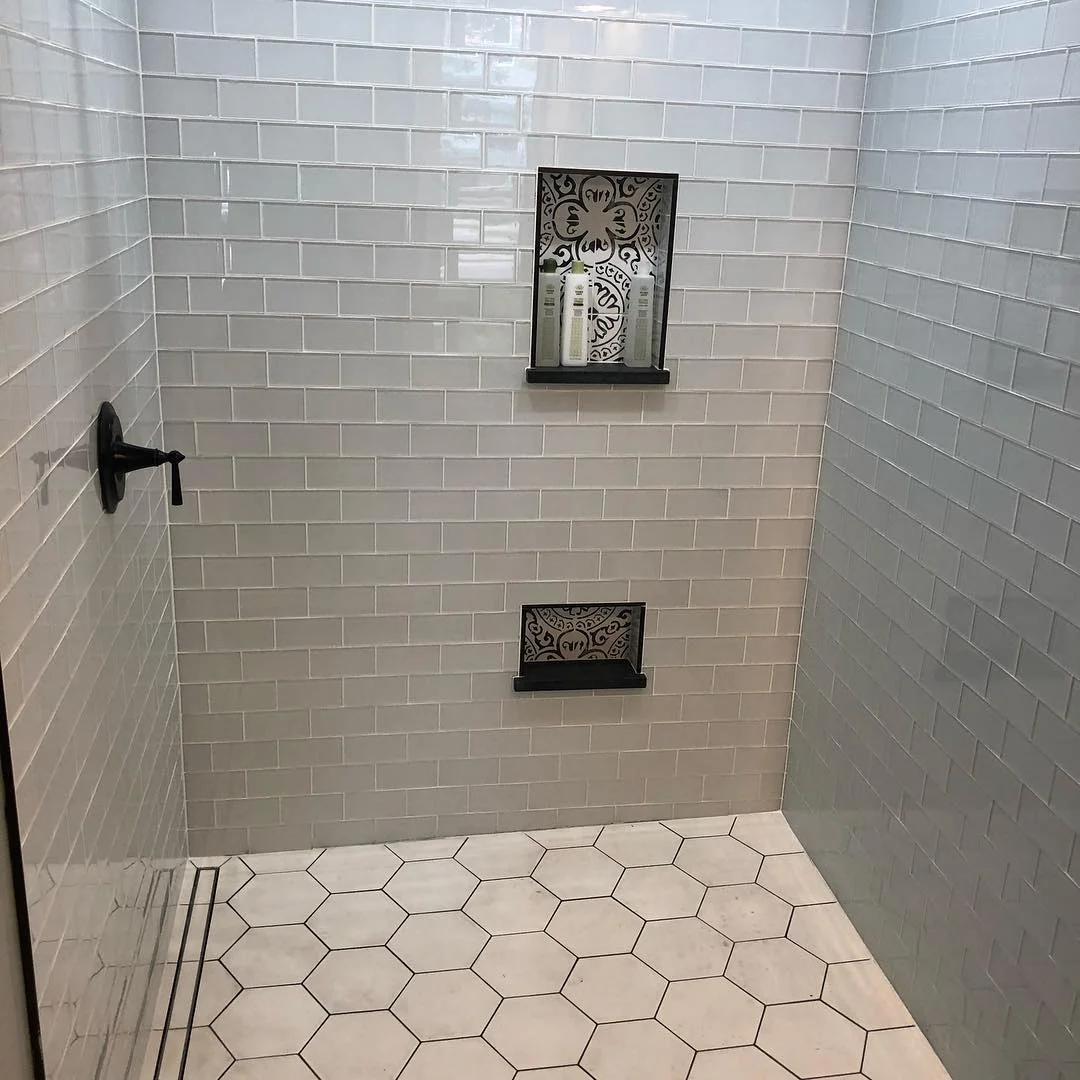
The hesitation is almost always the same: what does this do to resale value? We'll answer that directly in this page, because getting that question out of the way is usually all it takes to move forward.
What we cover:
Tub removal · Drain work · Waterproofing · Tile · Glass or doorless entry · Fixtures · Full finish work
Most projects begin with a site walkthrough to assess existing plumbing, subfloor condition, and what the opening looks like once the tub comes out. One remodeler handles the full conversion — demo, plumbing, tile, and glass all sequenced and managed together so nothing falls through the gaps between trades.
What a Tub to Shower Conversion in Brownsburg Actually Includes
Yes — most Brownsburg homeowners can convert a standard bathtub to a shower as long as the plumbing, subfloor, and available space support the change. The project covers tub removal, drain adjustment, waterproofing membrane installation, tile, and a finished entry — all permitted and inspected through Hendricks County. The main consideration before committing is whether at least one bathtub remains elsewhere in the home to protect resale value.
- Existing tub drain locations typically convert to a shower drain with limited subfloor work in most Brownsburg homes
- Waterproofing behind tile is required — not optional in Indiana's humid climate
- Plumbing changes require a permit through the Town of Brownsburg or Hendricks County Building Department
A tub-to-shower conversion is often assumed to be a simple swap — remove the tub, install tile, and finish. Bathroom remodeling services in Brownsburg Indiana frequently reveal that this approach fails over time. Many Brownsburg homes built in the 1990s and early 2000s have fiberglass tub surrounds installed without proper waterproofing behind the walls. Once the tub is removed, subfloor and framing damage is commonly exposed, and it must be repaired before new shower construction begins. That assessment is completed during the initial walkthrough to define scope accurately from the start.
A complete tub to shower conversion typically includes:
- Tub and surround removal — fiberglass, tile, or acrylic
- Subfloor inspection and replacement of any water-damaged sections
- Drain adjustment and proper slope preparation for the shower floor
- Cement backer installation throughout the wet area
- Full waterproofing membrane — walls and floor, not just the wet zone perimeter
- Wall tile installation
- Floor tile with slip-resistant finish sized for correct drainage slope
- Shower niche or recessed shelving if included in the design
- Plumbing fixtures — showerhead, valve trim, and any handheld or body spray additions
- Glass enclosure or doorless entry, depending on the design
- Exhaust fan upgrade if the existing unit is undersized
- Permit and final inspection through Hendricks County
How Brownsburg Homeowners Decide If a Tub to Shower Conversion Is the Right Call
The decision is usually simpler than homeowners make it. The core question is not whether they want the shower — they already know the answer to that. The real question is whether the conversion creates a resale problem.
The direct answer: Converting the tub in a master bath is a strong move when a second tub remains available elsewhere in the home. Removing the last remaining tub in a Brownsburg home is the one scenario that consistently affects resale value in the Hendricks County market.
In Brownsburg neighborhoods like Arbor Hills and Stone Gate, most move-up homes have two or more full bathrooms. That means the master bath tub can be converted — and the hall bath tub stays in place for kids, guests, and future buyers who need one. In that configuration, the conversion adds daily value and buyer appeal with essentially no resale downside.
The households where we slow the conversation down are single-bathroom homes, or situations where converting means there will be no tub anywhere in the house. Buyers with young children represent a significant portion of the Brownsburg buyer pool. Removing all tub access narrows the market for the home in ways that are hard to price back in.
A clear framework for making the decision:
- Does any other bathroom in the home have a tub? If yes, proceed with confidence.
- Does anyone in the household currently use this tub regularly? Be honest — the answer in a master bath is almost always no.
- Are there young children in the household who will need tub access for the next several years?
- What is the realistic timeline before selling — long-term stay or within three to five years?
Most households who work through that list reach the same conclusion: convert it.
What to Settle Before Your Tub to Shower Conversion Begins in Brownsburg
The planning decision that surprises most homeowners is the glass enclosure lead time. Custom frameless glass panels cannot be measured until tile is fully installed and cured. After measurements are taken, fabrication and delivery typically run two to four weeks. That means the shower is structurally complete and functionally ready — but unusable without an enclosure — for two to four weeks between tile completion and glass installation.
What happens when homeowners don't plan for this gap:
They end up using a bathroom with an open shower for a month while they wait on glass they could have ordered weeks earlier if the enclosure style had been decided before demo. We build this timeline into every project schedule upfront — it should never be a surprise.
What to have settled before demo day:
- Tile selected and in-stock, or ordered with lead time tracked — special-order tile adds weeks before the project even starts
- Enclosure style decided — frameless, semi-frameless, or doorless; the framing and tile work is planned around this choice
- Shower fixtures confirmed — valve trim, showerhead, and any handheld or body spray units
- Niche location decided — recessed niches are framed before cement backer goes up; moving the location after that means opening the wall
- Exhaust fan upgrade decided — if the existing unit is undersized for the new shower, this is the right time to address it before walls close
- Permit requirements confirmed — plumbing changes and electrical additions require permits through the Town of Brownsburg or Hendricks County Building Department
The niche is the selection most homeowners leave until last. It shouldn't be — it's decided before cement backer is installed, and changing it afterward means reopening finished work.
What Happens During a Tub to Shower Conversion in Brownsburg
Most Brownsburg tub to shower conversions run one to two weeks for tile and plumbing work. Glass enclosure installation adds a second visit after the tile cure period — typically two to four weeks later. Projects that uncover subfloor damage or require drain relocation add time and trigger additional inspections through Hendricks County before walls and floors can close.
Families in neighborhoods like Wynstone and Eagle Creek with only one full bathroom need to arrange temporary bathing access before demo day — not the day the shower comes out of service. That arrangement should cover the full window from demo through glass installation, not just the tile phase.
Here's the day-by-day sequence for a standard conversion:
| Day | What's Happening |
|---|---|
| Day 1 | Tub and surround removal; subfloor exposed and inspected; initial look at what's behind the walls |
| Day 2 | Subfloor repairs if needed; drain adjustment and plumbing rough-in; niche framing completed |
| Day 3 | Rough-in inspections through Hendricks County; cement backer installed throughout shower area |
| Day 4 | Waterproofing membrane applied — full cure time required before tile goes up |
| Day 5 | Floor tile installation with slope set toward drain |
| Days 6–8 | Wall tile installation; shower fixture rough-in completed |
| Days 9–10 | Grout application and cure; plumbing fixtures connected; exhaust fan installed and wired |
| Days 11–12 | Final caulking, punch list, plumbing inspection |
| 2–4 weeks later | Glass enclosure measured, fabricated, and installed; silicone cure period before first shower |
What stays functional during the project:
The toilet and sink remain accessible throughout. It's the shower specifically that's out of service. For households managing with one bathroom, planning the temporary arrangement around the full window — demo through glass — is how you avoid scrambling mid-project.
Are Tub to Shower Conversions Worth It in a Brownsburg Home
For most households, yes — and the return is both daily and financial.
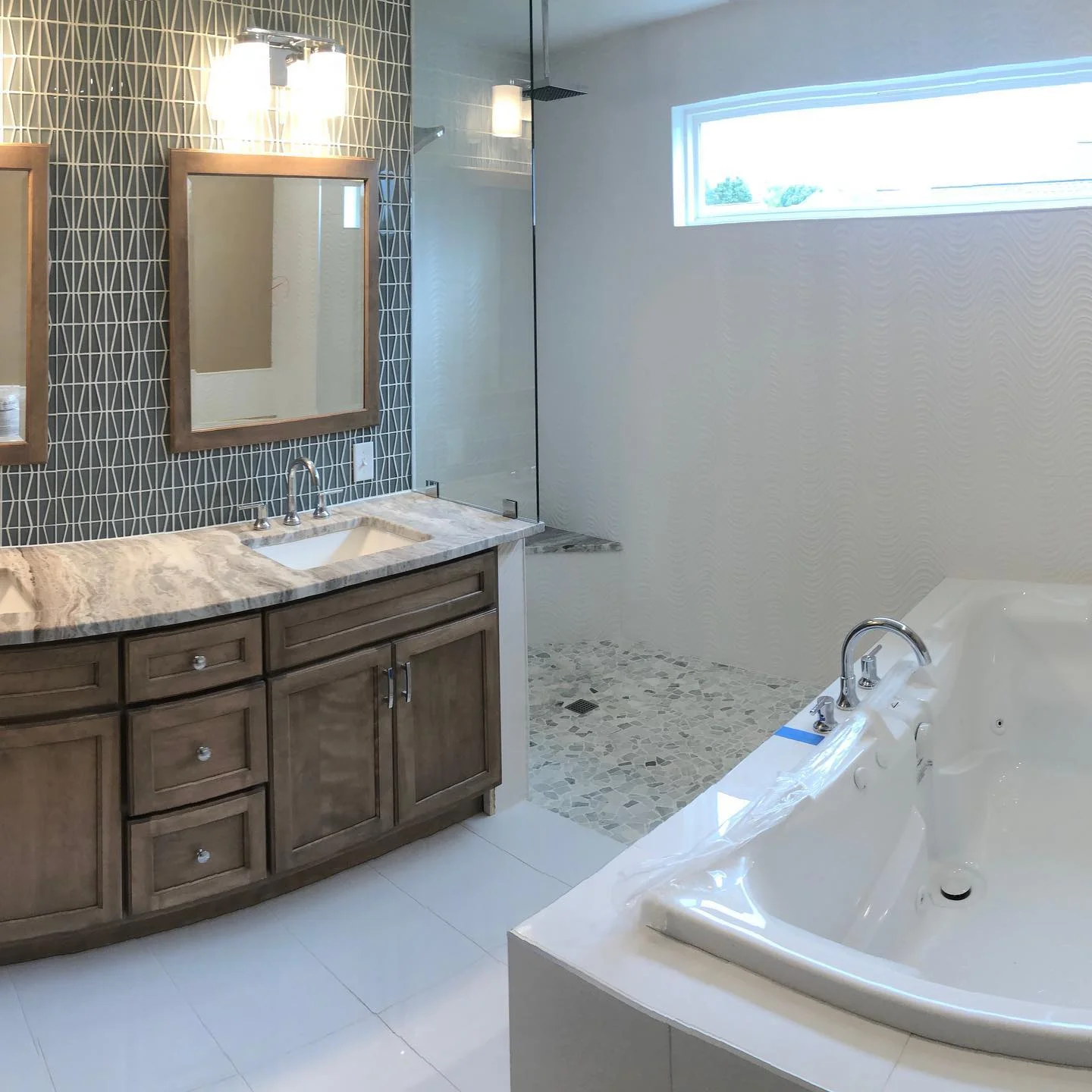
Buyers touring move-up homes in Brownsburg respond well to large tiled walk-in showers with frameless or semi-frameless glass in master bathrooms. Updated shower conversions photograph well in Hendricks County listings, reduce buyer objections about bathroom condition, and remove the "dated bathroom" line from inspection feedback sheets that buyers use to justify lower offers.
What we see consistently in the Hendricks County market:
A fiberglass tub surround in a master bath is one of the first things buyers flag as a needed update — and they price it into their offer. A tiled shower with frameless glass removes that objection entirely. The conversion effectively pays for itself in reduced negotiation at sale before the home ever lists.
The daily return is immediate. A shower that was designed for how you actually bathe — right height, right fixtures, right amount of space — makes a difference every morning before you've had coffee. That improvement starts the day the glass goes in, years before any sale.
The one scenario where the math changes:
Removing the last tub in the home. Brownsburg buyers with young children are a meaningful share of the buyer pool at most Hendricks County price points. A home with no tub access anywhere narrows the market. In a two-bathroom home where the hall bath keeps its tub, that concern disappears completely.
The Most Common Tub to Shower Conversion Mistakes — and How to Avoid Them
Every mistake on this list is preventable. Every one of them traces back to either rushing the sequence or skipping a step that seemed like it could be optional. In a shower, nothing is optional. Water finds every gap, and it takes its time revealing the damage.
The most common conversion mistake in Brownsburg:
Failing to adjust the drain slope when converting from a tub drain to a shower floor. A tub drain sits at the end of a flat surface. A shower floor requires a consistent slope toward a center or linear drain so water doesn't pool. A floor poured without the correct pitch grows mildew between every use and fails the final inspection through Hendricks County every single time. Setting the correct pitch and drain position from the start is the most important technical decision in the project — and the one most frequently shortcut by contractors trying to save time on subfloor prep.
Other mistakes worth knowing before you start:
- Skipping the waterproofing membrane — Tiling directly over cement backer without a waterproofing layer is the most common cause of long-term shower failure. Indiana's humid summers accelerate moisture intrusion in unprotected assemblies. By the time the damage is visible from the outside, the repair cost far exceeds what the waterproofing would have added to the original project. We apply full membrane coverage on walls and floor, every time.
- Not planning for the glass lead time — Custom frameless enclosures take two to four weeks after tile cures. Homeowners who don't account for this end up with a functional but open shower for a month. Lock in the enclosure style before demo is scheduled and build the lead time into the project calendar from day one.
- Deciding niche location after cement backer is up — The niche has to be framed before cement backer goes in. Changing the location afterward means opening finished work. It's a small decision that needs to happen early — not mid-project when the walls are already closed.
- Using smooth floor tile — Slip-resistant floor tile is a functional requirement in a walk-in shower, not a style preference. Polished or honed floor tile that looks beautiful in a showroom is a hazard when wet. Floor tile selection should start with surface texture, then work backward to appearance.
- Skipping permits on plumbing and electrical — Unpermitted work in a bathroom surfaces during home inspections and must be disclosed. It gives buyers a legitimate negotiating point and can affect homeowner's insurance coverage. Pull the permits. Close the inspections. It's not an optional step.