
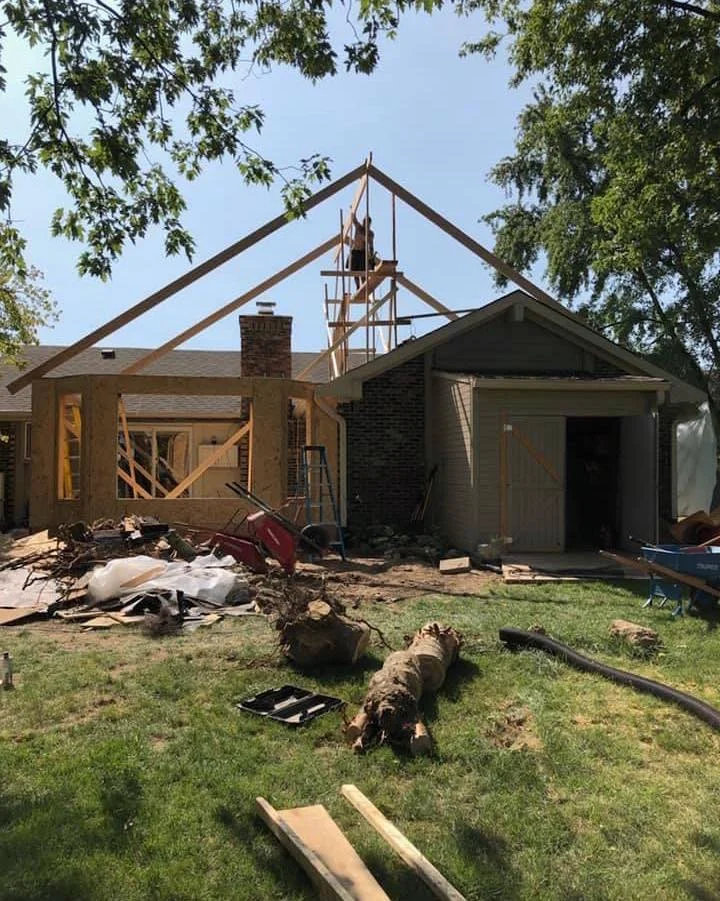
A room addition solves that problem permanently. It also requires more planning, permitting, and engineering than most homeowners expect — and the projects that run into trouble almost always trace back to one of those three areas being skipped or rushed.
What we cover:
Foundation design · Framing · Roofline integration · Exterior finish · Insulation · Mechanical systems · Drywall · Interior finish work — for additions of every size and purpose
Most projects begin with a site assessment to confirm setbacks, soil conditions, existing foundation proximity, roofline tie-in options, and what the lot can realistically support. One remodeler handles the full addition — engineering coordination, permit pulls, foundation, framing, mechanical, and finish all managed under one roof from first shovel to final paint.
What a Room Addition in Brownsburg Actually Includes
A room addition in Brownsburg expands the footprint or height of an existing home with new fully conditioned living space — foundation, framing, roofline integration, exterior siding, insulation, mechanical systems, drywall, and interior finish work are all part of a complete addition. The result is permitted, inspected space that functions as part of the main home and adds to the appraised square footage of the property. Scope and timeline depend on addition size, foundation type, and how the new structure ties into the existing roofline and mechanical systems.
- Foundation and framing are engineered and permitted before any ground is broken in Hendricks County
- Mechanical systems — HVAC, electrical, and plumbing — extend from the existing home into the new space
- Exterior finish must match or complement the existing home to protect resale value in the Brownsburg market
A room addition is not framing a box off the back of the house and finishing the inside. Indiana's frost depth and Hendricks County soil conditions require addition foundations that extend below the freeze line. A foundation poured above frost depth will shift and separate from the existing home structure during the first two to three freeze-thaw cycles in Brownsburg — cracked drywall, sticking doors, and structural separation that is expensive to correct after the addition is finished and occupied. Foundation engineering is the first conversation on every addition project, not an afterthought.
A complete room addition typically includes:
- Site assessment — setback confirmation, soil conditions, existing foundation proximity, roofline tie-in options
- Engineered drawings for foundation, framing, and roofline integration
- Site plan showing setbacks submitted with permit application
- Building permit through the Town of Brownsburg or Hendricks County Building Department
- Foundation excavation and footing installation below Indiana frost depth
- Foundation inspection before concrete is poured
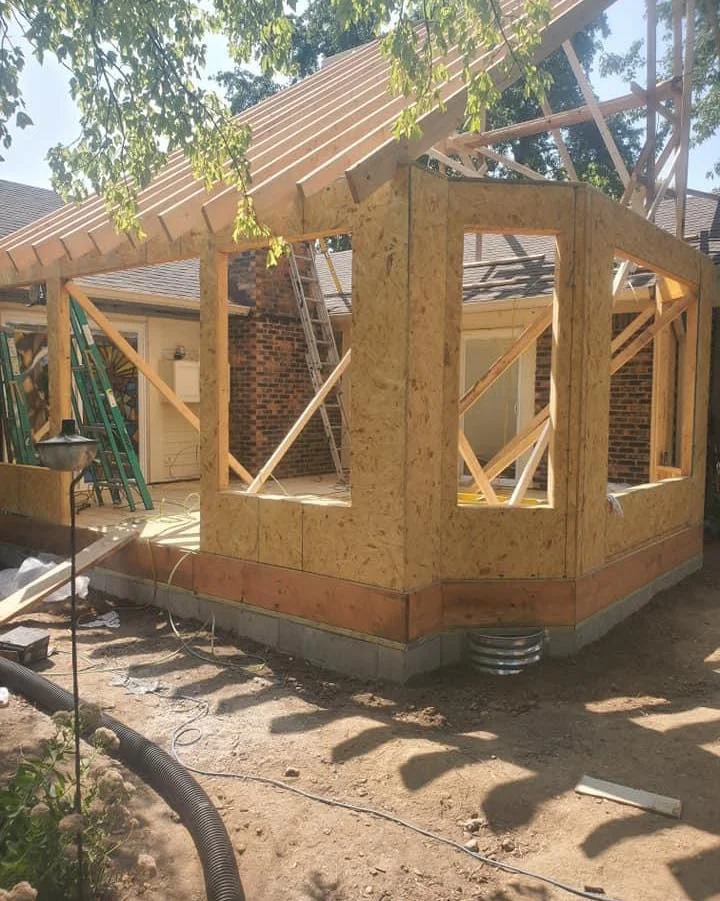
- Framing — walls, floor system, and roof structure
- Roofline tie-in with proper flashing and water management integration
- Exterior siding, sheathing, and weatherproofing to match the existing home
- Mechanical extension — HVAC ductwork or zoned system, electrical panel and circuits, plumbing if applicable
- Insulation to current Indiana energy code
- Rough-in inspections for mechanical before drywall
- Drywall, tape, finish, and prime
- Interior finish work — flooring, trim, paint, and any fixtures specific to the addition's use
- Final inspection before occupancy
How Brownsburg Homeowners Decide What Type of Addition Is Right for Their Home
The addition type decision is where most projects either get the scope right or commit to something the lot or structure can't actually support. A Brownsburg general contractor evaluates those constraints early so the design matches what the site and existing home can structurally handle. Knowing the difference before a contract is signed saves significant time and cost.
Our first question on every addition project:
What does the lot allow — and what does the existing structure support?
In Brownsburg neighborhoods like Arbor Hills and Stone Gate, many lots have limited rear yard depth combined with HOA setback requirements that constrain how far a ground-floor addition can extend. Homeowners on tighter lots often find that building up with a second-floor addition, or converting an attached garage, delivers more usable square footage within the buildable envelope than a rear addition that would eliminate the remaining yard entirely.
The main addition types and when each makes sense:
- Single-story rear addition: The most common type in Brownsburg. Works well on lots with adequate rear yard depth and a roofline that allows a clean tie-in. Best for family rooms, mudrooms, primary suites on the main floor, and garage conversions to living space.
- Second-floor addition: Delivers significant square footage without consuming lot space. Requires assessment of the existing foundation and first-floor framing capacity to support the added load — not every existing structure supports a second floor without reinforcement. Best for bedroom additions and primary suites when the lot is constrained.
- Bump-out addition: A smaller expansion — typically two to four feet of depth — off an existing wall. Lower foundation cost than a full addition. Best for kitchen expansions, dining room enlargements, or adding a bathroom where space is tight.
- In-law suite with separate entry: Requires more mechanical planning — separate HVAC zone, dedicated electrical, plumbing rough-in — but delivers a space that functions independently. Strong demand in the Brownsburg market as multigenerational households become more common.
- Over-garage addition: Adds living space above an existing attached garage without expanding the foundation footprint. Requires engineering to confirm the garage structure supports the load. Common solution for primary suite additions in Brownsburg homes where the rear yard is limited.
What to Settle Before Room Addition Construction Begins in Brownsburg
Three things can stop or significantly redirect an addition project after the contract is signed: a utility easement that bisects the planned footprint, an HOA restriction that requires a design change, or a soil condition that requires a more expensive foundation type. All three are discoverable before a contract is signed with the right pre-project process.
The most expensive addition mistake in Brownsburg:
Starting site work before permits are approved. A remodeler who begins foundation excavation before the building permit is issued creates stop-work order risk that can halt the project for weeks while the permit review process catches up to work already done on the ground. We apply for permits before any equipment is brought to the site.
What to have settled before construction begins:
- Property survey or plot plan confirming buildable area and setback distances
- HOA architectural review submitted and approved — some Brownsburg HOAs require exterior material and roofline approval before any addition begins
- Indiana 811 utility locate completed — addition footprints frequently overlap with utility easements that run through rear yards; discovering this after excavation begins creates costly redesigns
- Engineered drawings completed and submitted with the permit application — Hendricks County requires engineered plans for all room additions
- Soil assessment if the site has any history of fill, prior construction, or drainage concerns — unexpected soil conditions are a common source of foundation cost increases mid-project
- Mechanical extension plan confirmed — how HVAC, electrical, and plumbing will reach the new space; some existing systems don't have adequate capacity to extend without upgrades
- Exterior finish materials selected — siding, roofing, and trim need to be specified before framing begins so the exterior tie-in is planned correctly from the start
What Happens During a Room Addition in Brownsburg
Most Brownsburg room additions run eight to sixteen weeks from permit approval to final inspection depending on size, foundation type, and finish scope. The roofline tie-in is the most weather-sensitive phase — when the existing home is temporarily open to weather while the new roof structure connects to the old one. Scheduling this phase outside Indiana's rainy spring window and before the heat of Hendricks County summer reduces weather delay risk.
Families in neighborhoods like Wynstone and Eagle Creek who are staying in the home during construction get a phase-by-phase schedule before work begins — including which phases are most disruptive and when the home will be open to weather.
Here's what a room addition looks like phase by phase:
| Phase | What's Happening |
|---|---|
| Weeks 1–2 | Site preparation, excavation, and footing installation; footing inspection before concrete is poured |
| Weeks 2–3 | Foundation walls or slab; foundation inspection; waterproofing and drainage if applicable |
| Weeks 3–5 | Framing — floor system, walls, and roof structure; roofline tie-in with existing home |
| Week 5 | Framing inspection; roofing and exterior sheathing completed; home weathertight again after tie-in |
| Weeks 6–8 | Exterior siding, windows, and doors installed; mechanical rough-in — HVAC, electrical, plumbing |
| Week 8 | Rough-in inspections through Hendricks County; insulation installed |
| Weeks 9–12 | Drywall, tape, finish, and prime; flooring |
| Weeks 12–16 | Interior trim, paint, fixtures, and finish work; final inspection through Hendricks County |
On the roofline tie-in phase:
This is the period when the existing home is most exposed — the old roof is opened to connect to the new structure. We schedule this work during a window with stable weather in the forecast and have temporary weatherproofing ready to deploy immediately if conditions change. The exposure window is typically two to four days. The preparation before it determines how those days go.
What the Most Popular Room Additions Add to Brownsburg Homes
Room additions solve specific problems — and the ones that return the most value in the Brownsburg market are the ones that address the space needs buyers have come to expect in move-up homes in Hendricks County.
What the resale data consistently shows in Brownsburg:
A home that is missing what move-up buyers expect — a functional primary suite, a mudroom entry, adequate bedroom count — loses buyers at the showing stage regardless of how well everything else shows. The right addition converts that showing into a contract.
The four most requested addition types in Brownsburg — and what each delivers:
- Primary suite addition — The most requested addition in Hendricks County. Many Brownsburg homes built in the 1990s have undersized master bedrooms with bathrooms that don't meet current buyer expectations. Adding a primary suite with a walk-in closet and full bath — double vanity, tile shower, and adequate square footage — converts a home that loses buyers at the master bedroom into a competitive listing. The daily return starts before any sale is contemplated.
- Family room expansion — Brownsburg families with kids consistently cite the main living area as the space that runs out first. Expanding the family room off the kitchen — particularly in homes with an open-concept main floor — creates the gathering space that the household actually uses. Buyers touring the home notice it immediately.
- Mudroom addition at the garage entry — In Brownsburg, where most households enter through the garage, a dedicated mudroom with built-in storage, bench seating, and a utility sink converts the most chaotic transition point in the house into an organized entry. It's a functional addition that photographs well and solves a daily problem that buyers recognize instantly.
- In-law suite with private access — Demand for multigenerational living arrangements has increased consistently in Hendricks County. A properly permitted in-law suite with its own entry, bathroom, and sleeping area broadens the buyer pool for the home and serves the household before any sale is considered.
The Most Common Room Addition Mistakes — and How to Avoid Them
Every mistake on this list becomes more expensive with each phase of construction that proceeds on top of it. The time to catch addition problems is before the foundation is poured — not after the framing is up and the drywall is in.
The most common room addition mistake in Brownsburg:
Inadequate roofline tie-in between the new addition and the existing home. A roof connection that is not properly flashed, stepped, and integrated with the existing water management system creates a chronic leak at the most vulnerable point of the entire addition. In Indiana, where spring rain, ice dams, and wind-driven snow all stress roof connections, a poorly detailed tie-in point leaks into the wall cavity of both the new addition and the existing home before any visible damage appears on interior surfaces. By the time the leak shows on the ceiling, the wall assembly on both sides of the connection has been holding moisture for months.
Other mistakes worth knowing before any addition project starts:
- Starting without a permit — A room addition built without a permit must be disclosed at resale, may require demolition and rebuilding to code, and may affect homeowner's insurance coverage. All room additions in Brownsburg require permits. We apply before any equipment is brought to the site.
- Inadequate foundation depth — A foundation poured above Indiana's frost line will shift and separate from the existing structure during the first freeze-thaw cycle. The structural separation that follows is expensive to correct after the addition is occupied. Foundation depth is set by engineering — not by contractor preference or schedule pressure.
- Not assessing existing mechanical capacity before designing the addition — An HVAC system sized for the original home may not have adequate capacity to condition the addition without an upgrade. Discovering this after framing is up and walls are insulated means retrofitting a system that should have been planned from the start. We assess existing mechanical capacity before the addition design is finalized.
- Exterior finish mismatch — Siding, roofing, and trim that doesn't match or thoughtfully complement the existing home reads as an addition from the street. It affects curb appeal, listing photos, and buyer first impressions. Exterior finish selection is part of the design conversation — not a decision made on delivery day.
- Over-building for the lot — An addition that consumes the remaining yard, eliminates parking, or pushes the home significantly above neighborhood price points is a planning problem that shows up at resale. We assess the buildable envelope and the neighborhood comp range before finalizing addition scope.