
What a Whole House Renovation Actually Covers
A whole house renovation updates most or all systems and living spaces in a single project. In Brownsburg, this typically means kitchens, bathrooms, flooring, electrical, and HVAC — handled by one remodeler coordinating all trades.
- Structural and systems work happens first
- Finish work — flooring, cabinets, fixtures — comes after
- A final walkthrough confirms all work meets the agreed scope
Many Brownsburg homes built between the 1980s and 2000s have electrical panels and HVAC units that are well past their useful life. Cosmetic updates alone won't fix that. We assess every system before we touch a single wall, so you know exactly what the project covers.
How Brownsburg Homeowners Decide What to Tackle First
When the project list feels long, it helps to have a clear order. Safety comes first. Function comes second. Aesthetics come last.
That means electrical, plumbing, and HVAC get addressed before kitchens and baths. In Hendricks County, structural and mechanical work requires permits — and permits have to be pulled before that work starts. Trying to reverse the sequence causes delays and failed inspections.
We help you build a priority list based on what your home actually needs. You won't spend money on new cabinets while your panel is a fire risk.
How to Prepare Your Home and Family Before Work Begins
Staying in your home during a renovation is possible — but it takes planning. Families with kids or pets need a clear schedule before demo starts. Knowing what areas will be off-limits each week reduces friction for everyone.
In Brownsburg, exterior work is best scheduled for spring or fall. As an experienced Brownsburg remodeler, we account for seasonal conditions upfront — winters can delay outdoor timelines if projects aren't properly phased. Our planning keeps your project moving without weather-related setbacks.
- Pack up personal items and valuables before any demo begins
- Set up a temporary kitchen space if yours is going down
- Talk to your kids about what to expect — it reduces anxiety for them and you
What Happens During a Full Home Renovation in Brownsburg
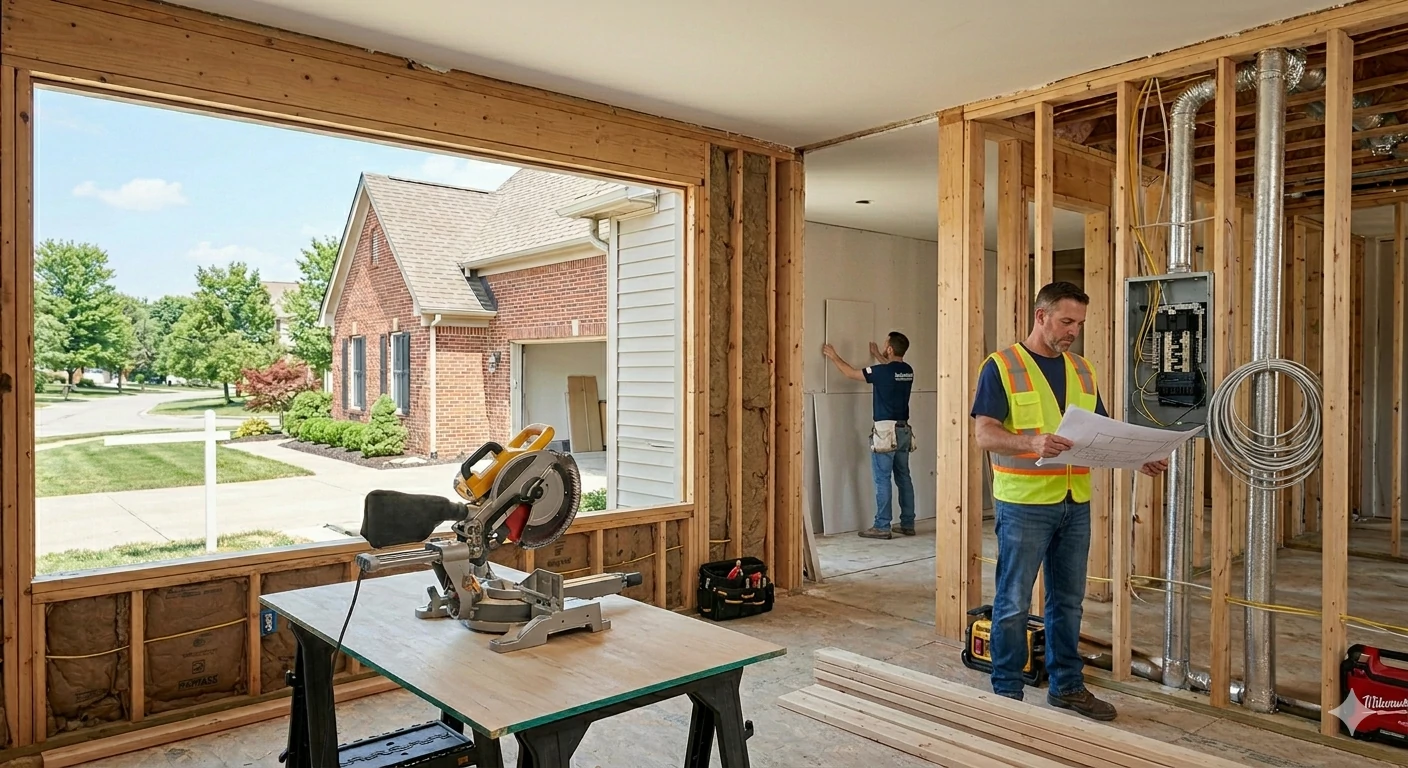
Week one usually starts with demo and rough-in work — walls open, systems exposed. It looks like chaos. It isn't. There's a sequence to everything we do.
Neighborhoods like Arbor Hills and Stone Gate may have HOA rules that affect delivery access or work hours. We check those requirements before we schedule a single crew. You won't get a surprise notice from your HOA because we didn't read the rules.
After rough-in comes inspection, then insulation and drywall, then finish work. Each phase has a clear start and end. We communicate those milestones to you before they happen — not after.
How to Know the Work Was Done Right
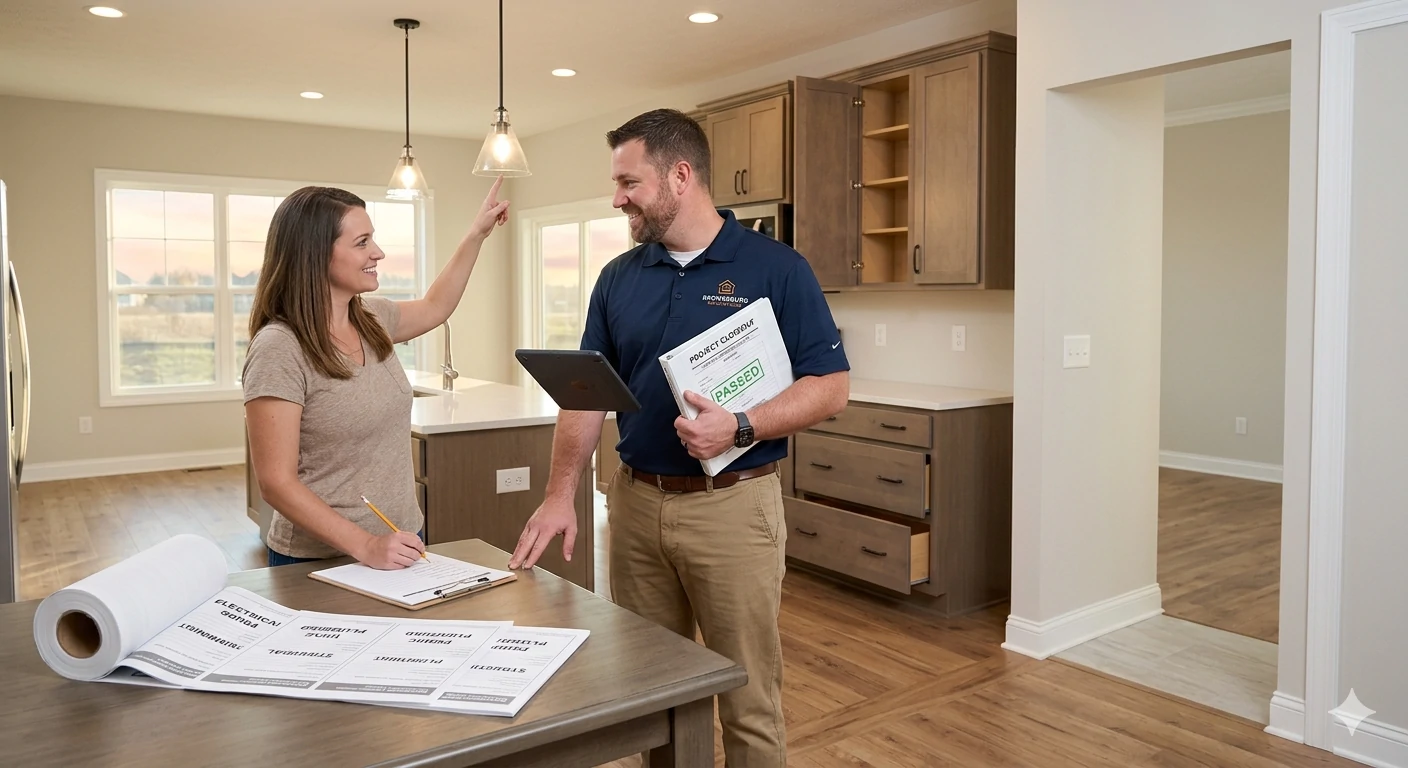
Before you write a final check, you should walk the project with us. A good final walkthrough isn't rushed. It's thorough.
In Indiana, permitted work requires a passed inspection before it's considered complete. For whole house renovations in Hendricks County, that means inspectors sign off on electrical, plumbing, HVAC, and structural work before finish materials go in. We track every open permit and make sure every inspection is closed.
- All fixtures, outlets, and switches operate correctly
- Flooring transitions are flush and secure
- Cabinetry doors and drawers open and close without binding
- No visible gaps, paint bleeds, or unfinished trim
- All permit cards and inspection sign-offs are in hand
The Biggest Mistakes That Hurt Home Value — and How to Avoid Them
Over-improving for your street is a real risk in Brownsburg. Home values vary significantly by subdivision. A renovation that makes sense in Heritage Trace may not pencil out in a different part of town. We look at street-level comps — not county-wide averages — before recommending scope.
Cutting corners on permits is the other mistake we see. Unpermitted work shows up on a title search. It creates problems when you sell. It can also void your homeowner's insurance if something goes wrong. Every project we run pulls the permits it requires.
The goal is a finished home that's worth more than what you put into it — and that passes inspection the first time.