
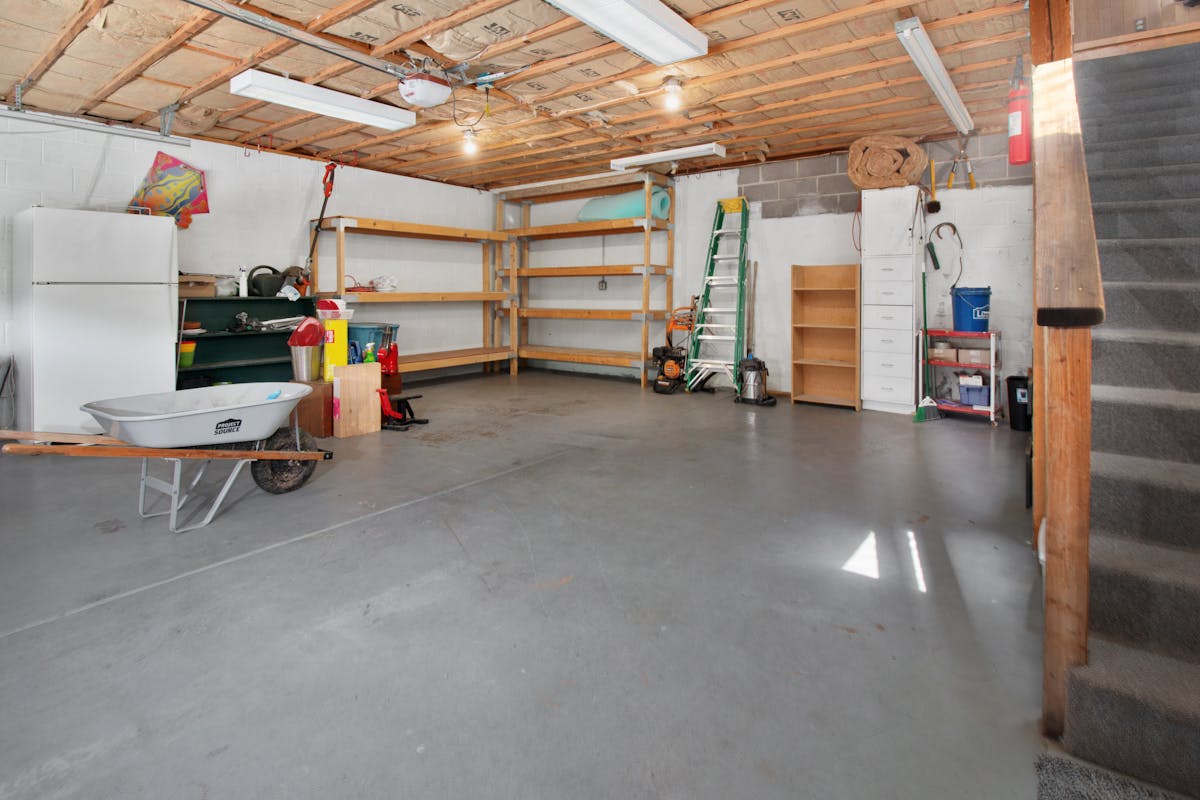
What a Garage Conversion in Brownsburg Actually Includes
A garage conversion transforms an attached or detached garage into finished living space. In Brownsburg, the process covers insulation, framing, electrical, HVAC, flooring, and closing off the garage door opening. The result is a permitted, code-compliant room that functions as part of the main home.
Indiana's climate makes proper insulation and HVAC integration non-negotiable. An uninsulated concrete slab with no thermal barrier will make the new room unusable in January and August alike. We address the building envelope before any finish work goes in.
- Vapor barrier and slab treatment
- Wall and ceiling insulation to residential code
- Framing the garage door opening with a wall, window, or door
- Electrical — new circuits, outlets, and lighting
- HVAC extension or dedicated mini-split
- Flooring over the treated slab
- Drywall, trim, and finish work
How Brownsburg Homeowners Decide If a Garage Conversion Is the Right Move
When space is the problem, homeowners usually weigh three options: finish the basement, build an addition, or convert the garage. Each has a different cost, timeline, and disruption level.
In Brownsburg subdivisions like Arbor Hills and Stone Gate, many lots have limited yard space for a new addition. As a local remodeler Brownsburg homeowners rely on, we often recommend converting the existing garage footprint to avoid the cost of new foundation work and roofing — the slab, roof structure, and exterior walls are already in place, giving the project a significant head start.
- You need living space faster than an addition allows
- Your lot doesn't support a ground-level addition
- The basement is already finished or not a good candidate
- The garage is attached and already conditioned or easy to condition
What You Need to Sort Out Before Garage Conversion Work Begins
Two things can derail a garage conversion before the first tool comes out: HOA rules and permit requirements. Both are addressable — but only if you check them early.
Some Brownsburg HOAs require a minimum number of covered parking spaces. Converting your only garage bay without checking the CC&Rs first can result in a violation notice mid-project. We review HOA documents as part of the pre-project process so there are no surprises.
- Your HOA CC&Rs allow the conversion and don't require minimum covered parking
- The project scope is defined well enough to pull accurate permits
- Your insurer is notified — adding finished square footage changes your replacement cost coverage
- The slab condition is assessed — cracks or significant settling need to be addressed before framing
What Happens During a Garage Conversion in Brownsburg
Most Brownsburg garage conversions run three to six weeks depending on scope. HVAC extension and electrical panel upgrades are the phases most likely to affect the schedule — both require inspections before the next phase can proceed.
Homeowners in neighborhoods like Wynstone and Eagle Creek can expect the first week to be the most disruptive. Slab work, framing, and rough-in trades are all active. After that, the project quiets down as insulation, drywall, and finish work take over.
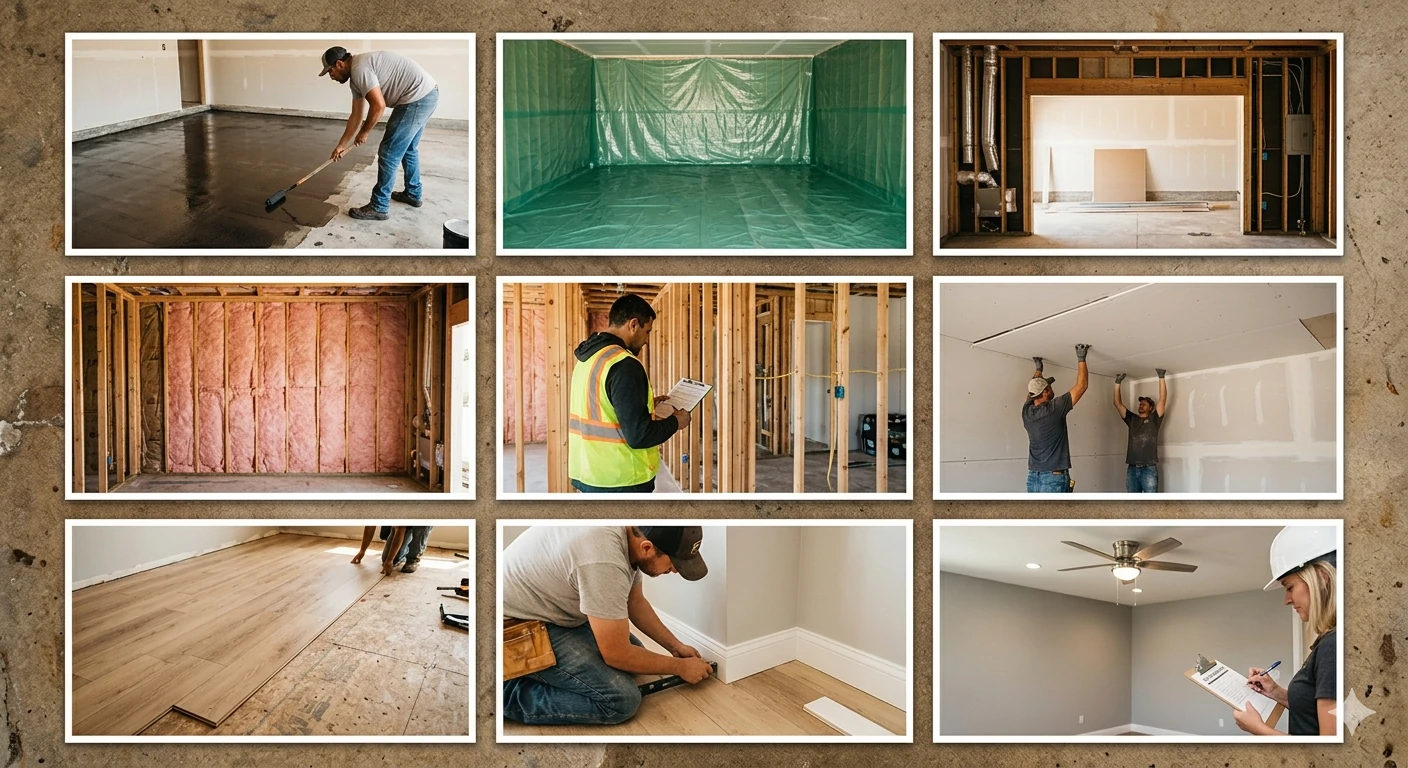
- Week 1: Slab treatment, vapor barrier, framing the garage door opening, HVAC and electrical rough-in
- Week 2: Insulation, inspections, drywall hang and finish
- Week 3–4: Flooring, trim, fixtures, paint, and final inspection
How a Garage Conversion Affects Your Home Value and Insurance in Brownsburg
A permitted, professionally finished garage conversion adds to your home's appraised value. In Hendricks County, finished square footage is counted in assessed value — and buyers in the Brownsburg market expect livable, inspected space. An unpermitted conversion does the opposite: it raises questions at resale and can complicate a refinance.
On the insurance side, converting garage space to living square footage changes the replacement cost of your home. That change needs to be reported to your insurer before work begins. A finished room that isn't reflected in your policy leaves you underinsured if something goes wrong.
- Pull every permit the project requires and close every inspection
- Notify your homeowner's insurance carrier before work starts — not after
The Most Common Garage Conversion Mistakes — and How to Avoid Them
The most common mistake in Brownsburg garage conversions is skipping the vapor barrier on the concrete slab. Hendricks County soil moisture and freeze-thaw cycles push ground moisture up through untreated slabs. That moisture damages flooring and framing within the first year — often before the homeowner realizes it's happening.
The second mistake is treating the HVAC as an afterthought. A room that shares no ductwork with the rest of the house will be cold in winter and hot in summer. Extending the existing system or adding a dedicated mini-split needs to be part of the plan from day one.
- Closing off the garage door opening without proper structural framing and a header
- Installing finish flooring directly on an untreated slab
- Skipping permits on change-of-use work and creating a resale problem later
- Choosing the wrong use for the space — match the room to your actual daily needs