
The decision to convert is usually straightforward once homeowners stop second-guessing the resale question. We'll address that directly in this page, because it's the thing that stalls this project more than anything else.
What we cover:
Tub removal · Waterproofing · Drain relocation · Tile · Glass enclosure · Fixtures · Finish work
Most projects begin with a walkthrough to assess existing plumbing locations, subfloor condition, and the size of the opening left by the tub. One remodeler handles demo through finish — no coordinating a plumber, tile setter, and glass installer separately in a space where sequencing is everything.
What a Walk-In Shower Conversion in Brownsburg Actually Includes
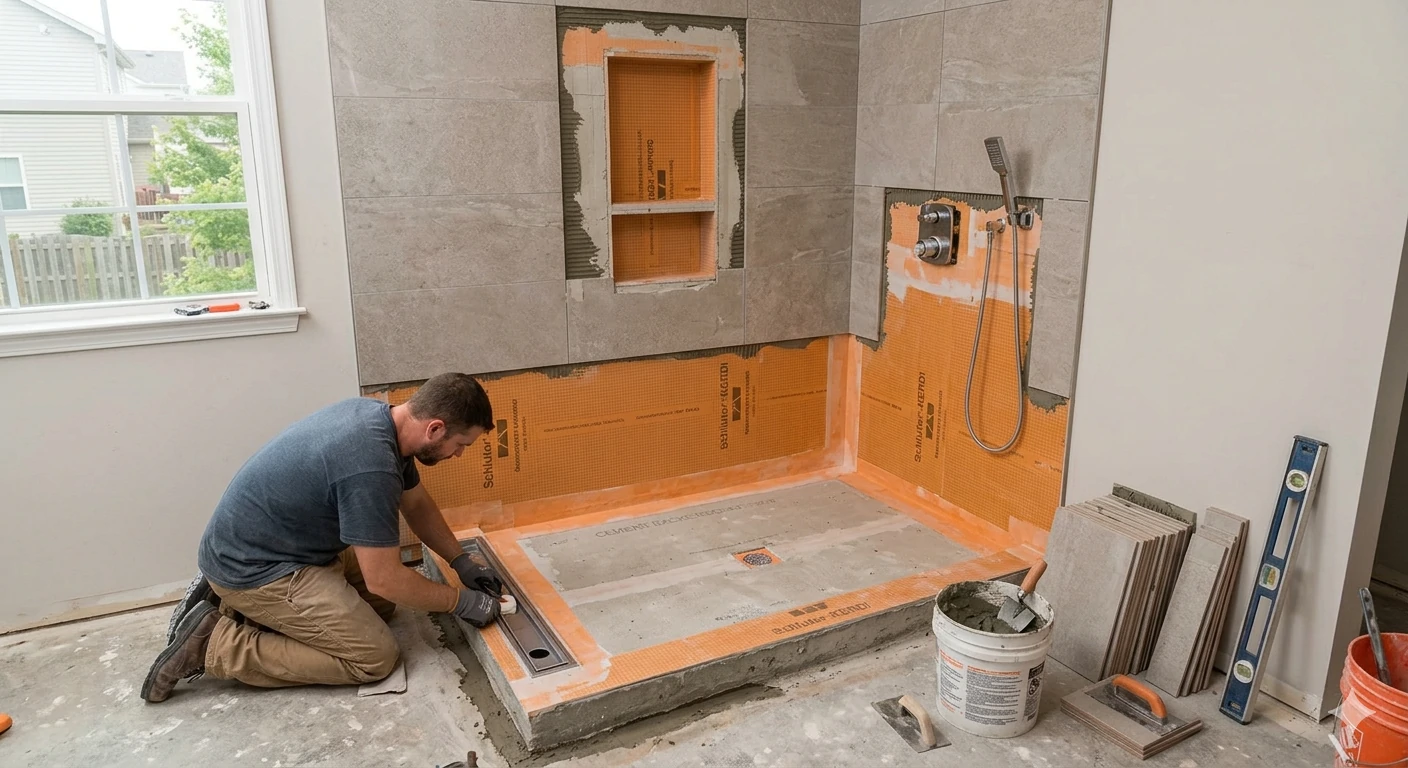
Yes — most Brownsburg homeowners can replace a standard bathtub with a walk-in shower as long as the existing drain location and subfloor condition support the conversion. The project involves tub removal, drain adjustment, waterproofing, tile installation, and a glass enclosure or doorless entry — all permitted and inspected work.
- Drain relocation is often minor — most tub drains convert to a shower drain with limited subfloor work
- Waterproofing membrane installation is required before any tile goes up — non-negotiable in Indiana's humid climate
- Permits are required for plumbing and electrical changes through the Town of Brownsburg or Hendricks County
A tub-to-shower conversion is not pulling the tub and tiling over the existing walls. That's the version that fails within a few years — sometimes sooner. Many Brownsburg homes built in the 1990s and early 2000s have fiberglass tub surrounds installed directly against standard drywall with no waterproofing behind them. By the time the tub comes out, water damage to the subfloor and framing is already present in a significant number of cases. We assess that during the walkthrough so the scope reflects what actually needs to happen — not what would be convenient to ignore.
A complete walk-in shower conversion typically includes:
- Tub and surround removal
- Subfloor inspection — damaged sections replaced before any new work begins
- Drain adjustment for proper shower slope — this is where most conversions are either done right or done wrong
- Cement backer installation throughout the shower area
- Waterproofing membrane — full coverage on walls and floor, not just the wet zone
- Wall tile installation
- Floor tile with slip-resistant finish and proper slope to drain
- Shower niche or recessed shelving
- Plumbing fixtures — showerhead, controls, and any body spray or handheld addition
- Glass enclosure or doorless entry framing
- Exhaust fan upgrade if needed
- Final inspection through Hendricks County
How Brownsburg Homeowners Decide If Converting Their Tub Makes Sense
The question most often raised before a tub-to-shower conversion is whether it impacts resale value. As a bathroom remodeler in Brownsburg IN, the key factor is simple: whether at least one bathtub remains in the home after the conversion. That condition typically determines how the change is viewed by future buyers.
The clear answer: Converting a tub in a master bath is a strong move when a second tub exists elsewhere in the home. Removing the last tub in a Brownsburg home is the one scenario that consistently affects resale in the Hendricks County market.
In Brownsburg neighborhoods like Arbor Hills and Stone Gate, most move-up homes have at least two full bathrooms. Converting the master bath tub — which most couples with kids stopped using the moment they had a walk-in shower option — while keeping the hall bath tub for kids and guests is a decision that adds daily value without creating a resale liability.
The households where we slow this conversation down are single-bathroom homes, or homes where the only tub is the one being considered for conversion. In those cases, the resale math changes. Buyers with young children are a significant portion of the Brownsburg buyer pool, and the absence of any bathtub narrows the market for the home.
A useful framework for making this decision:
- How many bathrooms does the home have, and does any other bathroom have a tub?
- Does anyone in the household currently use this tub regularly? Be honest about this — the answer is almost always no in the master bath.
- Are young children in the household who will need a tub for the next several years?
- What is the planned timeline before selling — long-term stay or selling within three to five years?
If the answers point toward conversion, the resale question answers itself.
What to Lock In Before Your Walk-In Shower Conversion Begins in Brownsburg
Walk-in shower conversions have one timing gap that surprises nearly every first-time client: the glass enclosure. Custom frameless glass panels cannot be measured until tile is fully installed and cured. Fabrication then takes two to four weeks after measurements are taken. That means the shower is functional but open for two to four weeks between tile completion and glass installation.
The most common avoidable frustration in Brownsburg shower conversions:
Homeowners who didn't know about the glass lead time and assumed the project would be fully complete the day tile was done. We explain this timeline upfront — before demo is scheduled — so it's never a surprise.
What to have locked in before demo day:
- Tile selected and confirmed in-stock or ordered with tracked lead time — special-order tile can add weeks before the project even starts
- Shower fixture package confirmed — showerhead, valve trim, and any additional body sprays or handheld units
- Niche location decided — recessed shower niches are framed before cement backer goes up; changing the location after that means opening the wall
- Glass enclosure style chosen — frameless, semi-frameless, or doorless; each affects how the shower is framed and how the tile work is planned around it
- Exhaust fan upgrade decided — if the existing fan is undersized for the new shower, now is the right time to address it
- Permit requirements confirmed — plumbing changes and electrical work require permits through the Town of Brownsburg or Hendricks County Building Department
The one selection homeowners most often delay is the niche. It seems like a small decision — it's not. The niche location is set during framing, before any cement backer or tile goes up. If the location changes after that point, it means opening the wall and starting that section over.
What Happens During a Walk-In Shower Conversion in Brownsburg
Most Brownsburg walk-in shower conversions run one to two weeks for tile and plumbing work. Glass enclosure installation adds another visit after tile fully cures — typically two to four weeks later. Projects that reveal subfloor damage or require drain relocation add time and require inspections through Hendricks County before walls close.
Families in neighborhoods like Wynstone and Eagle Creek with one full bathroom need to plan temporary bathing access before demo day — not after. The shower will be out of service from demo day until glass is installed and silicone is fully cured. That's the realistic timeline.
Here's what a typical conversion looks like day by day:
| Day | What's Happening |
|---|---|
| Day 1 | Tub and surround removal, subfloor inspection, initial assessment of what's behind the walls |
| Day 2 | Subfloor repairs if needed; drain adjustment and rough-in plumbing; framing for niche |
| Day 3 | Rough-in inspections; cement backer installation throughout shower area |
| Day 4 | Waterproofing membrane applied — full cure time required before tile |
| Day 5 | Waterproofing cure; floor tile installation begins |
| Days 6–8 | Wall tile installation; fixtures rough-in completed |
| Days 9–10 | Grout application and cure; plumbing fixtures connected; exhaust fan installed |
| Days 11–12 | Punch list, caulking, final plumbing inspection |
| 2–4 weeks later | Glass enclosure measured, fabricated, and installed; silicone cure before first use |
On single-bathroom households:
The toilet and sink remain accessible throughout this project. It's the shower specifically that's out of service from demo day through glass installation. Planning for that full window — not just the tile phase — is how you avoid being caught off guard.
Do Walk-In Shower Conversions Add Value to a Brownsburg Home
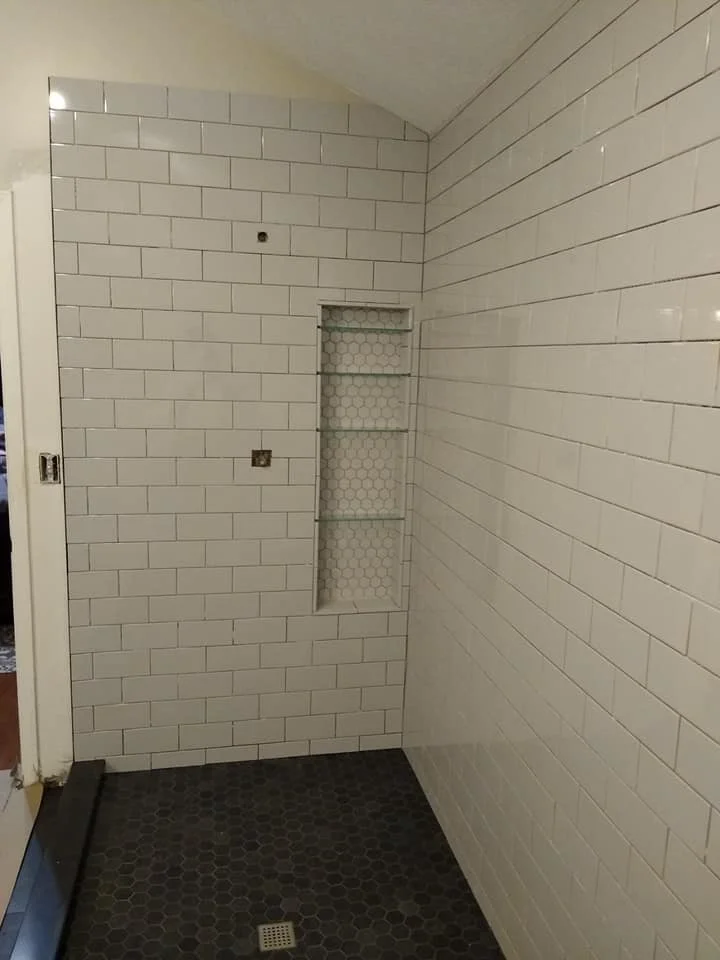
The short answer is yes — when the conversion is done with permits, proper waterproofing, and at least one tub remaining in the home.
In the Brownsburg resale market, buyers touring move-up homes in Hendricks County respond well to large tiled walk-in showers with frameless glass in master bathrooms. Updated shower conversions photograph well in listing photos, reduce buyer objections about bathroom condition, and signal that the home has been maintained and improved thoughtfully.
What we consistently see in Hendricks County:
A dated fiberglass tub surround in a master bath is one of the first things buyers note as a needed update — and they subtract the cost of fixing it from their offer. A tiled walk-in shower with frameless glass removes that objection entirely. The conversion pays for itself in reduced negotiation pressure before the home ever lists.
The only resale risk is the one already stated — removing the last tub in the home. Buyers with young children are a significant portion of the Brownsburg buyer pool, and the absence of any bathtub narrows the market for the home. In a two-bathroom home where a tub remains in the hall bath, that concern disappears entirely.
What buyers in the Brownsburg market respond to in a master shower:
- Large-format wall tile with minimal grout lines — easier to clean and reads as current
- Frameless glass enclosure or a well-designed doorless entry — both signal quality immediately
- Recessed niche instead of a corner caddy — built-in storage reads as intentional design
- Rainfall or multi-function showerhead — buyers notice fixture quality even on a quick walkthrough
- Proper lighting inside or adjacent to the shower — a dark shower photographs and feels worse than it is
The Most Common Walk-In Shower Conversion Mistakes — and How to Avoid Them
Most of these mistakes trace back to the same source: rushing the sequence or skipping steps that feel like they could be optional. In a shower, nothing is optional. Water finds every gap.
The most common conversion mistake in Brownsburg:
Skipping a proper drain position and slope adjustment when converting from a tub drain. A tub drain is positioned for a soaking tub — not for a shower floor that needs to direct water efficiently to a center or linear drain. A shower floor that doesn't drain completely pools water, grows mildew between uses, and fails the final inspection through Hendricks County. Setting the correct slope and drain position from the start eliminates the most common post-conversion complaint we hear about other contractors' work.
Other mistakes worth knowing before you start:
- Skipping the waterproofing membrane — Tiling directly over cement backer without a waterproofing membrane is the most common cause of long-term shower failure. The membrane is what keeps water out of the framing and subfloor. In Indiana's humid summers, a shower without it will grow mold behind tile within a few years. We apply full membrane coverage — walls and floor — every time.
- Not accounting for the glass lead time — Frameless glass enclosures are custom-fabricated after tile is complete and cured. That fabrication takes two to four weeks. Homeowners who don't plan for that gap end up with a functional but open shower for a month while they wait. We build the glass timeline into the project schedule from day one.
- Changing niche location after cement backer is up — The niche location has to be decided before framing begins. Changing it after cement backer or waterproofing is applied means opening the wall. This is one of the most common mid-project change requests and one of the most avoidable with a complete design conversation before demo.
- Using floor tile that's too large or too smooth — Large-format floor tile requires more precise slope work to drain correctly. Very smooth tile is a slip hazard when wet. Floor tile in a walk-in shower should be sized to allow proper slope and have a slip-resistant surface finish — function first, appearance second.
- Skipping permits on plumbing and electrical work — Unpermitted plumbing changes in a bathroom show up on home inspection reports and give buyers a legitimate negotiating point. Pull the permits, close the inspections, protect the investment.