
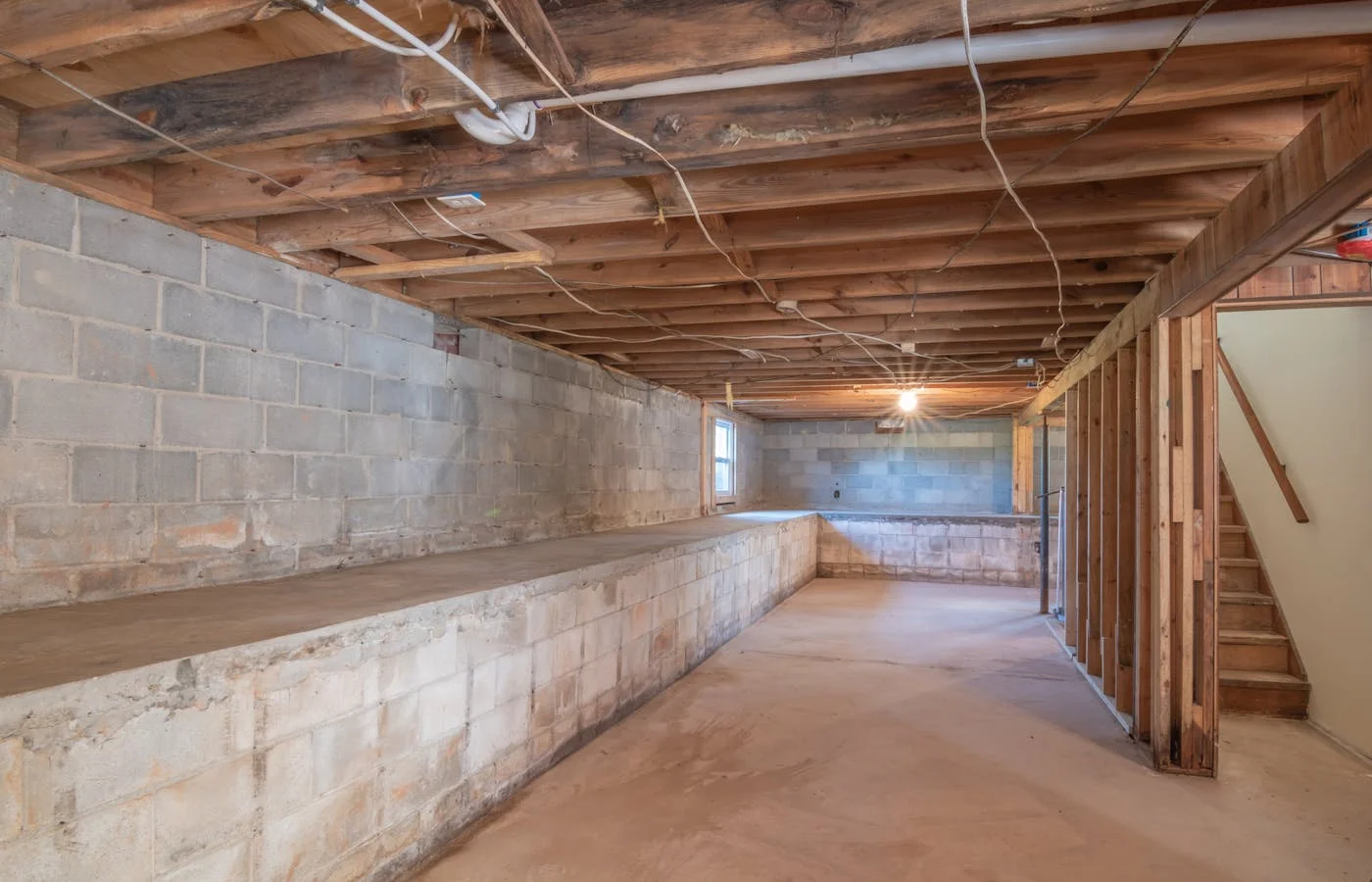
We have walked through a lot of Brownsburg basements. Some had problems the homeowner had been watching for years, hoping they would stay the same. Most of them had not. A crack that was a hairline in 2019 was a quarter inch wide by the time we showed up. A wall that was "just a little bowed" had moved two inches. The homeowner was not ignoring it — they just did not know what they were looking at.
That is the hardest part of foundation problems. They do not look like emergencies until they are.
This page covers foundation repair — crack repair, settling, bowing walls, cinder block work, and drainage fixes. We inspect, we advise honestly, and we fix what needs fixing.
What Foundation Repair Covers and When Your Home Needs It
Most Brownsburg homeowners notice something is off before they know what to call it. A door that used to close fine but now sticks. A crack in the drywall near a corner window. A floor that feels soft in one spot. These are not always cosmetic problems. Sometimes they are the first sign that the foundation underneath is moving.
In our experience, the homeowners who call us early spend a fraction of what the ones who wait spend. Not because we charge less — because the repair is genuinely smaller when the problem is caught at the crack-and-monitor stage versus the bowing-wall-needs-anchors stage. That is not a sales pitch. It is just how foundations work.
Here are the warning signs that mean it is time to get eyes on it:
- Cracks in the foundation wall — horizontal cracks are more serious than vertical ones; any crack that is widening over time needs attention now
- Doors and windows that stick or no longer close square
- Floors that slope, bounce, or feel uneven underfoot
- Gaps between the wall and the ceiling or floor
- Water in the basement or crawl space after rain
- Bowing or leaning basement walls
Brownsburg's clay-heavy soil expands when wet and contracts when dry. A trusted construction company in Brownsburg accounts for this cycle when designing and reinforcing foundations, since it places repeated stress on foundation walls and footings — especially in older neighborhoods like Brown Bear and Eagle Pines where homes have been exposed to these conditions for 25 to 30 years.
Foundation repair in Brownsburg covers:
- Crack injection — epoxy or polyurethane fills and seals cracks in poured concrete walls
- Wall anchors and carbon fiber straps — stabilize bowing or leaning basement walls without excavation
- Piering — lifts and stabilizes settled foundation sections using steel piers driven to load-bearing soil
- Cinder block tuckpointing and restoration — repairs deteriorating mortar joints in block foundations
- Drainage corrections — grading, downspout routing, and French drain installation to stop water from reaching the foundation
How Foundation Repair Works Without Lifting Your House
Most Brownsburg homeowners hear "foundation repair" and picture their house being lifted off the ground while crews dig up the entire yard. That is almost never what happens.
We have done foundation repairs in Brownsburg where the homeowner went to work in the morning, came home in the afternoon, and the crack that had been there for three years was filled, sealed, and finished. No excavation. No major mess. No temporary move.
Here is how foundation repair actually works:
- We inspect the cracks, settling, and drainage around your home — inside and outside
- We identify the root cause — soil movement, water getting in, or a structural shift
- We select the right repair method — crack injection, wall anchors, carbon fiber straps, or piering depending on what we find
- We prepare interior or exterior access — most repairs need only a small work area; minimal excavation if any is needed
- Repair materials are installed and the foundation is stabilized
- We do a final inspection and recommend drainage improvements if water caused the problem
The method depends on the foundation type and what is happening in the soil underneath. Brownsburg homes from the 1980s through the early 2000s sit on crawl spaces or slab foundations. We assess both before recommending anything — not before knowing anything.
Our honest opinion on "foundation repair companies":
Some companies that specialize only in foundation repair have a financial incentive to recommend the most expensive solution. We are a licensed remodeler. We do not make more money by recommending piering when carbon fiber straps will do the job. We recommend what the problem actually needs.
Types of Foundation Problems Common in Brownsburg Homes
Not every foundation problem looks the same. Here is what we see most often in Brownsburg — and what each one actually means.
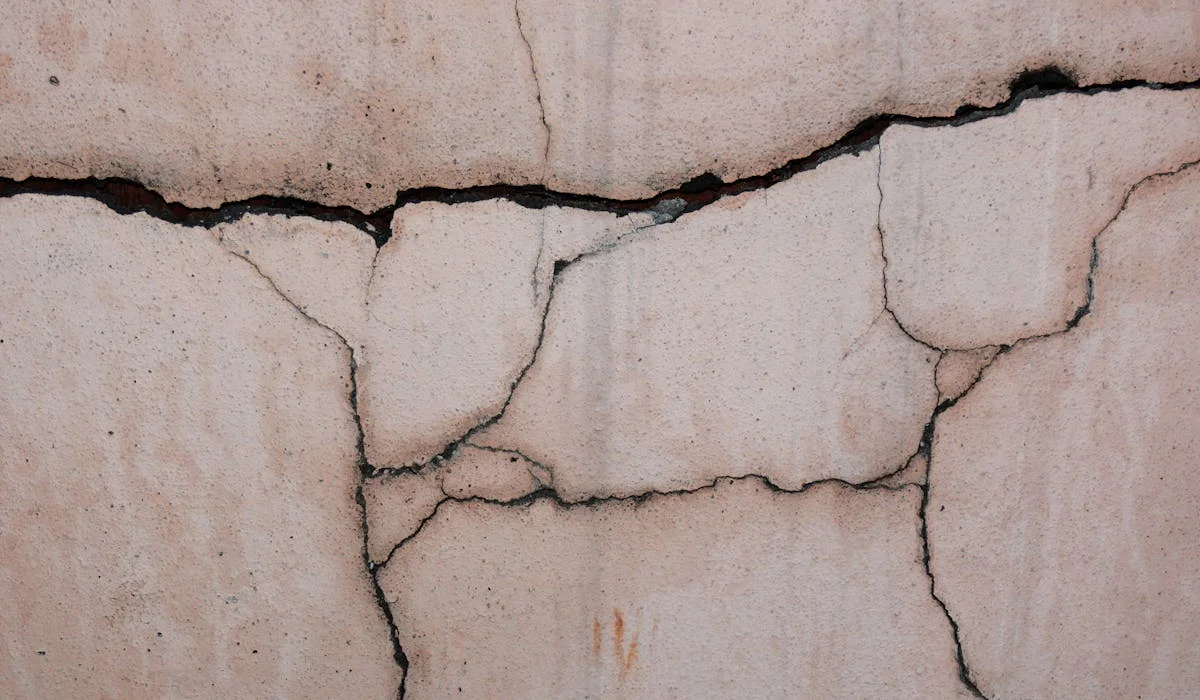
Vertical cracks run straight up and down. They are usually caused by normal concrete curing or minor settling. They let water in but are typically not a structural emergency. Still worth sealing. A crack that lets water in is a crack that is making the problem worse every time it rains.
Horizontal cracks run side to side. These are the ones that get our attention immediately. They mean the soil outside is pushing against the wall with more force than the wall is designed to handle. Left alone, horizontal cracks lead to bowing and eventually to wall failure. We have seen homeowners live with a horizontal crack for five years because "it has not gotten worse." Sometimes that is true. More often they just stopped measuring it.
Stair-step cracks run diagonally through the mortar joints of a block foundation. Common in older Brownsburg homes. Usually caused by settling or water pressure. Need to be watched and repaired before they open enough to allow water infiltration.
Bowing walls are the ones that concern us most. A basement wall that is curving inward under soil pressure is a structural problem. It is not going to fix itself. Carbon fiber straps or wall anchors stop the movement and stabilize the wall — but only if the bowing has not progressed too far. There is a point past which the wall needs to come out and be rebuilt. We would rather catch it before that point.
Settled corners or sections — part of the foundation has dropped lower than the rest. Doors and windows in that area stop working. Floors slope. Piering lifts and stabilizes the settled section.
Water infiltration — water coming in through cracks, the floor-wall joint, or through the wall material itself. Homes near Eagle Creek tributaries and low-lying areas of Brownsburg see more of this. The water in saturated clay soil does not just flow around your foundation. It pushes against it.
How to Know if Your Foundation Issue Is Worth Fixing
This is the question most Brownsburg homeowners are really asking when they call. Is this serious? Can it wait? Is it going to be expensive?
We try to be straight about this. Not every foundation crack needs to be repaired today. Some should be monitored. Some should be repaired. Some should have been repaired two years ago. The honest answer depends on what we actually see.
Our rule of thumb:
A crack that is stable, dry, and not growing is a crack you can watch. A crack that is widening, wet, or in a horizontal direction is a crack you fix now. A bowing wall is a call-us-today situation.
A framework for making the decision:
- Cosmetic crack, not growing, no water: Take a photo with a date marked. Check it again in six months. If it has not changed, monitor it. If it has, call us.
- Crack that has widened since you first noticed it: Get it assessed. Something is still moving.
- Horizontal crack or bowing wall: Call now. This does not get better on its own.
- Water in the basement or crawl space: Find the source and stop it before doing anything else. Water is the most common cause of foundation damage in Brownsburg, and adding a repair on top of an active water problem is like patching a roof in the rain.
One more thing worth saying directly: Brownsburg's real estate market is active. Foundation problems show up on every home inspection report. Buyers use them to negotiate down — or to walk away. Fixing a known issue before listing protects your asking price and removes a red flag that experienced buyers and their agents look for immediately.
What to Expect While Foundation Repair Is Being Done
Most foundation repairs in Brownsburg take one to three days. You can stay in your home. Disruption is limited to the work area.
We will be honest about what day one is like: it is usually the messiest day. Concrete dust, prep work, access opening if needed. After that it quiets down. Most of our clients are surprised by how contained the work stays.
Best time of year for exterior foundation work in Brownsburg: Late spring through early fall. Frozen or water-saturated ground in Indiana winters limits piering and exterior excavation. Interior repairs — crack injection, carbon fiber straps, and wall anchors done from inside — can be done year-round. If you are calling us in January, we will tell you exactly what we can do now and what needs to wait for the ground to thaw.
What a typical repair looks like day by day:
- Day one: Prep the work area, open access if needed, install the primary repair — cracks filled, straps or anchors set, or piers driven to depth
- Day two if needed: Finishing, any secondary repairs, cleanup of the work area
- Final day: Walkthrough with you, drainage recommendations, permit inspection if required
Structural foundation work in Hendricks County requires a permit. We pull it and schedule the inspection. You do not manage either one.
How to Prevent Foundation Problems From Coming Back
The repair fixes the damage. The prevention is what keeps it from coming back.
After doing foundation work across Brownsburg for years, the root cause in most cases is the same: water. Clay soil holds water. Water builds pressure against the foundation. That pressure cracks walls, pushes them inward, and works its way through every gap it can find.
The fix is not just repairing the wall. It is also stopping the water from getting there.
Our most repeated advice to Brownsburg homeowners:
Walk your yard after a hard rain. Watch where the water goes. If it is pooling near the foundation, flowing toward the house, or sitting against the siding for hours — that is where your next foundation problem is coming from.
Prevention steps that actually work in Brownsburg:
- Grade the lot away from the house — your yard should drop at least six inches in the first ten feet out from the foundation. Flat terrain and clay soil make this more important here than almost anywhere else.
- Extend your downspouts — downspouts that dump water at the foundation are one of the most common causes of localized foundation damage we see in Brownsburg. Six feet minimum. Farther is better.
- Clean your gutters — clogged gutters overflow and run water directly against the foundation wall. This one costs nothing to fix and causes expensive problems when ignored.
- Add a vapor barrier to your crawl space — ground moisture moves up through an uncovered crawl space and saturates the framing above it. A simple barrier changes the moisture environment completely.
- Check your window wells — window wells that fill with water during rain are draining against your foundation. Add covers or improve drainage at the bottom.
Arbor Grove and Stephens Creek have had repeated drainage-related foundation issues. Flat yards, clay soil, and downspouts pointed at the house are the combination we see every time. The repairs hold. The prevention is what keeps them from coming back in five years.