
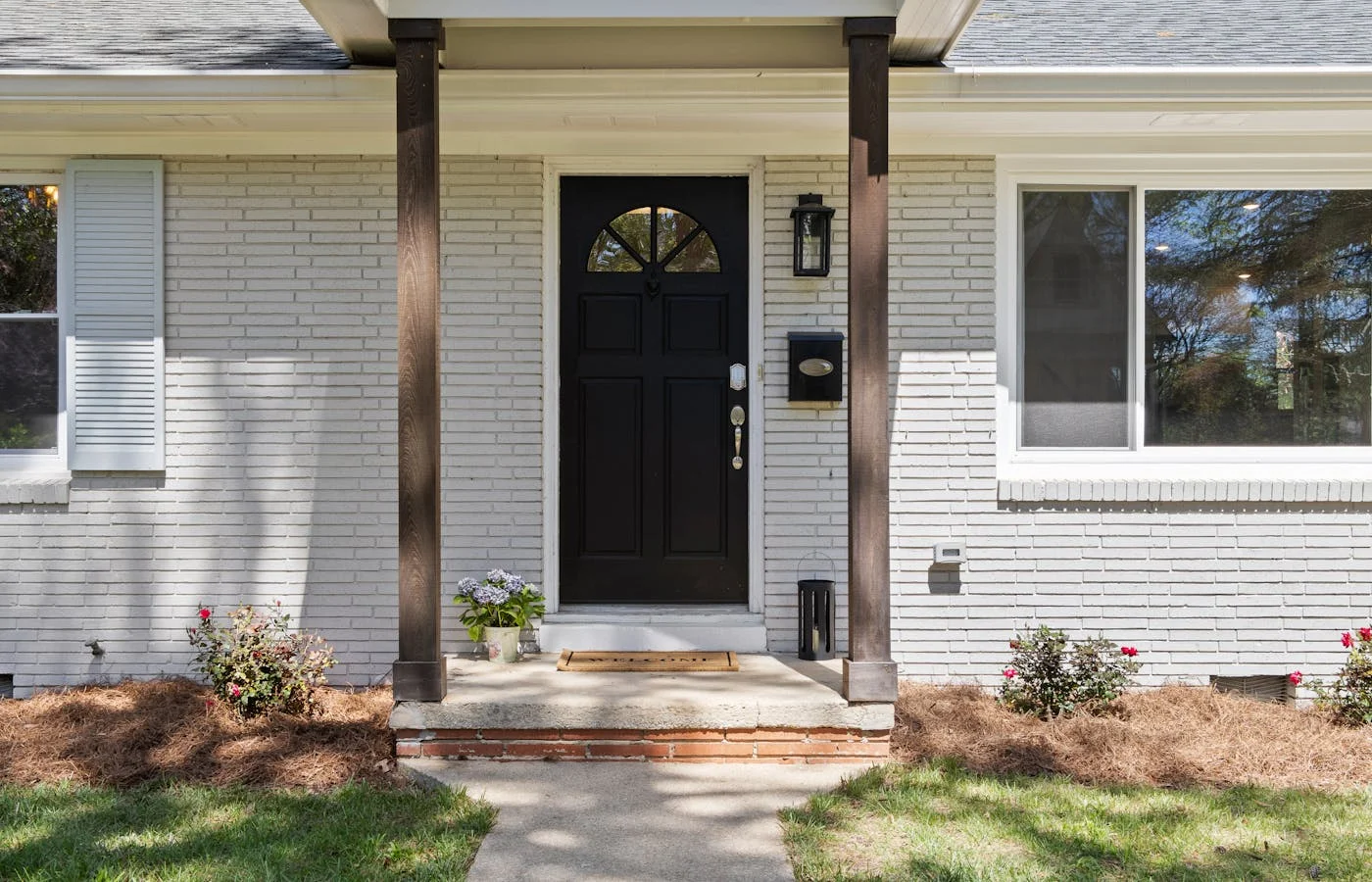
Most homeowners live with the symptoms for years before calling anyone: a draft near the patio door in January, condensation forming between the panes of a bedroom window, a front door that requires a shoulder to fully close in summer and rattles all winter.
The damage from a poor installation or a failed unit isn't just comfort and energy cost. Water that gets past a failed seal works into the rough opening framing — quietly, invisibly — until the rot or mold is extensive enough to require structural repair on top of the window replacement that should have happened three years earlier.
What we cover:
Removal · Rough opening assessment · Flashing · Insulation · New unit installation · Trim work · Weatherproofing inside and out
Most projects begin with a site assessment to confirm rough opening dimensions, framing condition, and whether existing openings need modification before new units go in. One remodeler handles the full installation — no gap between the person who removes the old unit and the person responsible for making the new one weathertight and finished on both sides.
What Door and Window Installation in Brownsburg Actually Includes
Before hiring a door and window installer in Brownsburg, ask these six questions — and listen carefully to the answers:
- Do they pull permits for structural opening modifications? Any rough opening change in Brownsburg requires a permit through Hendricks County
- How do they handle flashing and air sealing? Flashing method and sealant type determine whether the installation stays weathertight through Indiana's freeze-thaw cycles
- Who does the interior and exterior trim work? Some installers deliver only the unit — finish work gets handed off or skipped
- What happens if the rough opening framing is damaged when the old unit comes out?
- Can they provide references from completed Brownsburg or Hendricks County projects?
- Is the installation covered by a workmanship warranty separate from the product warranty?
A door and window installation is not pulling out the old unit and dropping in the new one. A trusted local contractor in Brownsburg handles rough opening inspection, necessary framing repairs, proper sill and head flashing, insulation of the gap between unit and framing, full air sealing, unit set, and interior and exterior trim work. Indiana's freeze-thaw cycles place heavy stress on every installation. When flashing and air sealing are skipped, water infiltration can damage framing, insulation, and interior finishes within two to three Hendricks County winters, often remaining hidden behind trim until rot, staining, or mold becomes visible.
A complete door or window installation typically includes:
- Site assessment — rough opening dimensions, framing condition, and modification needs
- Old unit removal and careful inspection of the rough opening once exposed
- Framing repair if damage is found — before the new unit goes in, not after
- Sill flashing — membrane or pan flashing at the base of every opening
- Unit installation and shimming — plumb, level, and square confirmed before any trim goes on
- Head and jamb flashing — water management at the top and sides of the opening
- Backer rod and sealant at the perimeter — air sealing after flashing is in place, not instead of it
- Insulation of the rough opening gap — spray foam or batt, appropriate to the opening depth
- Exterior trim — brick mold, casing, or stucco wrap finished and caulked
- Interior trim — casing, stools, and apron installed after the unit is confirmed weathertight and operating correctly
- Hardware installation and operation check
- Final weatherstripping adjustment
How Brownsburg Homeowners Decide Which Doors and Windows Need Replacing
The repair vs. replace decision comes down to the condition of three things: the unit itself, the frame, and the rough opening framing behind the frame.
The question that determines the answer:
Is the frame and rough opening structurally sound, or has water been working into it long enough to compromise the wood?
In Brownsburg neighborhoods like Arbor Hills and Stone Gate, homes built in the early to mid-1990s are reaching the end of the typical window lifespan. Original single-pane and early double-pane units in these homes show condensation between panes, failed seals, and increasingly poor thermal performance through Indiana winters. Replacing these units improves comfort, reduces heating costs, and is a visible selling point in the Hendricks County resale market. Buyers touring homes in this area notice window condition — and they factor dated or failing units into their offers.
Signs that full replacement is the right call:
- Condensation or fogging between the panes of a double-pane unit — the insulating seal has failed and the unit cannot be repaired
- Visible rot, soft spots, or deterioration in the window or door frame
- The unit no longer operates correctly — won't lock, won't open fully, or requires force to close
- Cold glass surfaces in winter that are noticeably worse than adjacent units — thermal performance has degraded significantly
- Multiple units in the same home showing the same failure pattern — a systematic replacement is more efficient than unit-by-unit repairs
Signs that repair may be sufficient:
- Single-pane glass is intact and the frame is sound — weatherstripping and hardware repair may restore performance
- The door or window sticks seasonally but seals correctly — adjustment and lubrication is often the right first step
- One unit in a home that is otherwise performing well — targeted repair rather than whole-home replacement
- The rough opening framing is completely dry and undamaged — no water has worked its way behind the frame
What to Ask a Door and Window Installer Before Hiring in Brownsburg
The permit question is the fastest filter. A door or window installer in Brownsburg who does not mention permits when discussing rough opening changes is either unaware of the requirement or deliberately avoiding it. Both predict other shortcuts in the installation process.
Our direct take:
An installer who skips permits on a rough opening modification is an installer who skips flashing details, air sealing, and the framing inspection that would reveal damaged wood before the new unit covers it. These shortcuts are not independent choices — they come from the same place.
Hendricks County permit requirements for structural opening modifications are the legal baseline. A workmanship warranty separate from the product warranty is the professional baseline. References from completed Brownsburg and Hendricks County projects are the credibility baseline. All three should be present before a contract is signed.
The full list of questions worth asking before hiring:
- Do you pull permits for rough opening modifications, and who is responsible for coordinating inspections?
- What flashing system do you use at the sill, head, and jambs — and why?
- Who installs the interior and exterior trim — is that included in the quote or a separate scope?
- What is your process when damaged framing is discovered after the old unit is removed?
- Do you carry general liability insurance and workers compensation — and can you provide current certificates?
- What does the workmanship warranty cover, and for how long?
- Can you provide references from Brownsburg or Hendricks County homeowners whose projects are at least two years old?
That last question is specific for a reason. A door and window installation that was done six months ago has not yet been through a full Indiana freeze-thaw cycle. A project that is two or more years old has — and references from those homeowners tell you whether the flashing and air sealing held up.
What Happens During a Door and Window Installation in Brownsburg
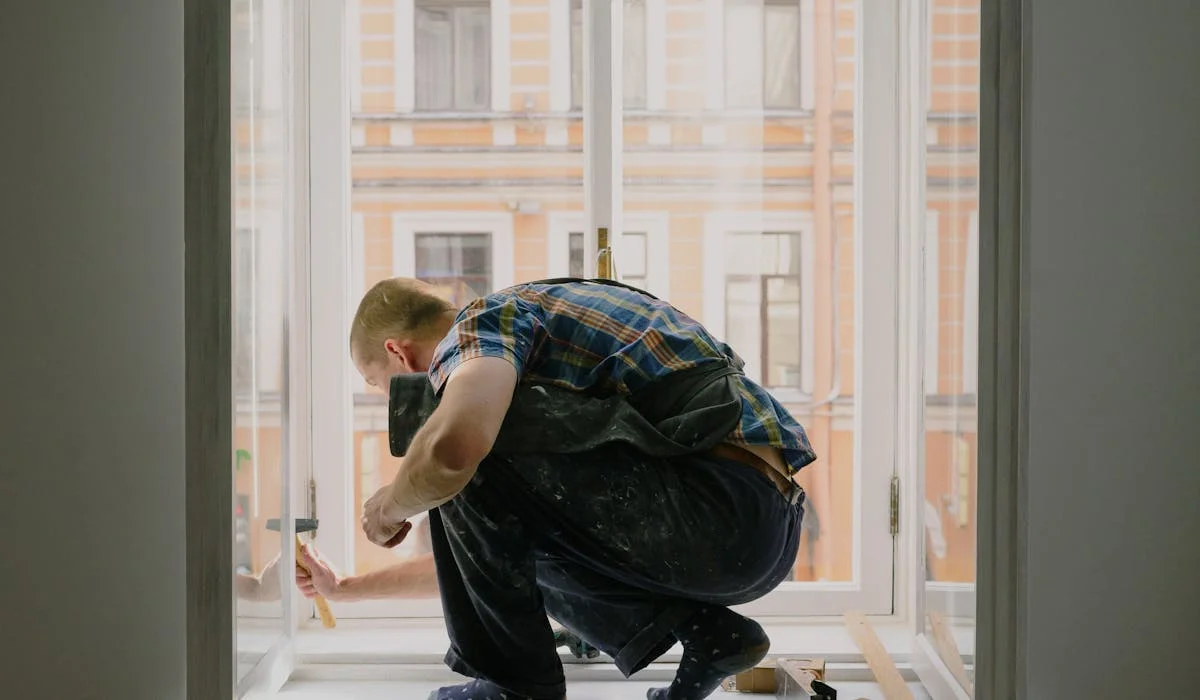
Most Brownsburg door and window installations complete one to three units per day depending on opening condition and trim complexity. Projects that reveal damaged framing or require rough opening modification take longer and may require a framing inspection through Hendricks County before the new unit is set and flashed.
Homeowners in neighborhoods like Wynstone and Eagle Creek who want a clear picture of how many openings will be exposed at once, how long each stays open, and when the home will be fully weathertight get a unit-by-unit schedule before work begins.
Here's what the installation sequence looks like for each unit:
- First: Old unit removed carefully — rough opening exposed and inspected immediately
- Then: Framing condition confirmed — any soft spots, rot, or damage addressed before continuing
- Then: Sill flashing installed — membrane or pan flashing across the full sill width
- Then: New unit set, shimmed plumb, level, and square — confirmed before any fasteners are driven
- Then: Head and jamb flashing applied
- Then: Gap between unit and rough opening framing insulated — backer rod and sealant at the perimeter
- Then: Exterior trim installed and caulked
- Then: Unit operation confirmed — opens, closes, locks, and seals correctly
- Then: Interior trim installed
On timing:
We schedule installations outside Indiana's coldest winter months wherever possible — not because the work can't be done in winter, but because an open rough opening exposed to freezing temperatures during installation creates comfort and moisture problems that a spring or fall installation avoids. When winter installation is necessary, we work one unit at a time and close each opening fully before moving to the next.
How to Know If Your Door and Window Installation Was Done Right in Brownsburg
The first Indiana rain after installation is the most important quality test for any Brownsburg door or window installation. Running water down the exterior of a newly installed unit while checking the interior rough opening for moisture infiltration reveals flashing failures that a dry-weather inspection misses entirely. A professional installer performs this check — or walks the homeowner through it — before considering the job complete.
How to do the rain test yourself: With a helper inside near the rough opening, use a garden hose to run water directly down the exterior of the unit — over the head casing, down the jambs, and across the sill. Have the helper watch the interior rough opening perimeter, the junction between the unit and the rough opening framing, and the sill area below the unit. Any moisture infiltration from a flashing or sealant failure will appear within a few minutes of running water.
The full post-installation checklist:
- The unit operates correctly — door or window opens, closes, and latches without binding or requiring force
- Weatherstripping makes full contact around the perimeter when the unit is closed — no visible daylight gaps
- Exterior caulk joints are full and consistent — no voids or gaps at the casing edges
- Interior trim is tight to the wall surface — no gaps where trim meets drywall or plaster
- The gap between the unit frame and the rough opening is fully insulated — no hollow spots that allow air movement
- The rain test passes — no moisture infiltration at the interior rough opening perimeter
The Most Common Door and Window Installation Mistakes — and How to Avoid Them
Most failures in door and window installations in Brownsburg trace back to one of two root causes: flashing was skipped or done wrong, or the rough opening framing condition wasn't assessed before the new unit went in. Both are invisible after the trim goes on. Both become very visible after the first few Indiana freeze-thaw cycles.
The most common door and window installation mistake in Brownsburg:
Relying on caulk alone as the primary weatherproofing strategy. Caulk is a secondary sealant that supplements proper flashing — not a replacement for it. In Indiana's climate, freeze-thaw cycles crack and separate caulk joints every winter. An installation that depends on caulk as the first line of defense against water infiltration begins failing within the first Hendricks County heating and cooling cycle after installation. Proper flashing is what keeps water out. Caulk is what keeps air out. Both are required. Neither replaces the other. Learn more about door and window installation best practices.
Other mistakes worth knowing before any installation starts:
- Not inspecting the rough opening framing before installing the new unit — Rot and water damage in the rough opening framing is discovered when the old unit comes out. Installing a new unit over damaged framing transfers the structural problem to the new installation and guarantees a shortened lifespan regardless of the unit quality. We assess the framing condition before the new unit comes off the truck.
- Skipping sill flashing — The sill is where water concentrates during rain events. A unit installed without a sill flashing membrane or pan allows water to pool at the base of the rough opening and work into the framing. This is the failure mode that causes the rot homeowners discover years later when they finally replace the unit again.
- Filling the rough opening gap with caulk instead of insulation — The gap between the unit frame and the rough opening framing needs insulation — foam or batt — to prevent air movement and thermal bridging. Filling it with caulk creates an air seal but leaves the thermal gap unaddressed. In a Brownsburg home through an Indiana winter, that gap is a continuous source of heat loss and condensation risk.
- Installing interior trim before confirming the unit is weathertight — Interior trim installed before a rain test or at least a careful exterior inspection of the flashing makes it impossible to access the rough opening if a problem is found. We complete and confirm the exterior work before interior trim goes on.
- Skipping permits on rough opening modifications — An opening modification without a permit and inspection leaves the homeowner with a structural change that must be disclosed at resale and may require remediation. We pull every required permit and schedule framing inspections correctly before the new unit is installed.