
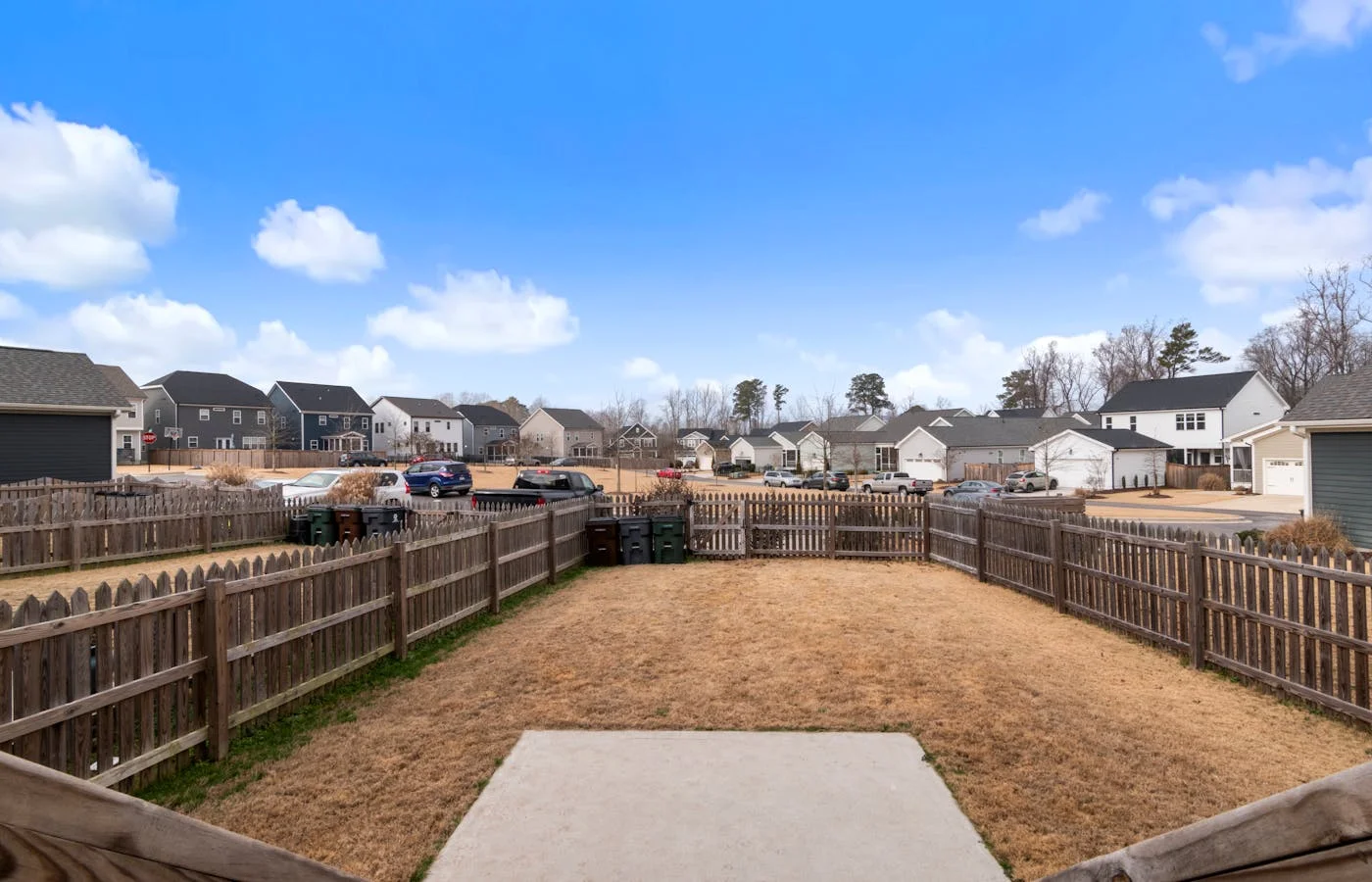
Most homeowners want three things: privacy, a defined yard for kids and pets, and a finished look that doesn't require attention every spring. Getting all three requires more planning before the first post hole is dug than most people expect.
The fence problems we see most often in Brownsburg aren't material failures. They're planning failures — a post set at 24 inches that heaves every winter, a fence line built six inches over the property line, a gate installed without checking the HOA approval requirement that covers the material and color of what was already purchased. All of them are avoidable. None of them are cheap to fix after the fence is built.
What we cover:
Layout planning · Post setting · Material selection · Gate installation · Finish work — for wood, vinyl, aluminum, and composite fencing
Most projects begin with a site walkthrough to confirm property line locations, utility locate requirements, HOA rules, and setback distances before any post positions are marked. One remodeler handles the full installation — permit coordination, layout, post setting, and finish all managed together so nothing is built in the wrong place or to the wrong spec.
What Fence Installation in Brownsburg Actually Includes
Before installing a fence in Brownsburg, here's what every homeowner should confirm — in this order:
- Locate your property lines before marking any post positions — installing on a neighbor's property creates legal and removal obligations that are expensive to resolve
- Submit an Indiana 811 utility locate request before any post holes are dug — gas, electric, and water lines run through rear yards in most Brownsburg subdivisions
- Check HOA rules — many Brownsburg neighborhoods restrict fence height, material, color, and which side of the yard facing the street can be fenced
- Confirm setback requirements with the Town of Brownsburg or Hendricks County — fences must stay within property lines and meet minimum setback distances from easements
- Pull a permit if required — certain fence heights and attached structures trigger permit requirements in Hendricks County
- Choose material based on maintenance tolerance and Indiana climate performance before ordering
A fence installation is not setting posts and nailing boards. A properly planned and installed fence requires property line confirmation, utility locates, HOA approval, permit coordination, post depth calculation for Indiana's frost line, material selection appropriate for the application, gate installation, and finish. Indiana's frost depth requires fence posts to be set at least 36 to 42 inches below grade in Hendricks County. Posts set above the frost line heave out of the ground during freeze-thaw cycles — panels rack, gates bind, and the entire fence line goes out of level within two to three Brownsburg winters. Post depth is the single most important installation decision and the one most commonly shortcut by low-bid installers in this market.
A complete fence installation typically includes:
- Site walkthrough — property line confirmation, utility locate, HOA rule review, setback confirmation
- Permit application if required through the Town of Brownsburg or Hendricks County
- Layout — post positions marked and confirmed before any holes are dug
- Indiana 811 utility locate completed before excavation begins
- Post hole digging to Indiana frost depth — minimum 36 to 42 inches below grade
- Concrete footing installation — post set plumb in wet concrete with crown sloped away from the post base
- Concrete cure period before panels are hung — this wait cannot be shortened
- Panel installation — level, consistent spacing, and consistent height throughout
- Gate installation — hardware set for proper swing, latch, and alignment
- Cap and trim details as specified for the material type
How Brownsburg Homeowners Choose the Right Fence Material and Style
The material decision comes down to three things: what the HOA allows, how much maintenance the household is willing to do, and how the fence will be used. Licensed contracting services in Hendricks County focus on aligning those factors before any materials are ordered, preventing the most common fence regret in Brownsburg — a product that looked right in a catalog but either failed to meet HOA approval or didn't hold up in real conditions.
Our starting point on every fence project:
What does the HOA allow, and what is the fence primarily for?
In Brownsburg neighborhoods like Arbor Hills and Stone Gate, HOA guidelines frequently restrict fence materials, colors, and heights. Vinyl privacy fencing and aluminum picket fencing are the most commonly approved options in Hendricks County subdivisions. Wood fencing is popular in neighborhoods without HOA restrictions but requires consistent maintenance — sealing, staining, and periodic board replacement — to hold up through Indiana's humidity and temperature swings without warping, splitting, or graying prematurely.
A practical decision framework by use case:
- Privacy and yard containment — no HOA restrictions: Pressure-treated wood or vinyl privacy panel. Wood requires maintenance; vinyl does not. Both perform well in Indiana's climate when posts are set correctly.
- Privacy and yard containment — HOA restricted: Vinyl in the approved color and height profile. Check whether the "good side" facing requirement applies — some Brownsburg HOAs require the finished side to face the neighbor, not the homeowner.
- Decorative front yard or pool perimeter: Aluminum picket. Rust-resistant, low maintenance, strong visual impact, and consistently approved in Hendricks County HOA communities.
- Dog containment — primary function: Material is secondary to post depth and panel gap spacing. A fence that heaves or has panel gaps a dog can push through fails the primary purpose regardless of how it looks.
- Resale-focused installation: Vinyl or aluminum. Both photograph well in listing photos, require no maintenance for the next owner, and are the materials buyers in the Brownsburg market respond to most positively.
What to Settle Before Fence Installation Begins in Brownsburg
The most expensive fence outcome in Brownsburg isn't a material failure — it's a fence built in the wrong location or without HOA approval that has to be partially or fully removed and rebuilt. Both are avoidable with the right pre-installation process.
The step most homeowners skip:
Confirming property line location from a recorded plot plan or survey before any post positions are marked. A fence installer who marks post positions without verified property line data is guessing at a legal boundary. A fence built six inches over the property line in a Hendricks County subdivision creates neighbor conflict and potential legal cost that no amount of goodwill resolves easily.
What to have confirmed before work begins:
- Property lines confirmed from a recorded plot plan from the Hendricks County Recorder's office, or from a licensed surveyor on any shared boundary line that could be disputed
- HOA architectural review submitted and approved if the neighborhood requires it — approval is required before purchase and installation, not after
- Indiana 811 utility locate completed — required by law before any excavation, and the one step that prevents hitting a buried gas or electric line in a rear yard
- Permit status confirmed with the Town of Brownsburg or Hendricks County Building Department — don't assume a fence doesn't need one
- Material ordered and delivery confirmed before installation is scheduled — post hole digging and panel installation need to happen on coordinated days, not days apart
- Gate location and swing direction confirmed — gate swing affects post spacing and concrete footing placement; changing it after posts are set requires removing and resetting posts
What Happens During a Fence Installation in Brownsburg
Most Brownsburg fence installations run one to three days for a standard residential yard depending on linear footage, material type, and gate count. Post concrete cure time adds a non-negotiable wait period before panels are hung — concrete that hasn't fully cured cannot support the lateral load of panels without post movement.
Homeowners in neighborhoods like Wynstone and Eagle Creek who want a clear picture of the installation sequence and yard disruption get a day-by-day schedule before work begins.
Here's what a typical fence installation looks like:
| Phase | What's Happening |
|---|---|
| Day 1 | Layout marked and confirmed; Indiana 811 locate flags visible and respected; post holes dug to Indiana frost depth; posts set plumb in concrete with crowning at the base to direct water away from the post |
| Cure period | Concrete cure time — typically 24 to 48 hours minimum before panels are hung; this window cannot be compressed without risking post movement during panel installation |
| Days 2–3 | Panel installation from one end to the other — level maintained throughout; gate posts set with appropriate spacing for the gate width; panels cut and fitted at corners and end points |
| Final | Gate hardware installed and adjusted — latch, hinges, and swing confirmed; any cap or trim details completed; site cleaned and walk-through with homeowner |
On spring and fall scheduling:
We recommend scheduling fence installations in spring or fall wherever possible. Spring avoids frozen ground and allows concrete to cure at stable temperatures before summer use. Fall installations complete before winter ground freeze and often benefit from shorter lead times as the busy summer outdoor season winds down. Winter installation is possible but adds excavation difficulty in frozen ground that affects schedule and crew time.
What Makes a Fence Last Through Indiana Seasons in Brownsburg
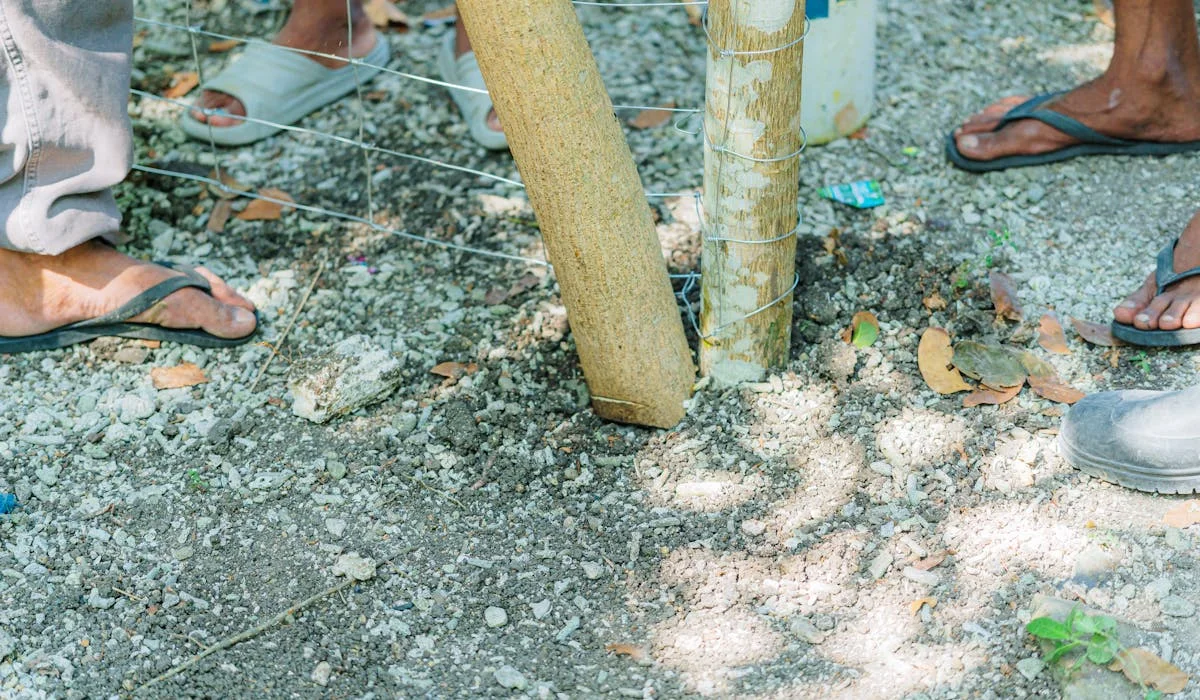
The fences that fail in Brownsburg within five years aren't built from bad materials. They're built on posts that weren't set deep enough, in concrete that wasn't allowed to cure before panels went up, or with post material that wasn't rated for ground contact. The material above the ground line matters. The installation below it determines everything.
What actually determines fence longevity in Hendricks County:
Post depth, concrete footing method, and post material at the ground line. These three decisions determine whether a fence holds its line and level through the full Indiana seasonal cycle — or starts showing movement after the first hard winter.
Post depth:
Indiana's frost depth requires fence posts set at least 36 to 42 inches below grade in Hendricks County. The standard rule of thumb is one-third of the total post length below ground. Posts set at 24 inches — a common shortcut — will heave during freeze-thaw cycles. The entire fence line moves with them. Panels rack, gates bind, and the once-straight fence line develops a wave that gets worse every winter. There is no maintenance fix for a post set above the frost line. The post has to come out and be reset.
Concrete footing method:
A post set plumb in wet concrete with the top crowned slightly to slope water away from the post base will outlast a post set in tamped gravel or dry concrete mix by years. Water that pools at the post base — in any material — accelerates deterioration at the ground line where stress is highest. The concrete crown that directs water away from the post is a small detail that makes a significant difference in post base longevity.
Post material at the ground line:
Ground contact-rated pressure-treated posts — marked as UC4A or UC4B for ground contact applications — are the correct specification for wood fence posts in Brownsburg. Standard above-ground-rated pressure-treated lumber used as a fence post will deteriorate at the ground line in Indiana's soil conditions within a few years. The rating is stamped on the end of the post. It's not a label upgrade — it's a different preservative level that determines how long the post holds up in direct soil contact.
The Most Common Fence Installation Mistakes — and How to Avoid Them
Every mistake on this list is discovered after the fence is built — which is exactly when it's most expensive to fix. The planning that prevents these failures takes less time than the remediation that follows them.
The most common fence installation mistake in Brownsburg:
Setting posts without accounting for Indiana's frost depth. Installers who set posts at 24 inches or less to save time and concrete cost produce fences that begin heaving in the first hard winter — throwing panels out of level and gates out of alignment throughout the Hendricks County freeze-thaw season. The difference in concrete and labor between a 24-inch and a 40-inch post setting is small. The difference in how the fence performs over the next decade is not. We set every post to the correct depth for Indiana soil conditions, every time.
Other mistakes worth knowing before any fence project starts:
- Building without confirming property lines — A fence installed without verified property line data risks encroaching on a neighbor's property. The legal and removal cost of a misplaced fence far exceeds the cost of pulling a plot plan or hiring a surveyor before installation begins. We confirm property line reference points before any post position is marked.
- Skipping the 811 utility locate — Hitting a buried gas line while digging a post hole is both dangerous and legally serious. Indiana requires the locate request before excavation regardless of how routine the installation appears. We submit the locate before any equipment is brought to the site.
- Installing panels before concrete is fully cured — Concrete that hasn't fully set cannot support the lateral load of fence panels without post movement. Posts that shift during panel installation produce a fence that is out of plumb from day one. We allow full cure time before any panel goes up.
- Ordering material before HOA approval is confirmed — An HOA rejection after material is delivered means returning product that may not be returnable and reordering in a different material or color. HOA approval comes before purchase, not after.
- Skipping permits on fence heights that require them — An unpermitted fence in a height category that requires inspection creates disclosure obligations at resale. Confirm permit requirements with the Town of Brownsburg or Hendricks County before installation begins — not after the fence is up.