
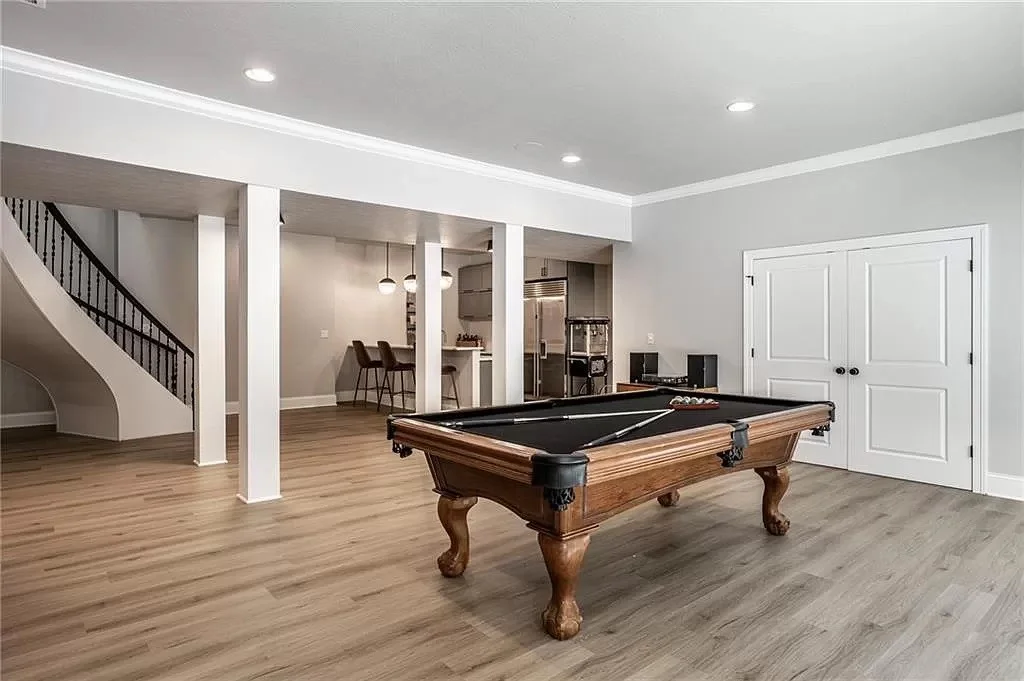
It also requires a more disciplined process than most homeowners expect — and the projects that develop problems within a few years are almost always the ones that skipped the moisture assessment, rushed the inspection sequence, or insulated against a foundation wall incorrectly for Indiana's climate.
What we cover:
Moisture assessment · Framing · Insulation · Electrical · Plumbing rough-in · Drywall · Flooring · Trim · Everything required to turn a raw basement into legally finished and permitted living space
Most projects begin with a site walkthrough to assess moisture conditions, ceiling height, existing mechanical systems, and what the space can realistically become. One remodeler handles the full scope — engineering, permits, all trades, and finish work managed together so the basement comes out right the first time.
What Basement Finishing in Brownsburg Actually Includes
The correct order to finish a basement in Brownsburg — and the sequence that determines whether the project passes inspection and performs correctly for the life of the space:
- Assess and address moisture — no framing or insulation goes in until the basement is confirmed dry and any water intrusion source is corrected
- Plan the layout and pull permits through the Town of Brownsburg or Hendricks County Building Department before any work begins
- Complete rough-in framing, then rough-in electrical, plumbing, and HVAC before any walls are closed
- Pass all rough-in inspections through Hendricks County — walls cannot close until inspections are signed off
- Install insulation, then hang and finish drywall throughout the space
- Install flooring, trim, doors, and finish electrical and plumbing fixtures
- Schedule and pass final inspection — this is what makes the space legally finished and appraised as living square footage
Finishing a basement is not framing a few walls, dropping a ceiling, and laying carpet. General contractor services in Brownsburg Indiana manage a full scope process that includes moisture assessment, vapor barrier installation, framing, insulation, electrical panel evaluation, rough-in plumbing and electrical, drywall, flooring, trim, egress compliance, and final inspection. This sequence is what legally establishes the space as finished square footage.
Many Brownsburg homes built in the 1990s and early 2000s have basements with aging sump systems, minimal electrical capacity, and HVAC that was never sized to condition finished square footage. A professional basement finish addresses every system — not just the surfaces — so the completed space is comfortable through Indiana's full seasonal range without cold floors in January and humidity problems in July.
A complete basement finishing project typically includes:
- Moisture assessment and confirmation that any water intrusion source is corrected before framing begins
- Vapor barrier installation on the slab and at foundation walls
- Layout planning and permit application through the Town of Brownsburg or Hendricks County
- Framing — walls, ceiling soffits, and any room partitions
- Insulation — foundation wall insulation and ceiling insulation to Indiana energy code
- Electrical rough-in — circuits, outlets, lighting, and panel assessment for capacity
- Plumbing rough-in if a bathroom or wet bar is included
- HVAC extension — ductwork or independent zone for the finished space
- Rough-in inspections through Hendricks County — all trades signed off before walls close
- Drywall, tape, finish, and prime
- Flooring — LVP, carpet, or tile depending on use and moisture conditions
- Trim, doors, and interior finish work
- Finish electrical and plumbing — fixtures, switches, outlets
- Final inspection before occupancy
How Brownsburg Homeowners Decide If Their Basement Is Ready to Finish
The readiness assessment is the conversation that most homeowners want to skip and most experienced contractors will not. A basement that is not ready to finish will develop problems behind the walls within one to two years of completion — and those problems require tearing out finished work to correct.
The question that determines readiness:
Has this basement ever had water on the floor, moisture on the walls, or a musty smell that was not immediately explainable?
In Brownsburg neighborhoods like Arbor Hills and Stone Gate, clay-heavy Hendricks County soil creates hydrostatic pressure against basement walls during Indiana's wet spring seasons. A basement that shows efflorescence, staining, or seasonal moisture on the walls or floor is not ready to finish until the water management system is assessed and any infiltration source is corrected. Finishing over an active moisture problem in a Brownsburg basement guarantees mold behind the walls within one to two Indiana humidity seasons — and the remediation cost is significantly higher than waterproofing would have been before framing began.
Signs the basement is ready to finish:
- No history of water on the floor or moisture on the walls over multiple wet spring seasons
- Sump pump if present is functioning and has adequate capacity
- No efflorescence (white mineral deposits) on the foundation walls — these indicate water has been moving through the concrete
- No musty odor — mold behind a wall has a smell before it has a visible footprint
- Ceiling height adequate for the intended use — a minimum of 7 feet clear after ceiling systems are installed
- HVAC assessment confirms the existing system can be extended or supplemented to condition the additional square footage
Signs the basement needs remediation before finishing:
- Seasonal water on the floor even in small amounts — any water infiltration is a moisture problem waiting to be enclosed
- Efflorescence or staining on foundation walls — the source needs to be identified and addressed
- Cracks in the foundation wall with any evidence of moisture movement
- Sump pump that runs continuously during wet seasons or has failed previously
- Musty smell that persists after cleaning — mold is already present somewhere in the space
What the Right Order of Basement Finishing Looks Like in Brownsburg
The sequence that separates a basement finish done right from one that requires walls to be opened after the fact is not complicated. It is also consistently ignored by contractors who are trying to move faster than the process allows.
The most expensive basement finishing mistake in Brownsburg:
Framing, insulating, and drywalling before rough-in inspections are scheduled and passed. Hendricks County requires separate inspections for framing, electrical rough-in, plumbing rough-in, and mechanical rough-in before any basement walls close. A contractor who closes walls before inspections are signed off leaves the homeowner responsible for opening finished walls to satisfy an inspector — work that was already paid for has to be redone.
The non-negotiable sequencing:
- First: Moisture assessment complete and any remediation confirmed finished and dry
- Then: Layout planned and permit application submitted and approved
- Then: Framing rough-in — all walls, soffits, and ceiling framing
- Then: Electrical rough-in — all circuits run and boxes set before any insulation
- Then: Plumbing rough-in if applicable — drains, supply lines, and vent stacks
- Then: HVAC rough-in — ductwork or equipment for the finished space
- Then: All rough-in inspections through Hendricks County — framing, electrical, plumbing, mechanical all signed off
- Then: Insulation installed
- Then: Drywall hung, taped, finished, and primed
- Then: Flooring, trim, and finish work
- Then: Finish electrical and plumbing — fixtures, devices, and connections
- Then: Final inspection scheduled and passed
The permit lead time from the Town of Brownsburg is the variable most homeowners underestimate at the start. Building the permit review window into the project timeline from day one keeps the sequence on track rather than creating pressure to start work before approvals are in hand.
What Happens During a Basement Finishing Project in Brownsburg
Most Brownsburg basement finishing projects run six to ten weeks for a standard open-concept layout with a bathroom. Projects that include a wet bar, home theater, egress window installation, or electrical panel upgrade run longer and require additional inspections through Hendricks County.
Families in neighborhoods like Wynstone and Eagle Creek who want a week-by-week picture of the project get a detailed schedule before work begins — including which weeks involve active trades in the basement and when each inspection milestone is scheduled.
Here's what a standard basement finish looks like week by week:
| Phase | What's Happening |
|---|---|
| Weeks 1–2 | Moisture assessment and any remediation; layout finalized; permit application submitted |
| Week 3 | Permit approved; framing begins — walls, soffits, bathroom framing if applicable |
| Week 4 | Electrical rough-in throughout the space; plumbing rough-in if bathroom or wet bar is included; HVAC rough-in |
| Week 5 | Rough-in inspections through Hendricks County — all trades must be signed off before any insulation goes in |
| Week 6 | Insulation installed; drywall hung throughout the space |
| Weeks 7–8 | Drywall taped, finished, and primed; flooring installation begins |
| Weeks 8–9 | Trim, doors, finish electrical, and finish plumbing fixtures |
| Week 9–10 | Paint, punch list, and final inspection through Hendricks County |
On the inspection schedule:
The inspections at rough-in are what protect the homeowner — not the contractor. A passed rough-in inspection is a documented record that the electrical, plumbing, and HVAC behind the walls were installed correctly before they were covered up. That record matters at resale and during any insurance claim. We schedule inspections as part of the project timeline, not as interruptions to it.
What Legally Makes a Basement Finished in Brownsburg and Why It Matters
This distinction matters more than most Brownsburg homeowners realize — particularly at appraisal, refinance, and resale.
The legal threshold in Brownsburg:
A basement counts as finished living square footage for appraisal purposes when it meets Indiana residential code requirements — adequate ceiling height, proper egress, permitted electrical and mechanical systems, and a passed final inspection through Hendricks County. An unpermitted basement finish may look identical to a permitted one but does not add the same appraised value and must be disclosed as unpermitted work during any sale or refinance transaction.
What makes a basement legally finished in Brownsburg:
- Minimum ceiling height — typically 7 feet clear in habitable spaces under Indiana residential code
- Egress compliance — bedrooms require an egress window that meets minimum opening dimensions for emergency exit
- Permitted electrical — circuits sized and installed to code, inspected and signed off
- Permitted mechanical — HVAC extension permitted and inspected
- Permitted plumbing if applicable — rough-in and finish work permitted and inspected
- Passed final inspection through the Town of Brownsburg or Hendricks County Building Department
Why the permit status matters at resale:
A finished basement that was never permitted presents a specific problem during the sale process. The seller is legally required to disclose unpermitted work. Buyers' lenders — particularly FHA and VA — may require the space to be brought into compliance before the loan closes. Buyers' inspectors flag unpermitted finish work as a negotiation point. The appraiser may not count unpermitted finished space in the above-grade living area calculation. All of these outcomes reduce the return on an investment that could have been fully protected with the permit process followed correctly from the start.
The Most Common Basement Finishing Problems — and How to Avoid Them
These problems don't appear on the day the project is complete. They appear six months to two years later — after the homeowner has furnished the space and the issues behind the walls have had time to develop.
The most common basement finishing problem in Brownsburg:
Inadequate insulation between the concrete foundation wall and the framed interior wall. Brownsburg winters drive cold through uninsulated foundation walls, creating condensation on the inside face of the concrete where warm interior air meets the cold surface. This condensation saturates insulation, promotes mold growth behind drywall, and produces the musty smell and comfort complaints that homeowners associate with "basement smell." It's not a basement problem — it's an insulation sequencing problem that is entirely preventable with the correct assembly installed correctly from the start.
Other problems worth knowing before any basement project begins:
- Finishing over unresolved moisture — The single most common source of mold behind finished basement walls in Brownsburg is a moisture problem that was present before finishing began and wasn't addressed. Efflorescence, seasonal dampness, and a sump pump that runs frequently are all signals to assess and resolve before framing begins. We assess moisture conditions before any scope is confirmed.
- Cold slab floors — An uninsulated concrete slab is a heat sink that makes any flooring installed directly on it feel cold regardless of how the space is heated. Rigid foam insulation under the subfloor, or a floating subfloor system with built-in thermal break, solves this before flooring goes down. It cannot be added after flooring is installed without tearing it out.
- Inadequate HVAC capacity for the finished space — A furnace and duct system sized for the original above-grade square footage may not have adequate capacity to condition the basement without comfort problems. Discovering this after the space is finished and furnished means retrofitting a system that should have been assessed before the project scope was finalized.
- Skipping egress on basement bedrooms — A basement bedroom without a properly sized egress window does not meet Indiana residential code and cannot be legally counted as a bedroom. This affects the home's bedroom count for appraisal and resale purposes. We identify bedroom intent in the design phase and confirm egress compliance before framing begins.
- Unpermitted work — An unpermitted basement finish must be disclosed at resale, may require demolition and reconstruction to satisfy a buyer's lender, and does not add the full appraised value that a permitted finish delivers. We pull every permit the project requires before any work begins.