
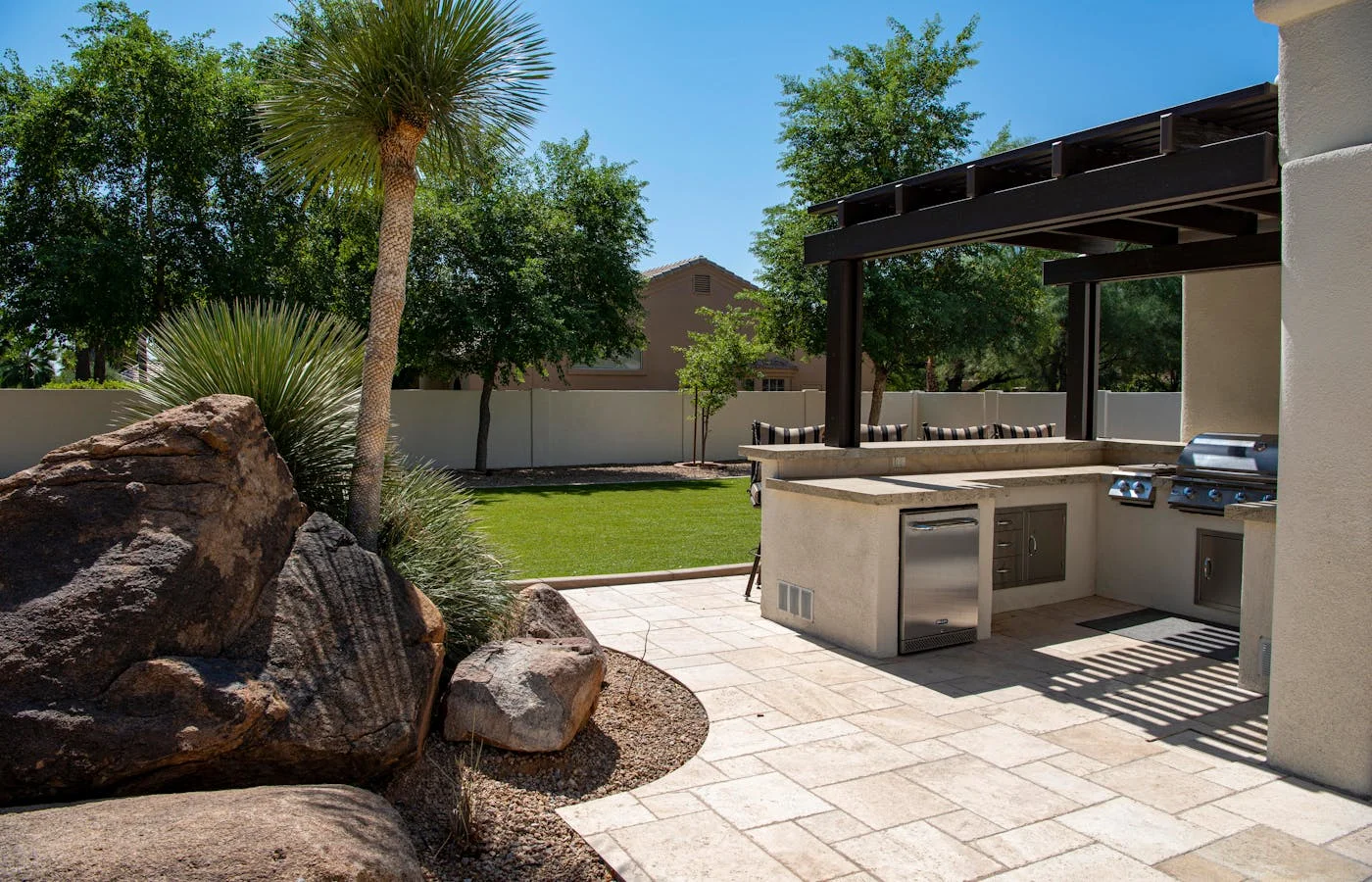
Indiana's climate puts more stress on outdoor kitchens than most homeowners anticipate. Freeze-thaw cycles, summer humidity, and UV exposure all work against materials that weren't specified for four-season outdoor performance. The difference between an outdoor kitchen that lasts fifteen years and one that shows significant wear after two winters is almost entirely in the material selection and utility details — most of which are invisible once the structure is built.
What we cover:
Site planning · Foundation or paver base · Framing · Countertops · Appliance integration · Electrical · Gas lines · Finish work — built for Indiana's outdoor climate
Most projects begin with a site assessment to confirm available utility connections, drainage, grade, and how the outdoor kitchen will connect to the home and existing patio or deck. One remodeler handles the full build — utility coordination, foundation, structure, countertop, appliance installation, and finish all managed together so nothing leaks, sparks, or fails after the first season.
What Outdoor Kitchen Construction in Brownsburg Actually Includes
Building an outdoor kitchen in Brownsburg requires a stable foundation, a weather-resistant structural frame, countertop surfaces rated for outdoor use, appliance integration, and properly permitted gas and electrical connections. In Indiana's climate, material selection and weatherproofing details matter more than in warmer regions — freeze-thaw cycles, summer humidity, and UV exposure all stress outdoor kitchen materials through a full Hendricks County seasonal cycle. The result is a functional cooking and entertaining space that holds up year after year without cracking, rusting, or requiring seasonal disassembly.
- A concrete paver or poured concrete base provides the stable, level foundation that outdoor kitchen framing requires
- Gas line and electrical rough-in must be permitted through the Town of Brownsburg or Hendricks County before any structure is built over them
- Countertop material must be rated for outdoor freeze-thaw exposure — not all stone and tile products hold up in Indiana winters
An outdoor kitchen is not a grill on a cart next to a mini fridge on a patio. A properly built outdoor kitchen requires a graded and compacted base, a structural frame built for outdoor exposure, weather-rated countertops, appliance cutouts sized to the specific units being installed, a permitted gas line rough-in, electrical circuits for outlets and lighting, and finish work that handles everything Indiana throws at it from May through March.
Brownsburg's climate is the design constraint that shapes every material and connection decision. Indiana freeze-thaw cycles crack poured countertops that aren't properly mixed and sealed for outdoor use. The same cycles expand and contract mortar joints in tile surfaces. Gas line connections at fittings that weren't properly supported and protected before the first winter develop leaks that aren't obvious until the second season. A remodeler who builds outdoor kitchens in Hendricks County selects every material and details every connection for four-season performance from the start.
A complete outdoor kitchen build typically includes:
- Site assessment — utility locations, grade, drainage, connection distance from the home
- Base preparation — concrete pavers or poured concrete slab graded and leveled for the structure
- Utility rough-in — gas line extension and electrical circuits permitted through the Town of Brownsburg or Hendricks County
- Rough-in inspections for gas and electrical before any structure is built over the connections
- Structural framing — steel stud, concrete block, or manufactured outdoor kitchen frame depending on design and load
- Countertop fabrication and installation — freeze-thaw rated material specified for the application
- Appliance cutouts and integration — grill, refrigerator, side burner, access doors
- Finish surfaces — tile, stucco, stone veneer, or composite panel depending on design direction
- Electrical finish — outlets, switch, and lighting fixtures rated for outdoor wet locations
- Gas appliance connection and pressure test
- Final inspection through Hendricks County
How Brownsburg Homeowners Choose the Right Outdoor Kitchen Layout and Materials
The layout conversation usually starts with a Pinterest image and ends with a site-specific design that accounts for where the utilities actually are, how the sun tracks across the backyard in the afternoon, and which direction the prevailing wind blows smoke toward the seating area. Brownsburg construction and renovation specialists translate those real-world constraints into a buildable plan that fits the property instead of forcing a generic design onto it.
Our starting point on every outdoor kitchen project:
Where can the gas and electrical connections reach without major trenching — and how will the smoke move relative to where people will be sitting?
In Brownsburg neighborhoods like Arbor Hills and Stone Gate, most backyards have natural gas available at the meter and electrical service accessible from the home. The connection distance from the house to the outdoor kitchen location determines how much utility rough-in is involved and whether the project requires trenching through an existing patio or lawn. A kitchen positioned to minimize connection runs is almost always the right call — not for cost alone, but because shorter gas runs have fewer fittings and fewer potential failure points.
Layout decisions worth making before design is finalized:
- Where is the grill positioned relative to prevailing wind? The grill should be positioned so wind blows smoke away from seating areas, not toward them.
- Where is the primary traffic path from the house to the kitchen? The layout should not require guests to walk around the cooking surface to reach food or seating.
- How many people typically cook at the same time? Two-cook kitchens need clear separation between prep zones and the grill.
- What appliances are non-negotiable? Grill, refrigerator, and side burner have different clearance, power, and gas requirements that affect the structural frame size.
- Will the kitchen be covered? A pergola or roof structure over the outdoor kitchen affects ventilation, material selection for the countertop, and whether the space can be used through Indiana's unpredictable spring and fall weather.
Material selection for Indiana's outdoor climate:
- Countertops: Porcelain tile rated for outdoor freeze-thaw exposure, sealed granite, or exterior-spec concrete countertops. Standard indoor porcelain, travertine, and unsealed natural stone will crack and lift in Hendricks County winters.
- Frame: Steel stud or concrete block for built-in structures. Manufactured aluminum outdoor kitchen frames for modular approaches. Wood framing is not appropriate for Brownsburg's outdoor humidity range.
- Finish surfaces: Outdoor-rated porcelain tile, natural stone veneer sealed for outdoor exposure, or fiber cement panel. Standard interior tile or unsealed stone on vertical surfaces will show moisture damage within a few seasons.
What to Settle Before Outdoor Kitchen Construction Begins in Brownsburg
The most expensive outdoor kitchen scheduling problem in Brownsburg is a structure built before gas and electrical rough-in is permitted and inspected. Inspectors need to see utility connections before they are covered by the structure. A contractor who installs gas and electrical connections without permits and then builds over them creates a situation where partial demolition is required to satisfy an inspection that should have happened first.
The sequence that prevents this:
Gas and electrical rough-in permitted and inspected → structure built over the confirmed connections. In that order. No exceptions.
Gas line extensions and electrical circuits for outdoor kitchens require permits through the Town of Brownsburg or Hendricks County Building Department. The permit process for outdoor utility work in Hendricks County is straightforward when planned in advance and becomes expensive when addressed after the structure is already built over the connections.
What to have settled before construction begins:
- Gas connection location confirmed — where the line runs from the meter to the kitchen site, and whether the existing service pressure supports the appliance load
- Electrical connection location confirmed — distance from the panel, amperage available, and whether a subpanel at the kitchen site makes sense for the appliance configuration
- Permit applications submitted for gas and electrical work before any base preparation begins
- Appliances selected and specifications confirmed — frame sizes, cutout dimensions, and BTU requirements all affect the structural design
- HOA approval if the neighborhood requires it — some Brownsburg HOAs have rules on outdoor structure size, placement, and finish materials
- Indiana 811 utility locate completed if any trenching is required for gas or electrical runs through the yard
- Countertop material selected — fabrication lead times run two to four weeks for most materials; the countertop order should be placed before structural framing is complete so both arrive on the same timeline
What Happens During an Outdoor Kitchen Build in Brownsburg
Most Brownsburg outdoor kitchen builds run two to four weeks from base preparation through final appliance connection. Utility permit lead times from Hendricks County and countertop fabrication schedules are the two variables most likely to affect the timeline. Scheduling the build to complete before Memorial Day gives Brownsburg homeowners a full Indiana outdoor season before the first fall frost arrives in October.
Homeowners in neighborhoods like Wynstone and Eagle Creek who want a clear picture of the construction sequence and backyard disruption get a week-by-week schedule before work begins.
Here's what a typical outdoor kitchen build looks like phase by phase:
| Phase | What's Happening |
|---|---|
| Week 1 | Site preparation — grade assessment, any drainage work, base excavation and compaction; utility trenching if required for gas or electrical runs |
| Weeks 1–2 | Utility rough-in — gas line extension and electrical circuits installed and inspected through Hendricks County before any structure covers the connections |
| Week 2 | Base installation — concrete pavers set and leveled, or poured concrete slab formed and poured; cure time for concrete base before structure is loaded |
| Weeks 2–3 | Structural framing — steel stud, concrete block, or manufactured frame built on the confirmed base; appliance cutouts framed to specification |
| Week 3 | Finish surfaces applied — tile, stone veneer, or panel installed on all visible exterior faces |
| Weeks 3–4 | Countertop installation — fabricated material delivered and set; any required edge detail completed |
| Week 4 | Appliance installation — grill, refrigerator, and accessories set and connected; electrical finish work — outlets and lighting installed and tested; gas connection made and pressure-tested; final inspection through Hendricks County |
On the Memorial Day timing target:
Brownsburg homeowners who want the outdoor kitchen ready for the start of outdoor entertaining season need to begin the planning and permit process in February or March. Permit lead times, countertop fabrication, and appliance delivery all have their own timelines that run in parallel — starting the process early is what gets the kitchen ready before the season opens.
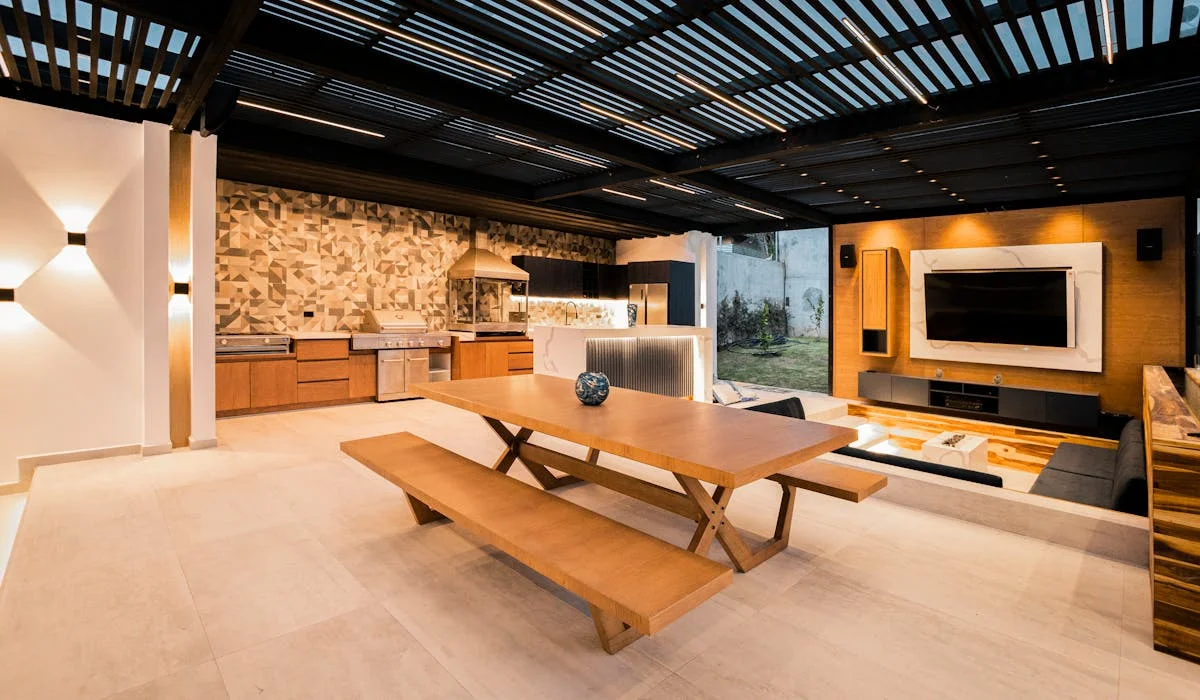
What Makes an Outdoor Kitchen Last Through Indiana Seasons in Brownsburg
The outdoor kitchens that fail in Brownsburg within a few years aren't built from bad materials — they're built from indoor materials specified for outdoor applications. The distinction is subtle at installation and catastrophic after the first Indiana winter.
What actually determines outdoor kitchen longevity in Hendricks County:
Base stability, countertop material specification, and utility connection weatherproofing. These three decisions determine whether the kitchen looks and functions the same after ten years as it did after ten days.
Base stability:
An outdoor kitchen frame sits on a base that goes through Indiana freeze-thaw cycles every winter. A base that shifts, heaves, or settles pulls the structure above it in the same direction — cracking countertops, opening tile joints, and binding appliance doors that were level when installed. Whether the base is concrete pavers or poured concrete, it needs to be properly compacted, properly graded for drainage, and properly thick for the load. We assess the existing surface before recommending a base approach — what works on one Brownsburg site may not be appropriate for another.
Countertop material specification:
This is the failure point that is most predictable and most commonly ignored. Porcelain tile that performs beautifully inside a Brownsburg home may have a water absorption rating that is too high for outdoor freeze-thaw exposure. When water infiltrates grout joints or tile face and freezes, it expands and forces the tile apart from the inside. The result is spalling, cracking, and lifting — typically visible after the second Indiana winter. Every countertop material we specify for outdoor use is confirmed rated for outdoor freeze-thaw exposure before it's ordered.
Utility connection weatherproofing:
Gas fittings and electrical conduit that are exposed to Indiana's outdoor humidity range need to be properly supported, properly sealed at penetrations, and rated for outdoor installation. A gas fitting that was not properly supported develops micro-movement through seasonal temperature changes — eventually enough to compromise the seal. Electrical conduit that isn't sealed at the point where it enters the structure allows moisture infiltration. Both are invisible at installation and obvious after a few seasons.
The Most Common Outdoor Kitchen Mistakes — and How to Avoid Them
Every mistake on this list is material or planning failure — not construction failure. They're visible within two to three seasons and significantly more expensive to correct after the structure is built than to prevent before it is.
The most common outdoor kitchen mistake in Brownsburg:
Using indoor-rated tile or natural stone on horizontal countertop surfaces. Many stone and porcelain tile products that perform perfectly inside a Brownsburg home are not rated for outdoor freeze-thaw exposure. They begin spalling, cracking, and lifting at grout joints after the first Indiana winter. By the second season, horizontal surfaces that looked finished at installation look like they need to be torn out and rebuilt. We specify only outdoor freeze-thaw rated countertop materials and seal every horizontal surface before the first season — without exception.
Other mistakes worth knowing before any outdoor kitchen project starts:
- Installing gas and electrical without permits — Gas line work requires a licensed contractor and permit in Indiana regardless of homeowner skill level. Electrical circuits for outdoor use require permits and inspection through Hendricks County. Unpermitted utility connections create safety risk, void appliance warranties, and generate a disclosure obligation at resale. The permit process is planned into the project from day one.
- Building on an improperly graded or unstable base — A base that doesn't drain or isn't compacted to support the structural load will shift after the first winter. The cracking, binding, and misalignment that follows requires significant remediation that the base preparation cost would have prevented.
- Positioning the grill without checking wind direction — An outdoor kitchen positioned without regard to prevailing wind direction blows smoke toward the house and seating area every time the grill is running. This is a planning decision that cannot be corrected after the structure is built. We assess wind direction at the site before finalizing the grill position.
- Selecting appliances after the structure is framed — Appliance cutout dimensions, clearances, and utility rough-in locations are fixed once the frame is built. Changing the appliance selection after framing means modifying the structure. Appliances need to be specified before framing begins — not chosen from a showroom after the kitchen is already built.
- Not ordering countertops before structural framing is complete — Countertop fabrication runs two to four weeks after final dimensions are confirmed. A structure that is complete and waiting on countertops is a structure the homeowner can't use yet. Placing the countertop order when the frame is near completion rather than after it's done keeps both on the same timeline.