
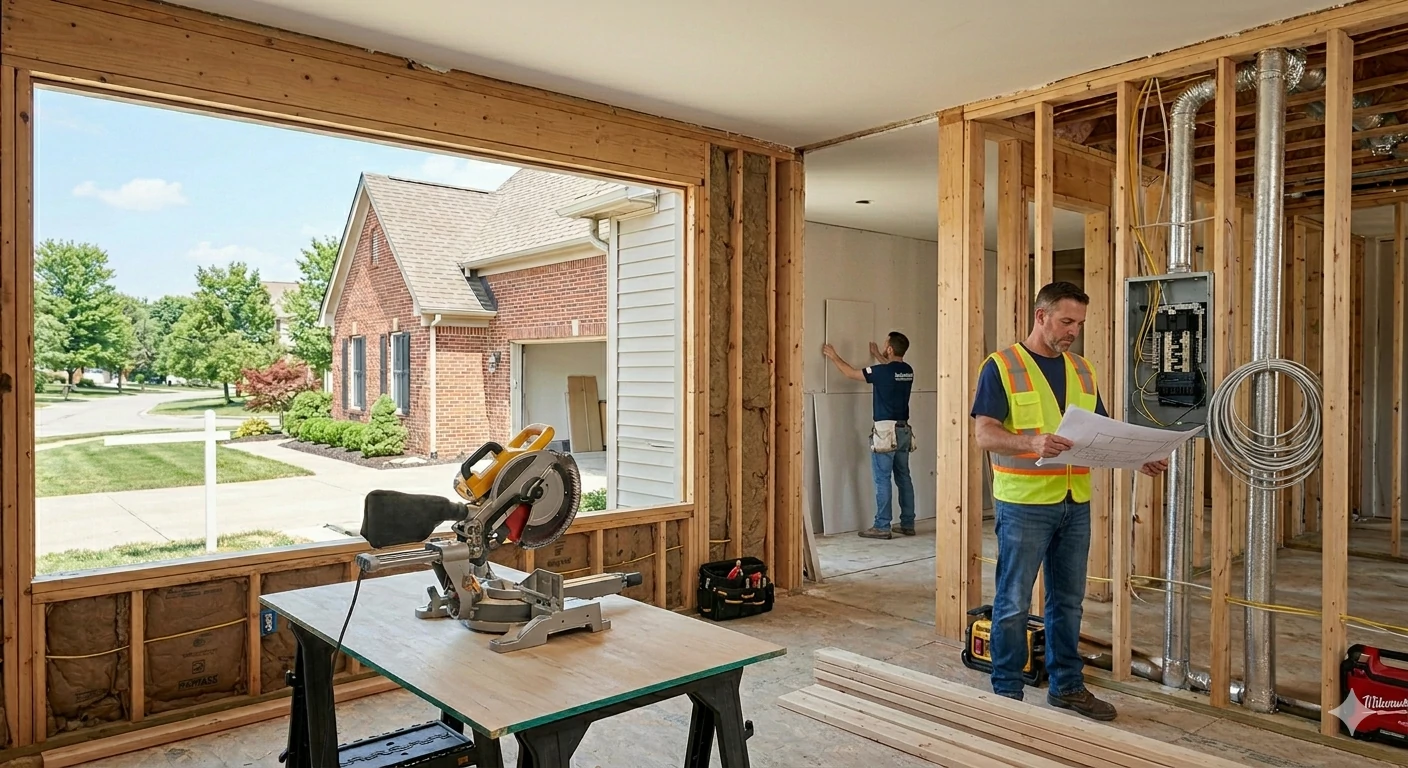
What Custom Home Construction Is and How It Differs From Production Building
The difference between a custom home and a production home is simple. A Brownsburg home builder working in production subdivisions sets the floor plans, finishes, and features, and the buyer selects from preset options. In a custom build, the homeowner makes those decisions — selecting the lot, working with a designer or architect on the floor plan, and choosing every finish level.
That difference matters more to some families than others. For the family that needs a specific layout — a first-floor primary suite, a larger kitchen, a dedicated home office — and cannot find it in any production home in Brownsburg, a custom build is not a luxury. It is the practical solution.
Brownsburg's rapid residential growth has brought a lot of new production housing to the market — Arbor Grove, Wynbrooke, and others. Available lots for fully custom builds still exist, but they are not in the same places production homes go up. Brown Township and the edges of established Hendricks County neighborhoods are where we see most custom lot availability. Knowing where to look is part of what a local builder brings.
Our honest take:
Custom home construction is not for every buyer or every timeline. It takes longer than buying existing. It requires more decisions. But for the family that knows what they want and cannot find it — and there are a lot of those families in Brownsburg right now — custom is the way to get it.
What sets a custom home apart:
- Your lot — not a builder's inventory
- Your floor plan — designed around how your family actually lives, not around a builder's construction efficiency
- Your finish level — entry-level to luxury, decided by you
- Your timeline — set around your needs, not a builder's sales calendar
- Your features — home office, mudroom, pantry, primary suite, whatever matters most to your household
How Custom Home Construction Works — All 7 Stages Explained
Here is how a custom home build works in Brownsburg from the first conversation to the day you get your keys:
- Meet with a licensed Brownsburg builder to define your goals, lot options, and project scope — this conversation shapes everything that follows
- Select your lot and complete a site survey, soil test, and utility assessment — what is in the ground and what is available at the street determines what the build actually requires
- Work with a designer or architect to finalize your floor plan and structural drawings — this is the stage where decisions made on paper are less expensive to change than decisions made during framing
- Your builder pulls permits from Hendricks County and schedules all required inspections — you do not manage either one
- Site prep begins — clearing, grading, excavation, and foundation work come first, before anything visible happens above grade
- Framing, mechanical rough-ins, insulation, and interior finishes follow in sequence — each phase inspected before the next one begins
- Final inspections are completed, the punch list is closed, and you receive your certificate of occupancy
Hendricks County permit timelines, soil conditions across Brownsburg's varied terrain, and Indiana's seasonal weather windows all affect how long each stage takes. The stage that surprises most first-time custom home builders is Stage 2 — the site work and soil assessment. What is in the ground under a Brownsburg lot can change the foundation requirement and the schedule before a single wall is framed.
What Drives the Scope and Cost of a Custom Home in Brownsburg
What we tell every Brownsburg family early in the process:
The single biggest cost decision you make in a custom home is the finish level. A simple floor plan built to a high finish level costs more than a complex floor plan built to a moderate one. Know your priorities before you finalize the plan.
The biggest cost drivers in a Brownsburg custom home:
- Foundation type and site conditions — Brownsburg's clay-heavy soil sometimes requires more foundation work than a sandier lot elsewhere in Hendricks County. Indiana's frost line depth requirements affect footing depth on every build. Site prep costs vary based on how much clearing, grading, and fill work the lot requires.
- Square footage — More square footage means more of everything. More framing, more mechanical, more drywall, more flooring. A larger home is not just proportionally more expensive — it is more expensive per square foot to finish to the same level because more trim, more paint, and more detail work scales with room count.
- Mechanical systems — HVAC, plumbing, and electrical are significant costs in any home. A custom home that includes radiant floor heating, a whole-house generator, or a smart home electrical system costs more than one that does not. These decisions need to be made before rough-in, not after.
- Kitchen and bath finishes — These are the rooms where finish level affects cost more than anywhere else. The difference between a functional kitchen and a high-end kitchen is significant. So is the difference between a standard master bath and a spa bath. Know what level you want before these rooms are framed.
- Lot costs and local fees — Brownsburg lot prices, Hendricks County impact fees, and Indiana utility connection costs are real scope variables that affect every custom build here. A local builder accounts for all of these from the start — not as surprises that surface after the contract is signed.
Is a Custom Built Home Worth It Compared to Buying Existing
This is the question most Brownsburg families sit with longest. And the honest answer is: it depends on what you need.
We are not going to tell every family to build custom. For some families, an existing home in a Brownsburg neighborhood they know is the right answer. Faster move-in. Known neighborhood. Less decision fatigue. Those are real advantages.
Custom makes more sense when:
- The floor plan you need does not exist in Brownsburg's current resale inventory — and the market is competitive enough that the right home may not come available on your timeline
- Energy efficiency is a priority — a custom home built to current code with the systems you specify will outperform most resale homes in Brownsburg from the 1990s and early 2000s
- You have specific features that production homes do not offer — a dedicated mudroom entry, a larger garage, a primary suite on the main floor, a built-in home office
- You want to be in a specific location where existing homes rarely come up for sale
Buying existing makes more sense when:
- Your timeline requires a move-in within six months
- You are comfortable modifying an existing home to fit your needs rather than building from scratch
- The neighborhoods you want have strong resale inventory in your price range
Brownsburg's competitive resale market and limited existing inventory in certain price ranges have pushed more Hendricks County families toward custom builds as a practical alternative — not just a luxury choice for buyers without budget constraints. We see this shift clearly in the conversations we have been having over the past few years.
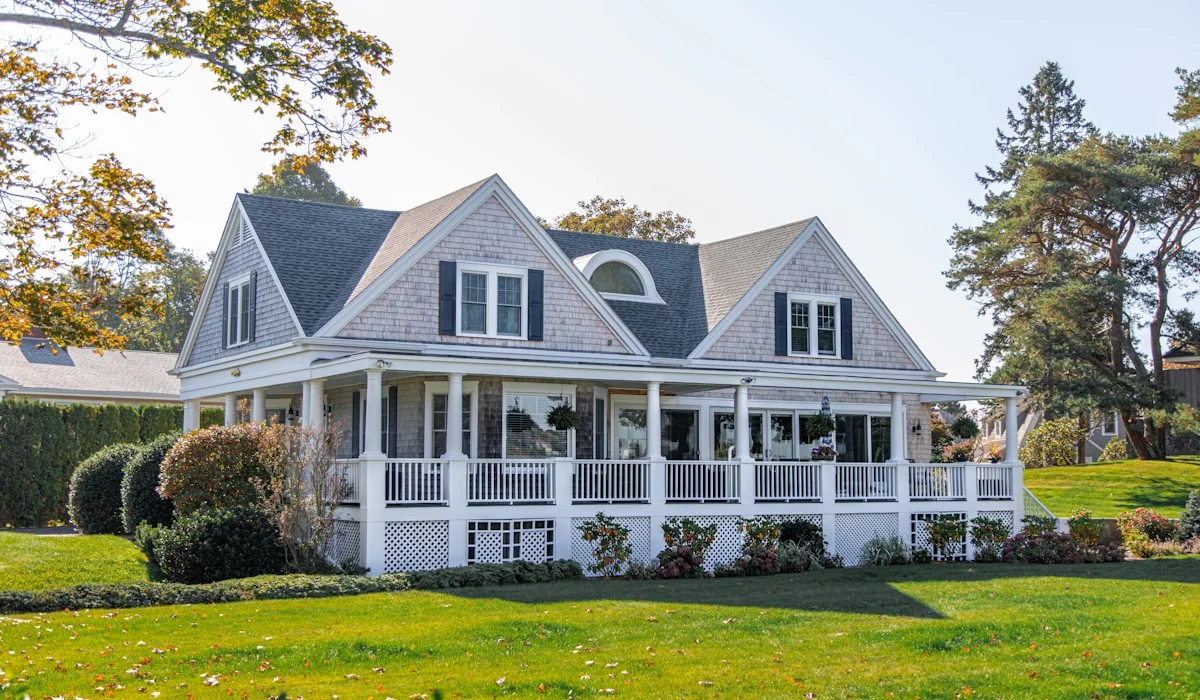
The Most Expensive Parts of Building a Custom Home — and How to Plan for Them
Knowing where the money goes before you finalize scope protects you from mid-build surprises. Here is where custom home budgets in Brownsburg actually concentrate.
Foundation and site work — Indiana's frost line depth requirements mean footings go deep. Brownsburg's clay soil conditions can add site prep expense compared to sandier lots in other parts of Hendricks County. If the lot has significant grade change, trees to remove, or a high water table, those conditions affect cost before a single wall is framed.
Mechanical systems — HVAC, plumbing, and electrical together represent a significant share of any custom home budget. This is also where upgrades add cost quickly — a second HVAC zone, a tankless water heater, upgraded electrical service for an EV charger or whole-house generator. Decide what you want in mechanical before rough-in begins. Adding it after is always more expensive.
Kitchen — The kitchen is where most custom home budgets stretch. Cabinets, countertops, appliances, and fixtures all compound. A high-end kitchen can cost more than the entire exterior finish of the home. Know what level you want and budget it separately from the rest of the house.
Primary bath — Same principle as the kitchen. Tile, glass enclosure, double vanity, freestanding tub, heated floor — each is a separate decision that adds to the total. Decide the finish level before the room is framed, not after.
Roofing — Complex rooflines cost more than simple ones. Every valley, hip, and intersecting roofline adds framing, flashing, and roofing material cost. A simple gable roof on a rectangular footprint is the most cost-efficient roof structure. A custom home with a dramatic roofline pays for it in every trade that touches the roof.
Our advice for early budget planning:
Identify your non-negotiables first — the three to five things your home must have — and budget those at the quality level you actually want. Everything else gets fit around them. Trying to budget everything at the same level and then cutting across the board when the number is too high produces a home where nothing is quite right.
How to Prepare to Build a Custom Home in Brownsburg
The families who get the most out of the first builder meeting are the ones who did some thinking before they arrived. Not a complete plan — just enough to make the conversation productive.
What slows down the first meeting:
Arriving without a lot in mind, without a financing conversation started, and without any clarity on what the must-haves are. Having even a rough answer to those three things makes the first meeting significantly more useful.
What to have ready before you meet with a builder:
- Lot information or preferred area — Do you own a lot? Are you looking in a specific part of Brownsburg or a specific school district? Do you want to be near certain neighborhoods?
- Financing pre-approval or a sense of budget range — Construction loans work differently from traditional mortgages; starting that conversation with a lender before the builder meeting avoids surprises about what you can build
- A rough square footage target — Not an exact number, but a range. A 2,000 sq ft home and a 3,500 sq ft home are different projects in scope, timeline, and cost.
- A must-have list — The three to five things your home has to have. Primary suite on the main floor. Four bedrooms. Three-car garage. Dedicated home office. Whatever they are, write them down.
- HOA or zoning research — If you have a lot in mind, confirm whether it is in a Brownsburg or Brown Township zoning district and whether there is an HOA with design requirements
Brownsburg and Brown Township zoning rules and Hendricks County lot requirements vary by location. A local licensed builder navigates all of this before a single shovel hits the ground. But the earlier you bring the lot into the conversation, the earlier those variables get factored into the plan.