
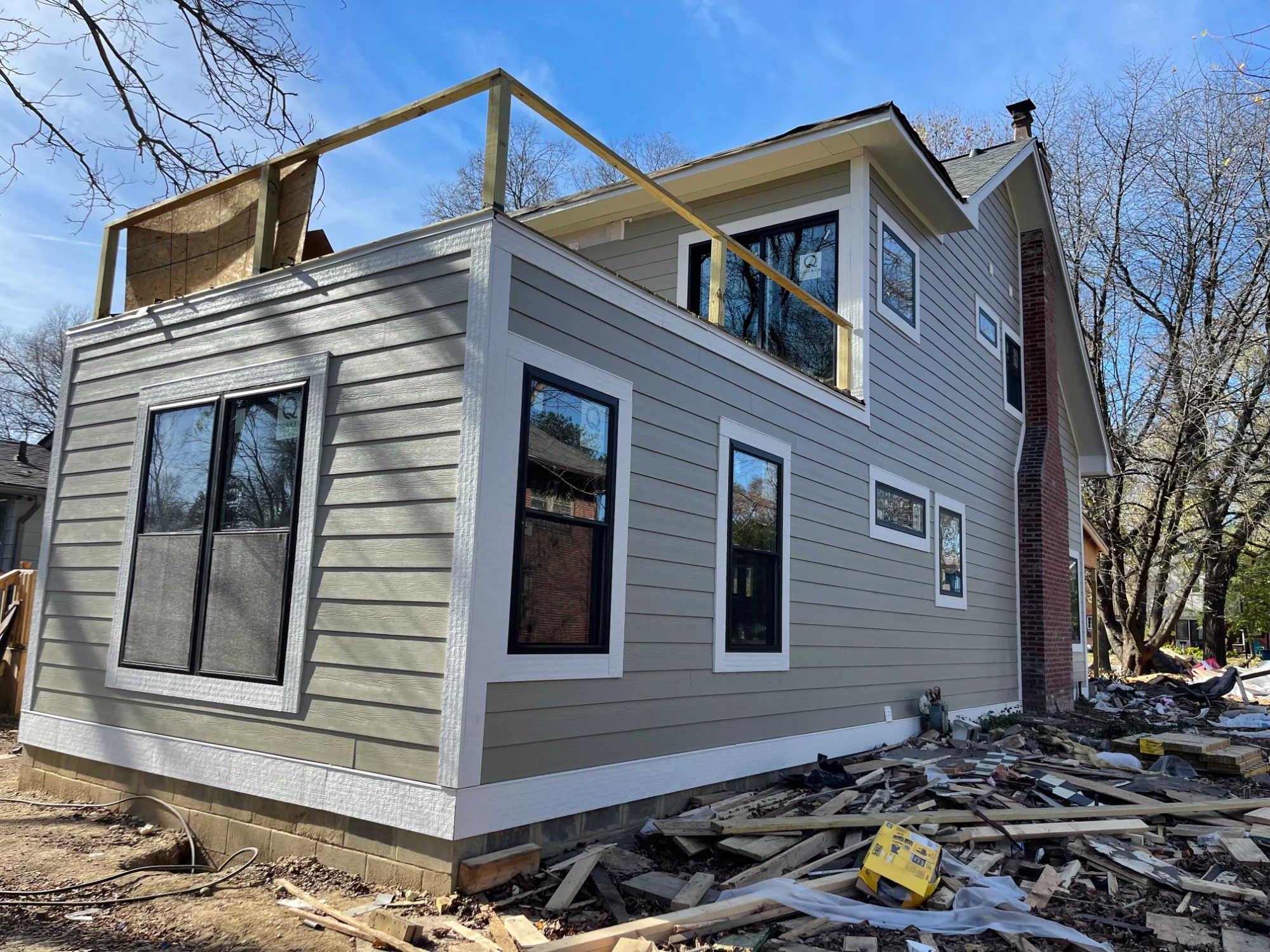
In Brownsburg, the decision to add on instead of move is one we see more families make every year. The neighborhood is right. The schools are right. The commute works. What is not right is the square footage — or more specifically, the way the square footage is arranged. A family with three kids sharing two bedrooms and one parent now working from home does not have a space problem that moving solves. They have a layout problem that an addition fixes.
We have managed a lot of additions in this area. The families who end up happiest are the ones who were clear about what they needed the new space to do — not just how many square feet they wanted. A room addition designed around how your household actually lives works better than one designed around a number.
What Home Addition Construction Covers for Brownsburg Homeowners
Here is how home addition construction works in Brownsburg from the first meeting to the final walkthrough:
- Meet with a licensed Brownsburg remodeler to define addition type, size, and how it connects to your existing home
- Designer or architect produces drawings; remodeler reviews structural connection points and load path
- Hendricks County building permit is pulled; HOA approval obtained if required
- Site is prepared — excavation, footing, and foundation or slab poured for the new addition footprint
- Framing goes up and roof is tied into the existing structure
- Mechanical rough-ins — electrical, plumbing, and HVAC extended into the new space
- Insulation, drywall, finishes, and final inspection complete the addition
An addition is not a renovation. A renovation updates what already exists. Brownsburg new home construction experts treat additions as new square footage that did not previously exist, which changes permit requirements, structural design, and project sequencing. That distinction matters because additions must be engineered and built as structural expansions, not interior updates.
Every addition requires a Hendricks County building permit, foundation work tied to Indiana's frost depth, structural framing that connects correctly to the existing home, and mechanical systems extended from the house into the new space. There is no shortcut to any of those steps. The ones that get skipped become the problems that show up at resale.
Brownsburg's established neighborhoods — Timber Creek, Country Brook, and Eagle Pines — have a high concentration of homes built in the 1990s and early 2000s where families are outgrowing original floor plans. Addition construction is one of the most active project categories in this area, and we know what those homes need structurally because we have worked in them.
Home addition construction in Brownsburg covers:
- Single-story room additions — new bedrooms, home offices, family rooms, or primary suites added to the ground-floor footprint
- Second-story additions — living space added above existing rooms without expanding the foundation footprint
- Attached garage additions — enclosed parking added to the home's footprint
- Sunrooms and screen porches — three-season or four-season spaces with their own foundation and roof structure
- In-law suites — attached living quarters with a separate entry, bathroom, and sleeping area
- Bump-outs — smaller expansions of an existing room that add a few feet of depth without a full addition footprint
Build Out or Build Up — Which Addition Type Makes Sense for Your Brownsburg Home
This is the decision most Brownsburg addition projects start with. And the answer is usually driven by the lot — not by preference.
Building out — expanding the ground-floor footprint — requires new foundation work, new exterior walls on three sides, and a new roof or roofline connection to the existing structure. It uses lot coverage. In Brownsburg, that matters, because many subdivision lots have HOA rules and local zoning requirements that limit how much of the lot a structure can cover.
Building up — adding a second story above existing living space — avoids new foundation costs and does not add lot coverage. It does add structural complexity: the existing walls and foundation need to carry the additional load, the roof comes off the existing structure to allow framing of the second floor, and the staircase has to come from somewhere in the existing floor plan.
Our honest take:
In neighborhoods like Wynbrooke and Arbor Grove where lots are on the smaller side, building up is often the only practical way to add significant square footage. The lot simply does not have room for a substantial ground-floor addition once setback requirements are applied on all sides. We check the setbacks and lot coverage rules for your specific property before any design work begins — not after a plan is already drawn.
When building out makes more sense:
- The lot has room — setbacks are met comfortably and lot coverage headroom exists
- The addition is one room — a primary suite, a home office, a mudroom — where a single-story expansion is the most direct path
- The family does not want stairs to access the new space
- The existing foundation and walls cannot carry the load of a second story without significant reinforcement
When building up makes more sense:
- The lot is constrained — setbacks or coverage limits make a meaningful ground-floor addition impossible
- The family needs multiple rooms — a second-story addition can add two or three bedrooms at once
- Foundation cost savings justify the structural complexity of the second-floor build
How Home Addition Construction Works From Plan to Finished Space
Most families who have not been through an addition before do not fully understand how long the pre-construction phase is — and how much of the project is decided before a single board is cut. That is not a warning. It is just the nature of building something that has to connect to an existing structure, pass multiple inspections, and hold up for decades.
Here is what each stage looks like:
- Design and structural review — floor plan developed, structural connection points confirmed, load path from the new addition through the existing home to the foundation assessed and documented
- Permit application — engineered drawings submitted to Hendricks County with a site plan showing setbacks; plan for three to six weeks of review
- HOA approval — required in most Brownsburg subdivisions for exterior additions; architectural review process varies by HOA but almost always requires drawings and material specifications
- Site preparation — utility locate, excavation, and foundation work; footings dug to Indiana frost depth and inspected before concrete is poured
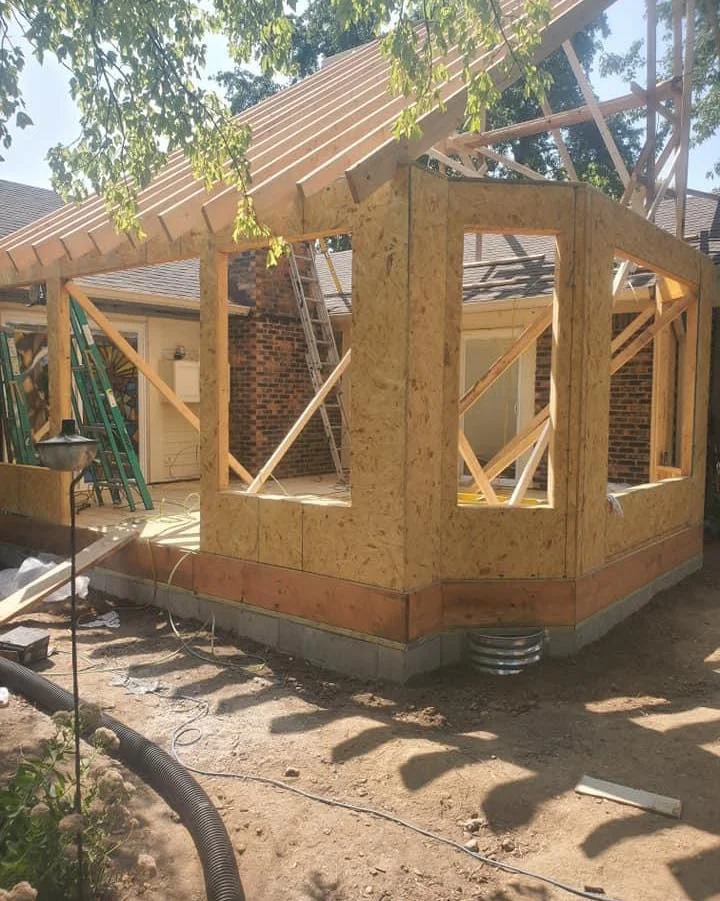
- Framing — walls, floor system, and roof structure built; the roof tie-in to the existing structure is the most critical framing phase and the one most likely to involve weather exposure risk
- Framing inspection — Hendricks County inspects before mechanical rough-in begins
- Mechanical rough-in — electrical, plumbing, and HVAC extended from the existing home into the new space; each trade inspected separately
- Insulation — inspected before drywall is hung
- Drywall, finishes, flooring, and trim
- Final inspection and certificate of occupancy
Hendricks County requires inspections at foundation, framing, mechanical rough-in, insulation, and final completion. A licensed Brownsburg remodeler schedules every checkpoint and ensures no stage is skipped. The most common cause of project delays on local addition work is calling for an inspection before the work is ready — which pushes the schedule by days — or missing the inspection window entirely.
Common Home Addition Mistakes That Cost Brownsburg Homeowners Time and Money
The most expensive mistake in Brownsburg addition projects:
Skipping permits. Unpermitted structural additions show up immediately during Hendricks County title searches. Buyers' lenders — FHA, VA, and most conventional lenders — will not finance homes with unpermitted structural work. The seller is required to disclose it. Remediation requires opening the structure, obtaining permits retroactively, and passing inspections that should have been completed during construction. The cost of fixing this is significantly higher than the permit would have been. We pull every required permit. Every time.
Other mistakes worth knowing before your project begins:
- Poor structural connection to the existing home — An addition that is framed alongside the existing structure without a proper structural connection will move independently. Floors will be uneven at the threshold. Drywall will crack at the joint. The roof connection will develop leaks. The connection detail is the most important structural decision in an addition project.
- Undersized footings for Indiana's frost depth — Footings that do not reach below Indiana's frost line heave during freeze-thaw cycles. An addition that heaves pulls away from the existing structure. The gap widens with every winter. There is no cosmetic fix for this. The footings have to come out and be reset.
- Not extending HVAC capacity — An addition that is not served by the existing HVAC system, or is served by a system that was already at capacity, will be uncomfortable. The existing system runs harder to compensate, energy bills rise, and the addition never reaches the temperature the thermostat is set to. HVAC extension capacity needs to be assessed during design — not discovered after the walls are closed.
- Mismatched exterior materials — Siding, brick, roofing, and trim that does not match the existing home reads as an addition from the street. Matching exterior materials is part of the design conversation, not an afterthought on material delivery day.
- Choosing scope before confirming budget — An addition that is designed to one size and then value-engineered down after the contract is signed creates an inferior result. Know your budget before design begins. Design to what the budget supports.
What Drives the Scope and Size of a Home Addition in Brownsburg
The conversation we have with every Brownsburg addition client before design begins:
What are the setbacks on your lot? What is the lot coverage maximum? What does your HOA require for architectural review? These three questions determine what is possible before we discuss what is preferred.
What shapes buildable addition scope in Brownsburg:
- Lot setbacks — minimum required distances from the structure to each property line; front, rear, and side setbacks all apply; Brown Township and Brownsburg town limits have different setback requirements and the rules governing your specific lot need to be confirmed before design
- Lot coverage maximum — many Brownsburg HOAs and zoning districts limit how much of the lot can be covered by structure; an addition that pushes the home past the coverage maximum cannot be permitted regardless of how it is designed
- Existing structural capacity — for second-story additions, the existing foundation and first-floor walls need to carry the additional load; this requires structural assessment and sometimes reinforcement before framing begins
- HVAC capacity — the existing mechanical system may need to be upsized or supplemented to serve the addition; this is a cost that belongs in the project scope from the start
- Floor plan connection — the new space has to connect to the existing home in a way that makes functional sense; the connection point affects where doors, corridors, and circulation paths land, which shapes the entire addition layout
How to Prepare Your Brownsburg Home for Addition Construction
The step most Brownsburg homeowners skip:
Indiana 811 utility locate. Established yards in neighborhoods like Quail Creek and Stephens Creek frequently have buried irrigation lines, invisible pet fencing systems, and landscape lighting utilities. These are not marked on any map. Hitting one during foundation excavation delays the project and creates a repair cost. We submit the locate request before any excavation is scheduled. Always.
What to have done before construction begins:
- Indiana 811 utility locate completed — we manage this as part of project setup; confirm it is done before the first shovel goes in
- HOA approval confirmed in hand — do not assume approval will come quickly; some Brownsburg HOAs have monthly review cycles and a submission that misses the cycle waits a full month
- Work zone cleared inside and outside — furniture, personal items, and landscaping removed from the addition footprint and the path the crew needs to access it
- Temporary living plan if affected areas include kitchen or main living spaces — framing is loud and disruptive; knowing in advance which days are the most active helps the household plan around it
- Construction access confirmed — gate openings, overhead obstacles, and soft lawn areas that cannot support equipment all need to be identified before the first delivery arrives