
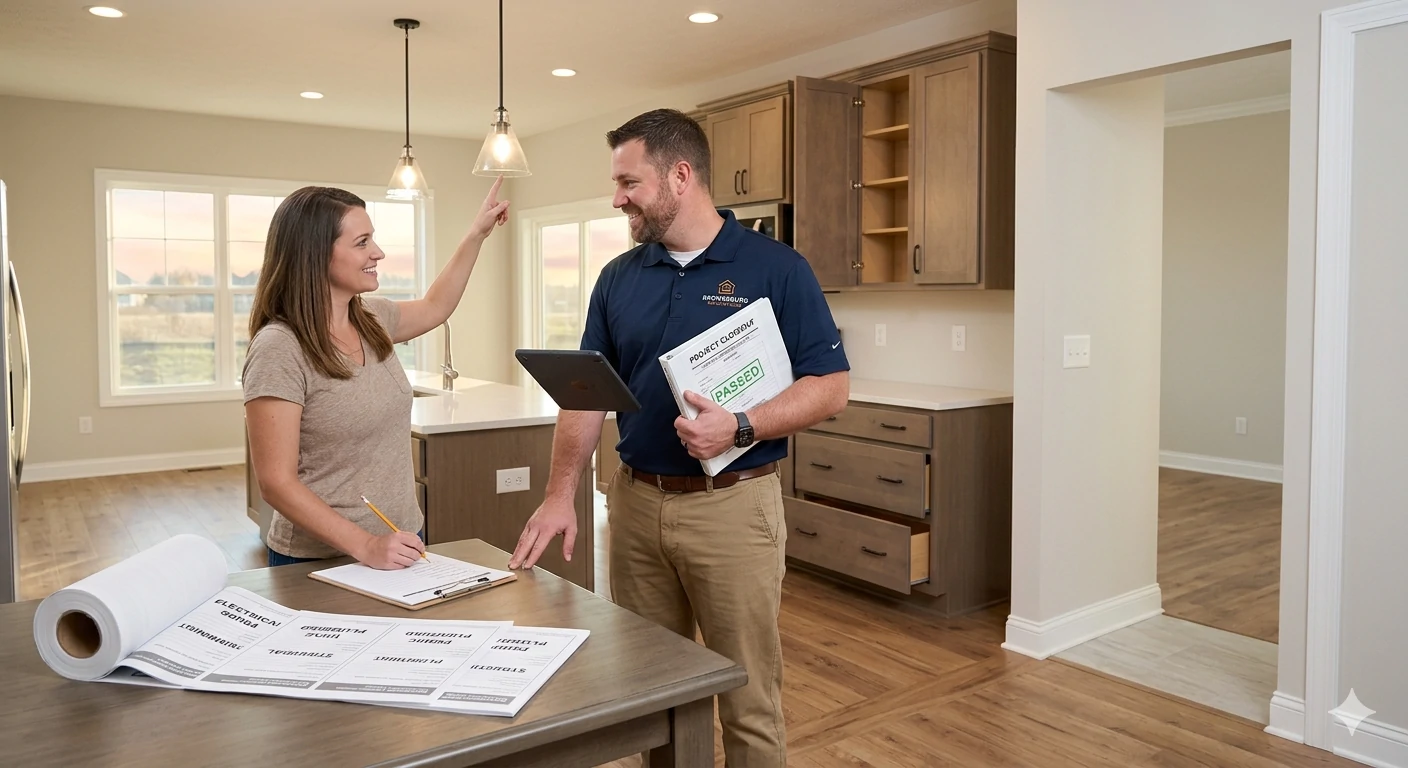
In Brownsburg, building new and buying existing are close in total cost — but they deliver very different outcomes. Buying existing is faster. Building new gives you control over layout, energy systems, and finishes from day one. The right choice depends on lot availability, your timeline, and what existing inventory can or cannot offer your family.
Key tradeoffs to weigh:
Building new takes 9 to 14 months; buying existing can close in 30 to 60 days · New builds carry no deferred maintenance; existing homes may need updates right away · Brownsburg's tight resale market means fewer existing options at competitive price points
What New Home Building Involves for Brownsburg Families
Building a new home is not just construction. A home builder in Brownsburg IN works through months of decisions before ground is ever broken — lot selection, design development, permit review, and material selections that are finalized well before framing begins.
Most families who have never built before think the process starts when construction starts. It does not. It starts when you identify a lot. Everything that follows flows from what that lot allows — its size, its setbacks, its soil conditions, its utility access, and whether it is in Brownsburg's town limits or Brown Township.
Brownsburg's active development along the US-136 and Ronald Reagan Parkway corridors means buildable lots are available — but they move quickly. A local licensed builder knows which parcels in Hendricks County are ready for immediate development and which ones have conditions that will complicate the build. That local knowledge is one of the most useful things a builder brings to the conversation before you have spent a dollar.
New home building in Brownsburg involves:
- Lot acquisition — finding a lot, assessing it for soil conditions, utility access, and setback compliance, and confirming what can be built on it before you buy it
- Design — working with a designer or architect on a floor plan built around how your family lives, not around a builder's cost efficiency
- Permitting — engineered drawings submitted to Hendricks County, permit issued before any ground is broken
- Site prep — clearing, grading, utility connections, and excavation before framing begins
- Framing, mechanical rough-ins, insulation, and interior finishes — each phase inspected before the next begins
- Final inspection and certificate of occupancy before you move in
Is It Cheaper to Build or Buy a Home in Brownsburg
This is the question most Brownsburg families ask first — and the honest answer is that the gap between building and buying has gotten smaller in recent years.
Hendricks County's competitive resale market has pushed existing home prices higher. Homes that would have been clearly less expensive to buy than to build five years ago are now in a much closer range. That has made new construction a more financially comparable option for more Brownsburg families than it used to be.
What we tell families asking this question:
The cost comparison is real, but it is not the only comparison that matters. A home you built to exactly how your family lives — with the layout you want, the energy systems you specified, and no immediate renovation needs — is a different product than one you bought and then modified. The right financial comparison includes the cost of changes you would make to an existing home in the first two years.
Where building new has a financial advantage:
- No deferred maintenance — everything is new; no HVAC replacement in year three, no roof in year five
- Energy efficiency — a home built to current Indiana energy code outperforms most Brownsburg resale homes from the 1990s and early 2000s on heating and cooling costs
- No renovation surprises — what you see is what you built; no water damage behind walls, no outdated electrical to update
Where buying existing has a financial advantage:
- No construction loan interest during the build period
- Faster move-in — 30 to 60 days versus 9 to 14 months
- Known neighborhood — you see the street, the neighbors, and the lot conditions before you commit
How New Home Building Works — From Lot to Move-In
Here is how a new home build works in Brownsburg from the first conversation to the day you get your keys:
- Lot selection — identify a parcel, assess it for soil, utilities, setbacks, and zoning before purchasing
- Design and engineering — floor plan developed and structural drawings prepared for permit submission
- Permit application — submitted to Hendricks County Building Department with engineered drawings and site plan; plan for four to six weeks of review time
- Site preparation — clearing, grading, utility connections, and excavation
- Foundation — footings at Indiana frost depth, inspected before concrete is poured
- Framing — walls, floor systems, and roof structure built and inspected before mechanical rough-in begins
- Mechanical rough-in — electrical, plumbing, and HVAC installed and inspected before insulation goes in
- Insulation — inspected before drywall is hung
- Drywall, interior finishes, flooring, cabinets, and trim
- Final inspection through Hendricks County and certificate of occupancy before you move in
Hendricks County building inspections happen at multiple stages — framing, mechanical rough-in, insulation, and final. A licensed Brownsburg builder schedules and manages every checkpoint. You do not track inspections separately or coordinate with the building department on your own.
Build Up or Build Out — Which Makes More Sense for Your Brownsburg Lot
This is a question that comes down to three things: your lot size, your setback requirements, and your budget for added square footage.
Building out — a single-story footprint that spreads across the lot — requires more foundation, more roofline, and more exterior wall per square foot of living space than a two-story design. It also requires more lot coverage, which matters on smaller parcels.
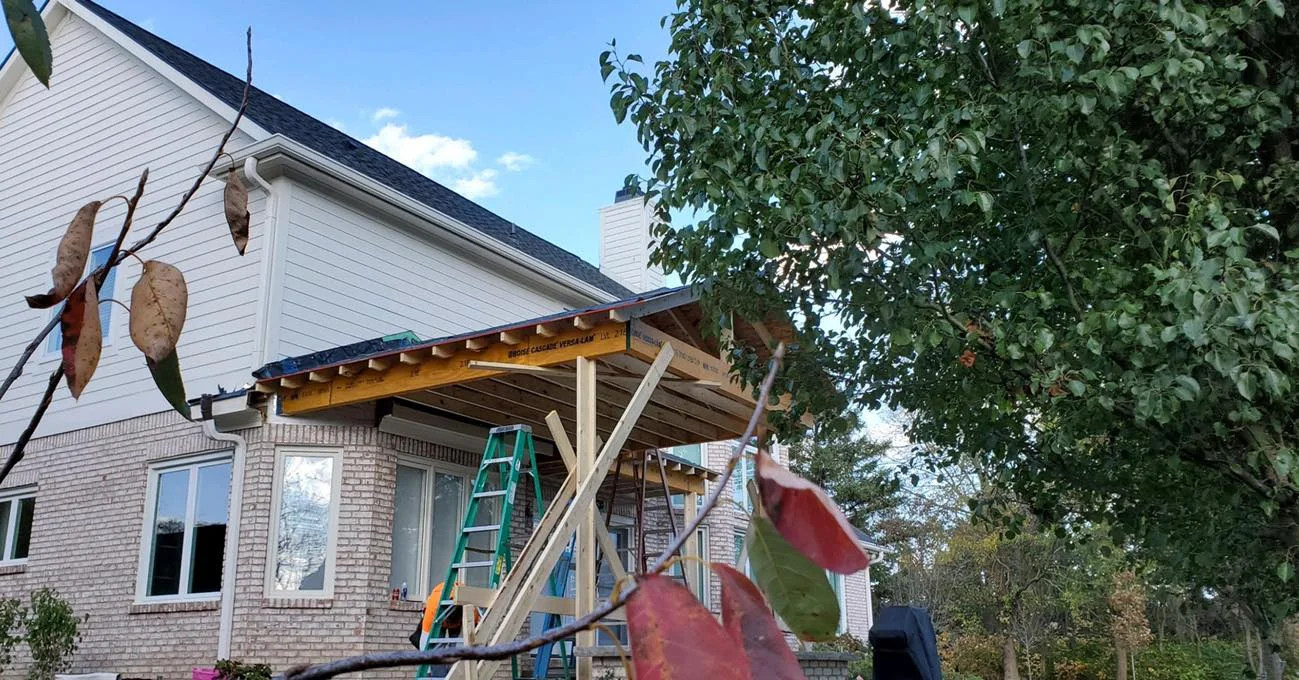
Building up — a two-story design — adds square footage on the second floor without expanding the foundation footprint. It typically costs less per added square foot than building out, because the second floor shares the same roof and foundation. It does add a staircase and some structural complexity, but for most lots in Brownsburg, it is the more efficient path.
Our honest take:
In most Brownsburg subdivisions, lot setback and coverage requirements make two-story the smarter path on any lot under a certain size. A ranch home on a tight suburban lot often bumps up against setback limits before it can reach the square footage the family needs. A two-story design gets there without those constraints.
Many newer Brownsburg subdivisions have minimum setbacks that limit how far a footprint can spread toward the property lines. Knowing those setbacks before you design is essential — designing a floor plan that cannot be permitted on your specific lot is wasted work.
Key Decisions That Shape Your New Home Build in Brownsburg
Not every decision in a new home build has the same weight. Some decisions lock in early and affect everything that follows. Others can wait until later in the process without creating problems. Knowing the difference saves time and prevents expensive mid-build changes.
Decisions that come first and cannot easily be changed later:
- Lot selection — every design, structural, and mechanical decision flows from the lot
- Floor plan — the layout determines the foundation footprint, the structural framing, and the mechanical rough-in locations; changing the floor plan after framing begins means tearing out work
- Foundation type — determined by lot conditions and building design; established before construction starts
- HVAC system type and zoning — rough-in is set during framing; changing the system after rough-in means reopening walls
- Window locations and sizes — established in framing; changing them later means structural modification
Decisions that come later and have more flexibility:
- Cabinet style and finish
- Countertop material
- Flooring type and color
- Plumbing fixture selection
- Interior paint colors
- Lighting fixtures
Indiana energy code requirements shape insulation values, window ratings, and HVAC sizing decisions early in the Brownsburg build process. A local builder incorporates these requirements into the plans before permits are submitted — not as a surprise during construction when the code-required spec differs from what was planned.
How to Get Ready to Build a New Home in Brownsburg
The families who get the most out of the first builder meeting are the ones who came with a few things already thought through. Not a complete plan — just enough to make the conversation go somewhere useful.
What wastes time in a first meeting:
Not knowing whether you want a one-story or two-story home, not having had any conversation with a lender, and not having any clarity on what the home must have versus what would be nice to have. The first meeting works best when those three things have at least a rough answer.
What to have ready before your first builder conversation:
- Financing pre-approval or a budget range — construction loans work differently from traditional mortgages; starting that conversation with a lender before meeting with a builder avoids surprises about what you can actually build
- Lot options or preferred area — do you own a lot? Is there a part of Brownsburg or a specific school district you want? Do you need to be in town limits or is Brown Township okay?
- A rough square footage range — not an exact number, but a range; a 2,000 square foot home and a 3,500 square foot home are genuinely different projects
- A short must-have list — three to five things the home has to have; primary suite on the main floor, four bedrooms, three-car garage, dedicated home office — whatever they are, write them down
- HOA or zoning research — if you have a lot in mind, find out whether it is in Brownsburg's town limits or Brown Township and whether there is an HOA with design requirements
Brown Township and Brownsburg town limits have different zoning rules and utility connection processes. Knowing which jurisdiction your lot falls under before the first builder meeting saves time and prevents early surprises that slow down the design and permit process.