
Brownsburg, IN
How Do I Get Started With Roof Replacement in Brownsburg?
Signs Your Roof Needs Replacing
A roof usually needs full replacement when shingles are curling, cracking, or missing across large sections, or when it's past 20 years old and shedding granules. Small leaks or a handful of damaged shingles can often just be repaired. But if daylight is coming through the attic boards, or you feel soft spots when you walk the roof line, replacement is the safer call.
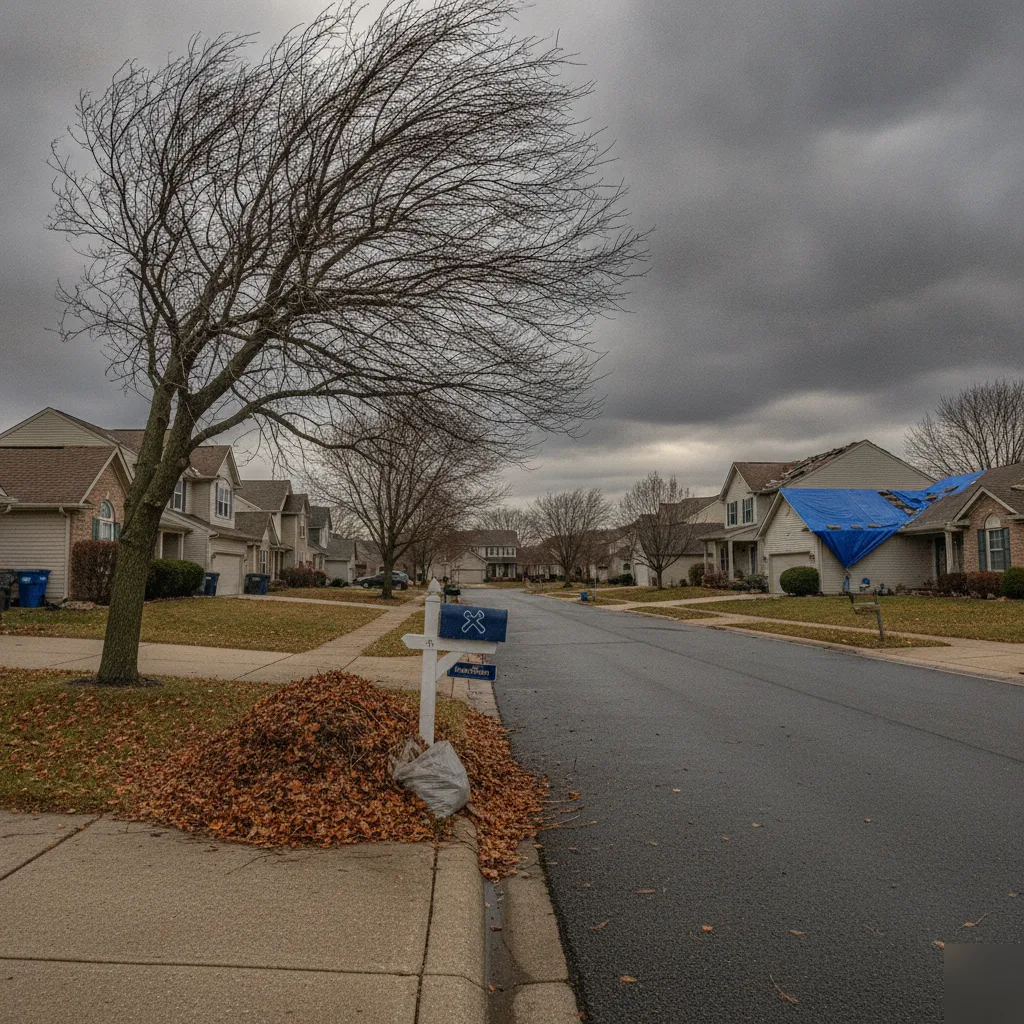
Most homeowners don't think about their roof until water shows up on the ceiling. By then, the damage has usually been building for months, sometimes longer. We see this constantly in Brownsburg homes built in the 1990s and early 2000s, where the original shingles are finally running out of road.
So how do you know if you're dealing with a simple repair or something bigger? Age is a big part of the answer. Most asphalt shingle roofs last 20 to 25 years, according to the National Roofing Contractors Association. If your Brownsburg home still has its original roof from the late 1990s, you're right in the window where replacing it makes more sense than patching it again.
- Shingles curling up at the edges or cracking across the surface, especially on south and west facing slopes that take the most sun
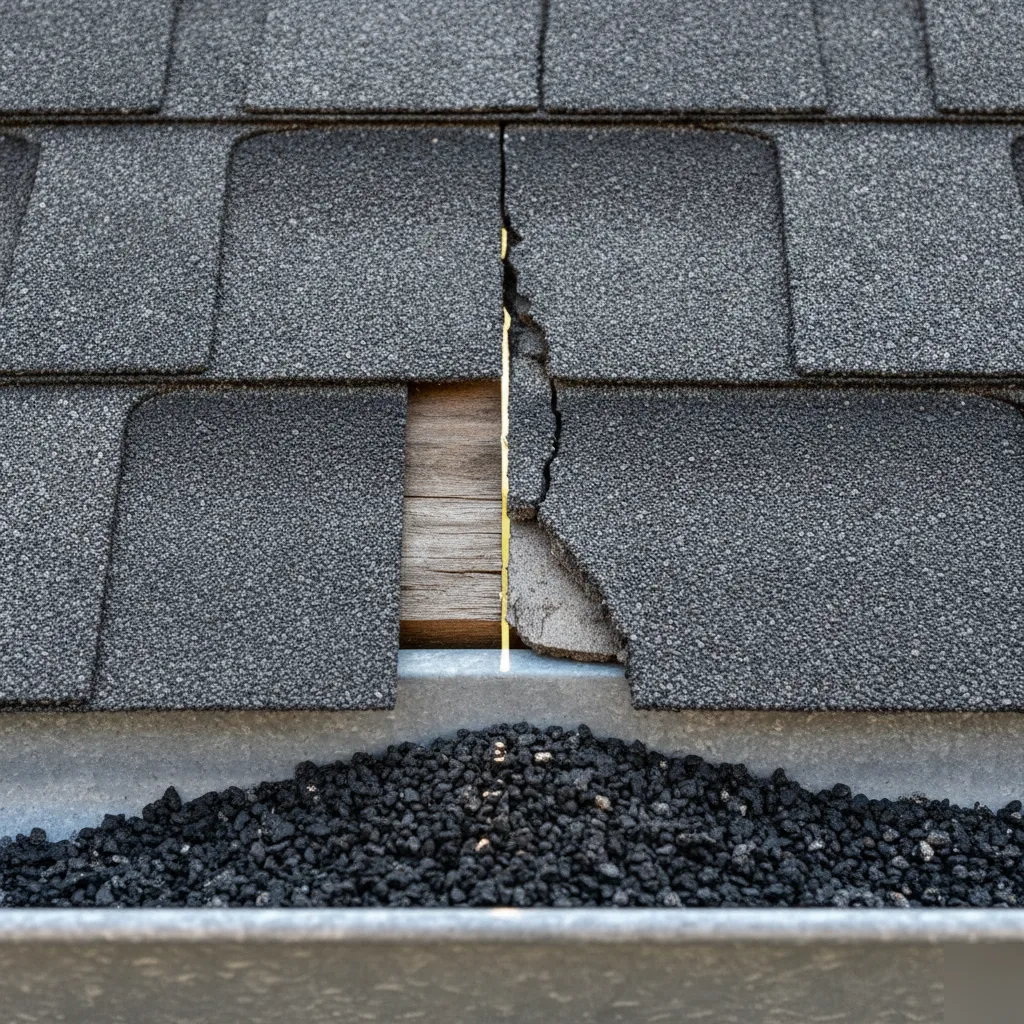
- Bald spots where granules have washed away, leaving the black asphalt mat exposed
- Shingles missing entirely after a windstorm, particularly along ridge lines
- Soft, spongy spots when you walk the roof, usually a sign the decking underneath is rotting
- Daylight visible through the roof boards when you look up from inside the attic
- Dark streaks or moss patches that keep coming back no matter how many times you clean them
Here's something homeowners often miss: granule loss doesn't always show up on the roof itself. Check your gutters instead. If they're full of what looks like coarse black sand, that's shingle granules washing off, one of the earliest signs a roof is aging out, long before you'd ever notice curling from the ground.
We got a call a few years back from a homeowner near Arbuckle Acres Park. Her ceiling had a small brown stain, nothing dramatic. But once the crew got up on the roof, the decking around three separate vent pipes was soft enough to push a finger through. That's well past patch-job territory.
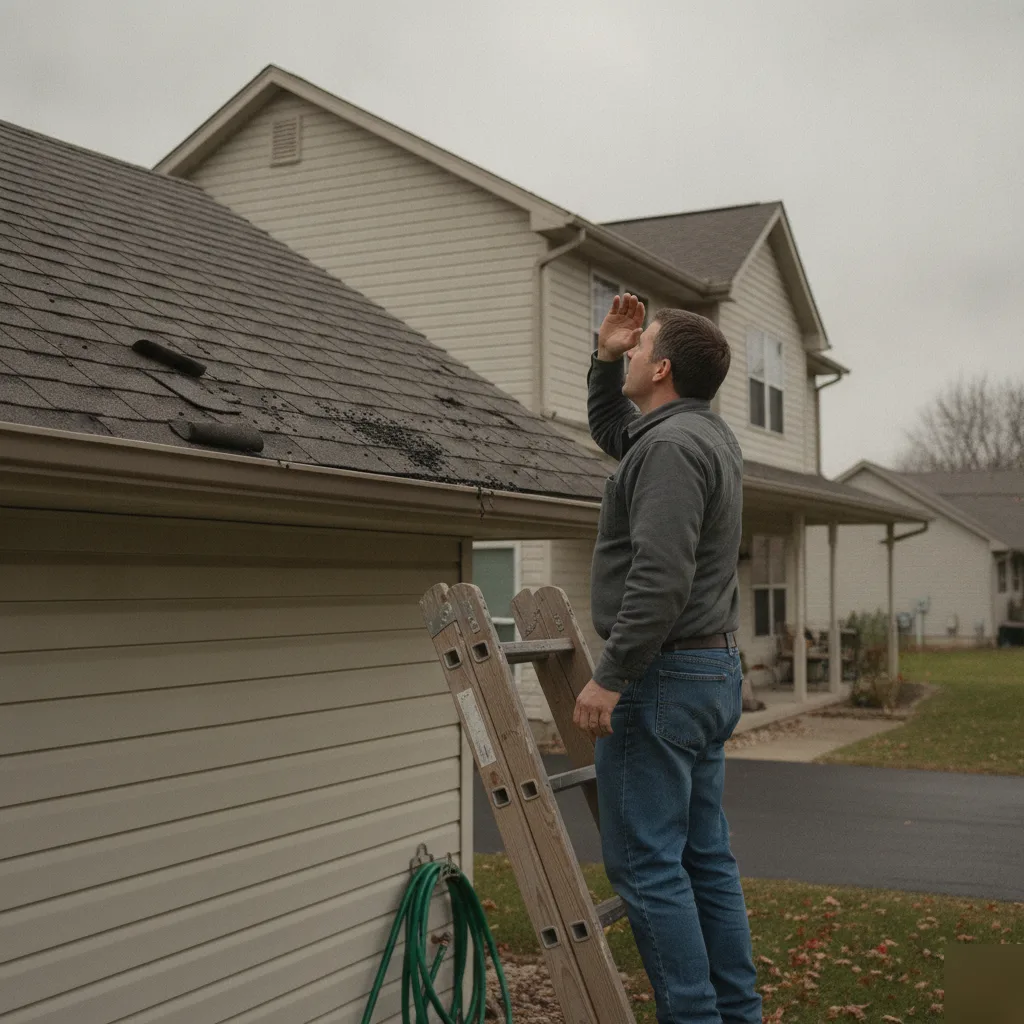
A single soft spot or one damaged bundle of shingles after a storm doesn't automatically mean you need a full tear-off.
But when the wear is spread across the whole roof, and the material itself is failing rather than just one section, replacement is usually the smarter long-term move. Patching an old roof again and again ends up costing more over time than doing the job right once.
Repair or Replace? A Quick Decision Guide
Not every roof problem calls for a full tear-off. Some issues are small and fixable in an afternoon. Others are a sign the whole system underneath is failing. We've walked plenty of Brownsburg attics where the homeowner thought they just needed one shingle patched, only to find the decking underneath already soft from years of slow leaking.
So how do you tell the difference? A repair usually makes sense when the damage is isolated: one section of missing shingles after a storm, a small leak around a single pipe boot, or flashing that pulled loose near a chimney. Replacement makes more sense when the problem is spread across the whole roof, or when the roof is already near the end of its expected life.
- Shingles are curling, cracking, or losing granules across large areas, not just one spot
- You've had two or more leaks in the past year in different parts of the house
- The roof is 20 years or older and made of standard asphalt shingles
- Sunlight is visible through the attic decking, or you can see daylight from inside
- Your energy bills have crept up with no other explanation
One sign gets overlooked all the time: if your neighbors on the same street or in the same subdivision, built around the same year, are getting new roofs, yours is probably not far behind. Homes from the same era tend to age at roughly the same pace.
Repair versus replace really comes down to scope and age. A repair fixes a symptom, a replacement fixes the cause. If your roof is 8 years old and lost a few shingles in a windstorm, repair it and move on. If it's pushing 22 years and you're patching a different spot every spring, repairing isn't really saving you money, it's just delaying the bigger job while you pay for both along the way.
Here's the part most people don't think about until later: a roof leaking in one spot has often been letting moisture in for months before any stain shows up on the ceiling. By the time you notice it, the damage below the surface can be worse than what's visible.
If you're not sure which side of that line your roof falls on, that's a completely normal place to be. It's worth getting a real inspection before deciding anything on your own.
The Real Roof Replacement Process, Step by Step
Most homeowners picture roof replacement as one big event. It isn't. It's a sequence of smaller steps, and skipping one is usually why a roof fails early. We've walked enough Brownsburg roofs to know exactly where corners tend to get cut.
Here's the honest breakdown of how a proper roof replacement goes, from the first inspection to the final cleanup.
- Inspection and assessment. A contractor walks the roof, checks the decking, flashing, and ventilation, and looks for soft spots you'd never spot from the ground.
- Material selection. You choose shingles or roofing material based on your home's style, the pitch of your roof, and how long you plan to stay in the house.
- Permit pull. Hendricks County requires a building permit for full roof replacement, and skipping this step can create real problems when you sell the home later.
- Tear-off. The old roofing comes off down to the decking. This is where hidden rot or damaged plywood usually shows up, and it can change the scope of the job on the spot.
- Decking repair. Any soft or rotted plywood gets replaced before new material goes down. Nail a new roof over bad decking, and you're just buying time.
- Underlayment and flashing install. This layer guards against water intrusion around chimneys, valleys, and vents, the part nobody sees but everybody ends up depending on.
- Final install and cleanup. New shingles go on, ridge vents get set, and the crew runs a full magnetic nail sweep of the yard before leaving.
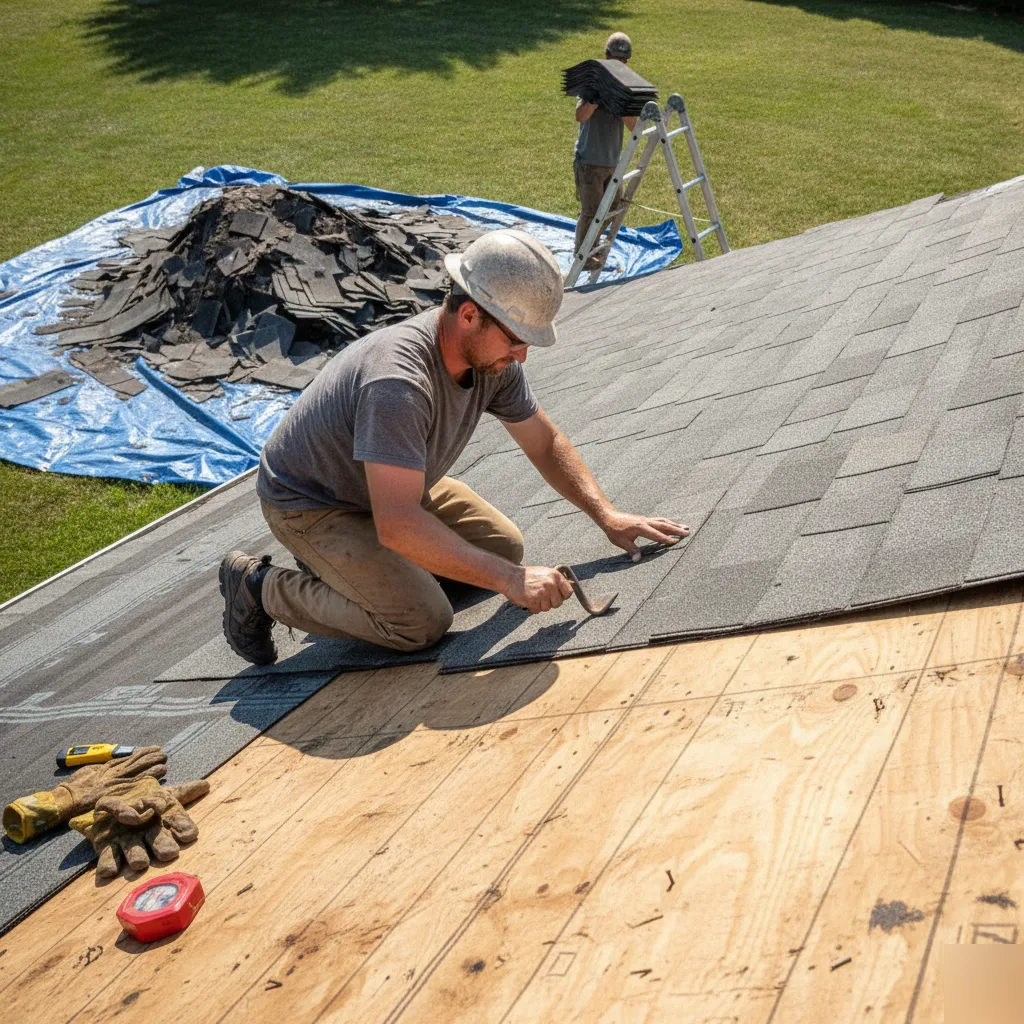
Step four is where things get real. We've pulled off roofs in older Brownsburg neighborhoods near Arbuckle Elementary and found decking soft enough to push a finger through. There's no way to know that until the old roof is off. A good crew stops, shows you photos, and explains the fix before moving forward. A rushed crew just covers it up.
So how long does the whole process take? For most homes in Brownsburg, a full tear-off and replacement runs one to three days once materials are on site, weather depending. And weather matters more here than people expect. Indiana's freeze-thaw cycles put stress on shingles that milder climates rarely see.
Something homeowners often miss: the permit and inspection step protects you, not just the county. It creates a paper trail proving the work was done to code. Skip it, and you're the one holding the risk if there's ever an insurance claim down the road.
Frequently Asked Questions
Can I inspect my own roof, or should I call a professional?
You can check the easy signs yourself, but a professional should confirm anything serious. Walk your yard and look for curling shingles, bald spots, or missing pieces near the ridge. Check your gutters for black granules too. But soft decking, hidden leaks, and attic daylight are harder to spot safely from a ladder. If you notice any warning signs, it's smart to get a trained eye on the roof before storm season adds more damage.
What's the biggest mistake homeowners make with roof replacement?
The biggest mistake is waiting until there's a ceiling stain before taking action. By that point, water has usually been getting in for months. Many Brownsburg homeowners also assume one small repair will fix things, when the whole roof is aging out at the same time. Patching a failing roof over and over often costs more in the long run than replacing it once. Catching wear early saves you from bigger repairs later.
Does Brownsburg weather affect how long a roof lasts?
Yes, Brownsburg's mix of hot summers, cold winters, and strong spring storms wears down shingles faster than milder climates. South and west facing slopes take the most sun damage, while wind and hail from spring storms can strip granules or tear shingles loose. Homes built in the 1990s and early 2000s across Brownsburg are now hitting that 20 to 25 year mark where local weather cycles have caught up with the roof's original lifespan.
Do I need a permit for roof replacement in Brownsburg?
Yes, Hendricks County requires a building permit for a full roof replacement. Skipping this step can cause problems later, especially when you sell your home and need proof the work was done properly. A licensed contractor should handle the permit process for you as part of the job. This is one reason it helps to plan the project with someone familiar with local rules before tear-off begins.
How do I decide between repairing my roof or replacing it fully?
It comes down to how widespread the damage is and how old the roof is. A repair makes sense for one damaged section, like a storm-torn patch or a single leaky pipe boot. Replacement makes more sense when wear is spread across the whole roof or it's already past 20 years old. If you're unsure which side your roof falls on, a full inspection is the clearest way to know for sure before you decide.
What's the first step in getting a roof replaced?
The first step is a full roof inspection to check the decking, flashing, and ventilation, not just the shingles. This tells you whether you're dealing with isolated damage or roof-wide wear that calls for a full tear-off. From there, you can move into material selection and permitting. If you're ready to figure out where your roof stands, learning more about roof replacement is the best next step before scheduling any work.