
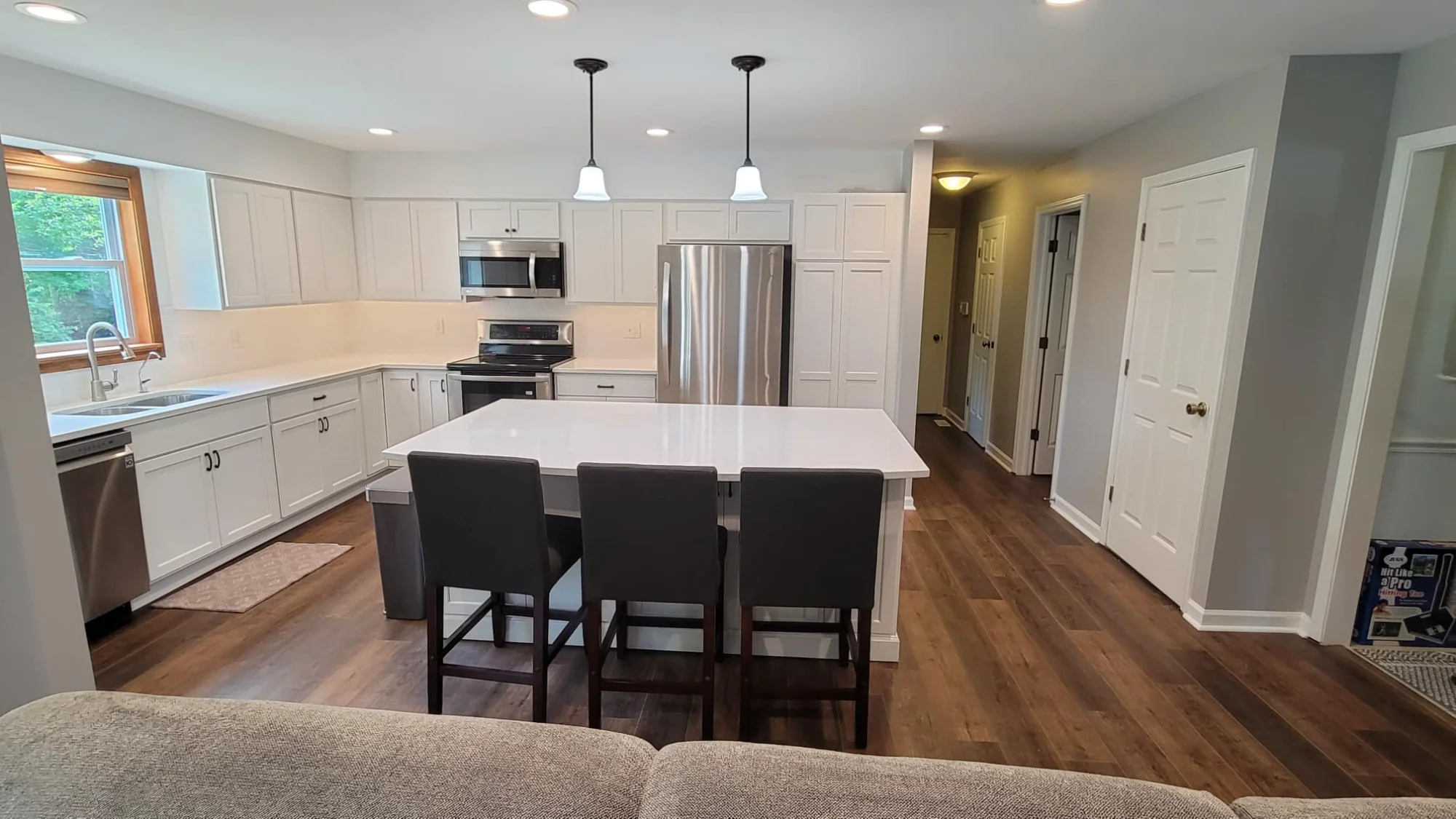
Opening a kitchen to the main living area is one of the most impactful changes you can make to a home. It changes how the house feels, how the family moves through it, and how buyers respond to it when it's time to sell. It also involves structural work that cannot be skipped, rushed, or done without permits.
What we cover:
Structural assessment · Load-bearing wall removal · Engineered beam installation · Permit coordination · Utility rerouting · Kitchen reconfiguration · Full finish work
Most projects begin with a structural walkthrough to confirm what's inside the wall before any demo is planned. One remodeler handles engineering coordination, demolition, framing, and finish — no managing a structural engineer, a framer, and a finish carpenter separately.
What an Open Concept Kitchen Remodel in Brownsburg Actually Includes
An open concept kitchen remodel is not a weekend demo project. When a wall carries structural load — which most kitchen-to-living walls in Brownsburg homes do — removing it requires an engineered beam, new posts or columns to transfer the load, and a permitted inspection before the work is covered up.
Here's how an open concept kitchen remodel actually gets done in Brownsburg:
- Identify whether the wall is load-bearing — this determines whether a beam is required and what the structural scope looks like
- Hire a structural engineer to size the beam if the wall carries load — permits require engineered drawings in Hendricks County
- Pull permits through the Town of Brownsburg before any demo begins — structural work without a permit creates serious resale problems
- Remove the wall, install the beam, and transfer the load to new posts or columns at each end
- Reroute any electrical, plumbing, or HVAC that ran through the removed wall
- Patch floors, finish drywall, and complete kitchen reconfiguration — final inspection closes the permit
Many Brownsburg homes built in the 1990s and early 2000s have load-bearing walls between the kitchen and main living area. As Brownsburg custom kitchen renovation experts, we verify structure before any demolition, since these walls often look identical whether they are load-bearing or not. Openings frequently reveal HVAC trunks, plumbing stacks, or electrical panels — making pre-demo structural and systems inspections essential to prevent mid-project changes and delays.
A complete open concept remodel typically includes:
- Structural assessment and load-bearing determination
- Structural engineering drawings for beam sizing if required
- Permit application and approval through the Town of Brownsburg or Hendricks County
- Wall removal and temporary shoring during beam installation
- Engineered beam and post installation
- Electrical, plumbing, and HVAC rerouting as needed
- Floor patching where the wall footprint was
- Drywall, paint, and ceiling finish work
- Kitchen reconfiguration — cabinets, countertops, and appliances adjusted for the new layout
How Brownsburg Homeowners Decide If Their Wall Can Come Down
The most common question at the start of an open concept project is: can my wall actually come down? The answer depends on one thing — whether the wall is load-bearing.
A load-bearing wall carries the weight of the structure above it and transfers that load down to the foundation. Removing it without replacing that load path with a properly engineered beam is how ceilings crack, floors sag, and structural failures happen. It's also how unpermitted work ends up on a disclosure statement at resale.
How to tell if a wall is likely load-bearing:
- The wall runs perpendicular to the floor joists
- There is a beam or bearing point in the basement directly below it
- The wall sits directly below second-floor framing
- The wall is in the center of the house rather than on an exterior edge
In Brownsburg neighborhoods like Arbor Hills and Stone Gate, two-story homes are common. A wall on the first floor directly below second-floor framing is almost always load-bearing — and requires an engineered beam and posts before it comes out. That's not a deterrent. It's just the correct scope for the job, and it's what protects the home after the wall is gone.
Non-load-bearing walls are a simpler removal. They still require checking for utilities inside the wall before demo, but the structural scope is significantly smaller. We confirm load-bearing status during the initial walkthrough — before any design decisions are made and before a demo date is scheduled.
What to Settle Before Open Concept Demo Begins in Brownsburg
Eagerness to start demo is understandable. The wall has been there for twenty years and you're ready for it to be gone. But the decisions made in the two weeks before demo day determine whether the project runs smoothly or stalls in the middle.
The most expensive surprises in open concept projects are all pre-demo problems that weren't caught early enough.
Discovering HVAC ductwork, a plumbing stack, or an electrical panel inside the wall after demo has started adds cost and time that a pre-demo inspection would have prevented. We open walls carefully and look before committing to a removal sequence — not after.
What to have settled before demo begins:
- Structural assessment completed and load-bearing status confirmed
- Engineered drawings ordered and approved if a beam is required
- Permits pulled through the Town of Brownsburg or Hendricks County Building Department — structural work without a permit is a disclosure problem at every future sale
- Utility locations inside the wall identified — electrical, plumbing, and HVAC all need a reroute plan before the wall comes down
- Kitchen reconfiguration plan finalized — the new layout affects where cabinets, appliances, and outlets land after the wall is gone
- Flooring plan confirmed — the wall footprint will need to be patched, and matching existing flooring in a twenty-year-old home is not always straightforward
Hendricks County requires a permit and inspected structural drawings before any load-bearing wall removal in Brownsburg. A remodeler who skips this step leaves the homeowner holding an unpermitted structural change — one that must be disclosed at resale, remediated, and reinspected at the seller's expense.
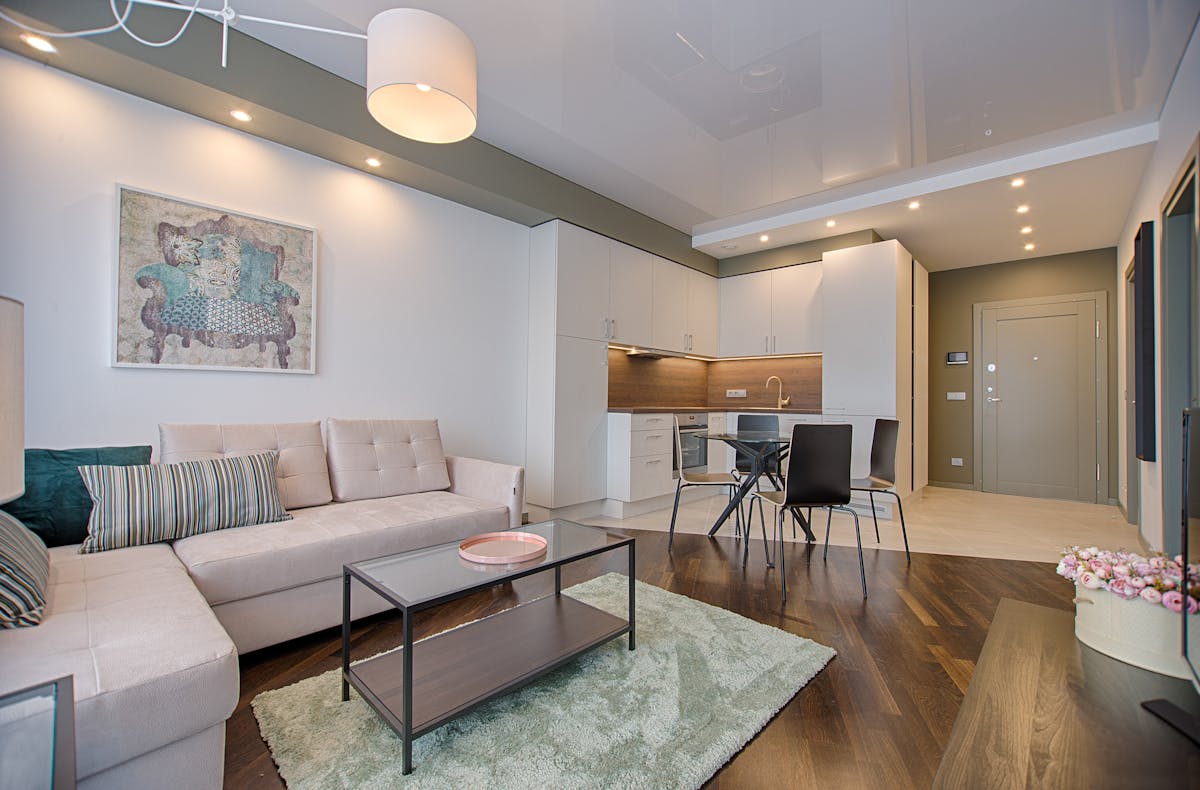
What Happens During an Open Concept Kitchen Remodel in Brownsburg
Most Brownsburg open concept kitchen remodels run four to eight weeks from permit approval to final inspection. The structural phase — demo, beam installation, and rough-in rerouting — runs one to two weeks. Kitchen reconfiguration, floor patching, drywall, and finish work make up the rest of the timeline.
Families in neighborhoods like Wynstone and Eagle Creek preparing for the most disruptive phase of a kitchen project need a realistic picture of what each week looks like. Here's the typical sequence:
| Phase | Work completed |
|---|---|
| Week 1 | Temporary shoring installed, wall removed, beam set, load transferred to posts — this is the loudest and most disruptive phase |
| Weeks 1–2 | Electrical, plumbing, and HVAC rerouted through the new open space; rough-in inspections completed |
| Weeks 2–3 | Drywall patched and finished, floor patching completed, structural inspection closed |
| Weeks 3–5 | Kitchen reconfiguration — cabinets relocated or replaced, countertops templated and fabricated, appliances repositioned |
| Weeks 5–8 | Backsplash, lighting, paint, trim, and final inspection |
The honest middle of this project:
The week after the wall comes down is the most disorienting. The space is open but unfinished — no drywall, exposed framing, a gap in the floor where the wall sat. That phase passes quickly. By the time drywall goes up, the room starts to show what it will actually become.
Every project gets a detailed schedule before the first tool comes out. You'll know which days are loud, which days the kitchen is out of service, and when the space becomes functional again.
What Are the Real Downsides of an Open Concept Kitchen — and How to Handle Them
Most remodeling content treats open concept as a universal improvement. Our experience in Brownsburg homes is more nuanced than that. The open concept layout works extremely well for the right household. For others, the tradeoffs are real and worth discussing before the wall comes down.
Our position:
We'd rather have this conversation during the planning phase than hear about it six months after the project is done.
The three most common post-remodel concerns — and how smart design addresses each one:
- Noise transfer — Without a wall to absorb sound, kitchen noise — appliances, conversations, the range hood — carries directly into the living area. The fix is a properly sized, ducted range hood that vents to the exterior rather than recirculating. Island placement can also create a soft acoustic buffer between cooking and seating areas. In Brownsburg homes with young children, this is the concern we hear most often after the fact.
- Cooking odors — An open kitchen shares air with every adjacent space. A range hood that actually moves air — not a decorative unit with inadequate CFM — is non-negotiable in an open concept layout. We discuss hood specifications during the design phase, not as an afterthought during installation.
- Loss of wall storage — Removing a wall means losing whatever upper cabinet storage was on it. That square footage has to go somewhere. An island with deep storage, a pantry cabinet reconfiguration, or a built-in along an adjacent wall replaces that storage capacity in most Brownsburg kitchens without feeling like a compromise.
The families who love their open concept remodel most are the ones who went in with clear eyes about the tradeoffs and made design decisions that addressed each one before the wall came down.
The Most Common Open Concept Remodel Mistakes — and How to Avoid Them
These mistakes show up repeatedly in Brownsburg. None are complicated to avoid. All of them are significantly more expensive to fix after the fact than to prevent with a proper pre-demo process.
The most common open concept mistake in Brownsburg:
Removing a load-bearing wall without a permit or engineered drawings. It happens more than it should — and it surfaces at the worst possible time. During a home inspection before a sale, an unpermitted structural change must be disclosed, remediated, and reinspected at the seller's expense. We pull every permit required on every project. That step is not negotiable.
Other mistakes worth knowing before you start:
- Skipping the structural assessment — The wall looks the same whether it carries load or not. Assuming it's non-load-bearing because it seems like an interior partition is how structural failures happen. Every wall gets assessed before demo is scheduled.
- Not locating utilities before demo — Electrical panels, plumbing stacks, and HVAC trunks hide inside walls that look removable from the outside. A pre-demo inspection with a borescope or careful exploratory opening catches these before they become a mid-project crisis.
- Reconfiguring the kitchen after the wall is already down — The new kitchen layout should be finalized before the wall comes out. Cabinet locations, appliance positions, and outlet placements in the new open space all affect the rough-in work that happens during the structural phase. Changing the layout after rough-in means reopening finished work.
- Underestimating floor patching — Where the wall sat, the flooring has a gap. In homes with hardwood, tile, or older LVP, matching the existing floor is not always possible. Discussing flooring before demo — whether that means patching, a transition strip, or replacing the floor in the connected area — prevents a finish problem that homeowners notice every day.
- Installing a decorative range hood instead of a functional one — An open concept kitchen without a properly vented range hood pushes cooking odors, grease, and humidity into the living area continuously. CFM rating and exterior venting are requirements in an open layout, not optional upgrades.