
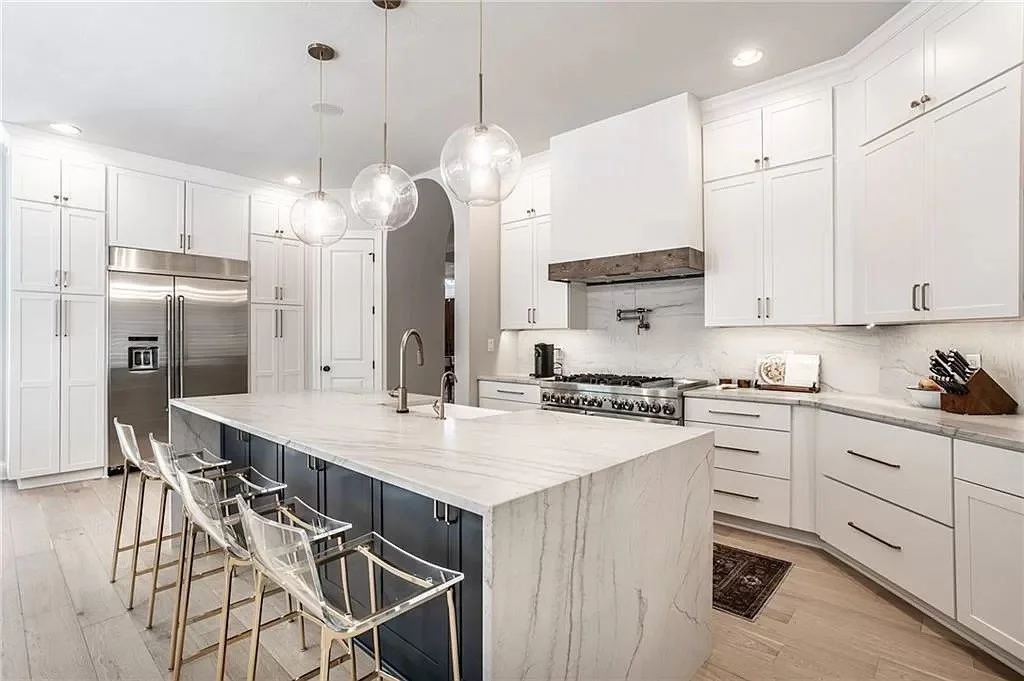
We've remodeled a lot of small kitchens in this area. The ones that turn out best aren't the ones where everything got torn out and replaced — they're the ones where the right decisions were made about what to change and what to leave alone.
What we cover:
Layout optimization · Cabinets · Countertops · Lighting · Electrical · Plumbing · Finish work — all sized and sequenced for compact spaces
Most projects begin with a site measure and a conversation about what frustrates you most about the kitchen right now. One remodeler handles the full job — no coordinating separate trades in a space where every inch of working room matters.
What a Small Kitchen Remodel in Brownsburg Actually Includes
A small kitchen remodel is not always a gut renovation. In compact spaces, precision and sequencing matter more than square footage. The most impactful changes in a Brownsburg small kitchen are often upper cabinet reconfiguration, lighting upgrades, and countertop replacement — not moving walls or replacing every surface at once.
Here's the correct order of operations for a small kitchen remodel in Brownsburg:
- Finalize all selections before demo begins — cabinets, countertops, and appliances must be ordered before anything is torn out in a small kitchen
- Demo existing surfaces, cabinets, and flooring — in a small kitchen this phase moves fast, usually one day
- Complete any electrical, plumbing, and HVAC rough-in work before walls close
- Pass rough-in inspections through Hendricks County before installing cabinets
- Set and level cabinets, then template countertops — fabrication begins after cabinets are confirmed
- Install countertops, appliances, and fixtures once fabrication is complete
- Finish with flooring, backsplash, lighting, and trim — final inspection closes the permit
Many Brownsburg homes from the 1990s have galley-style or closed kitchens with limited square footage. In those spaces, the sequencing above is not just best practice — it's essential. A small kitchen is the one room in the house the family cannot go without for long. Starting demo before cabinets are ordered creates a wait that hits harder here than in any other room.
A complete small kitchen remodel typically includes:
- Layout assessment and optimization within the existing footprint
- Cabinet removal and replacement — or refacing if boxes are structurally sound
- Soffit removal if applicable — one of the highest-return changes in a small Brownsburg kitchen
- Countertop fabrication and installation
- Electrical — dedicated circuits, added outlets, under-cabinet lighting
- Plumbing — sink, faucet, and dishwasher connection
- Backsplash, flooring, and paint
- Lighting — overhead, task, and ambient
How Brownsburg Homeowners Get the Most Out of a Small Kitchen Layout
The most common frustration from Brownsburg homeowners with small kitchens is that added storage doesn't solve the core issue. Kitchen design and remodeling in Hendricks County often shows that more upper cabinets, organizers, or hooks only mask layout problems rather than fixing them. That's because storage isn't usually the problem. Layout efficiency is.
Our honest take:
A small kitchen that is laid out well feels larger than a larger kitchen that isn't. The goal of a compact kitchen remodel is not to maximize storage — it's to maximize how the space functions and feels.
In Brownsburg neighborhoods like Arbor Hills and Stone Gate, ranch-style homes with original closed kitchens benefit most from three specific changes:
- Removing upper cabinet soffits — That boxed-in space above the cabinets is one of the most visually oppressive features in a 1990s Brownsburg kitchen. Removing it and running cabinets to the ceiling opens the room up dramatically — it raises the perceived ceiling height, adds real storage, and immediately makes the kitchen feel less closed-in.
- Adding a peninsula — A peninsula creates a boundary between the kitchen and an adjacent space without closing it off completely. It adds counter surface, storage underneath, and often seating on the far side. In a small kitchen, it does more work per dollar than almost any other single change.
- Improving task lighting — Most small kitchens in Brownsburg have one overhead light fixture that casts shadows directly where you're trying to work. Under-cabinet lighting on every upper run changes how functional and how large the kitchen feels — immediately and noticeably.
Other layout moves that return strong results in compact Brownsburg kitchens:
- Pull-out cabinet organizers that make deep base cabinets fully accessible
- Drawer bases instead of door bases wherever possible — drawers are more efficient in small spaces
- Light countertop and cabinet colors that reflect light rather than absorb it
- Open shelving on one wall instead of upper cabinets — creates visual depth without adding visual weight
What to Lock In Before Your Small Kitchen Remodel Begins in Brownsburg
The single most important decision in a small kitchen remodel timeline is placing the cabinet order before demo begins. Not shortly after. Before. Cabinet lead times from Brownsburg-area suppliers run three to six weeks for semi-custom and four to eight weeks for full custom. If you start demo and then order cabinets, you're living without a kitchen for at least that long — possibly longer if there are fabrication delays or specification changes.
The rule we follow on every small kitchen project:
Nothing comes out until everything is ordered. No exceptions.
What to have locked in before demo day:
- Cabinet style, finish, and configuration confirmed — order placed with lead time tracked
- Countertop material selected — fabrication begins after cabinets are installed and templated
- Appliance sizes confirmed — rough-in dimensions have to be set before cabinets go in
- Sink and faucet selected — plumbing rough-in location depends on the sink type
- Lighting plan finalized — under-cabinet circuits need to be run during rough-in
- Permit requirements confirmed — electrical, plumbing, and structural changes all require permits through the Town of Brownsburg or Hendricks County Building Department
One more thing worth saying directly: in a small kitchen, every trade works in close proximity to every other trade. A scheduling gap between electrical, plumbing, and cabinet installation — even a few days — adds time to a project in a space where the family is without a functional kitchen the entire time. Tight coordination is not a bonus in compact kitchen projects. It's a requirement.
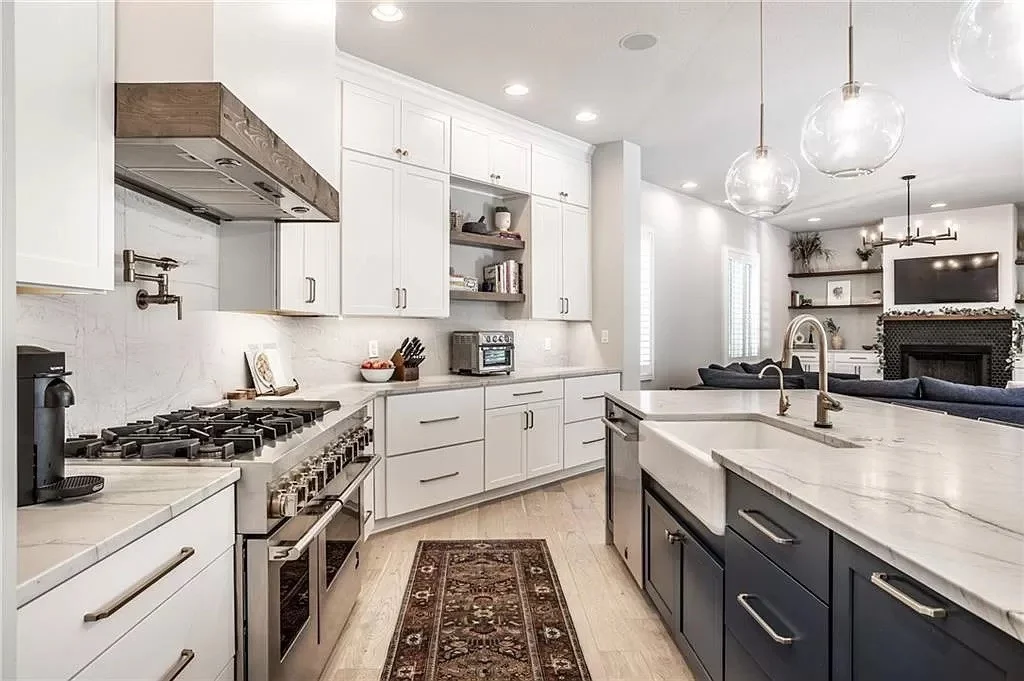
What Happens During a Small Kitchen Remodel in Brownsburg
Most Brownsburg small kitchen remodels run two to four weeks for a standard scope. The tight footprint means the project moves faster than a larger kitchen — but it also means there's less margin for scheduling errors between trades.
Families in neighborhoods like Wynstone and Eagle Creek who depend on their kitchen daily need a clear picture of what each phase looks like and when the kitchen comes back online. Here's what a typical small kitchen remodel looks like day by day:
| Day | Work completed |
|---|---|
| Day 1 | Demo — in a small kitchen, cabinets, countertops, and flooring usually come out in a single day |
| Days 2–3 | Electrical and plumbing rough-in, any HVAC adjustments, soffit removal if applicable |
| Days 4–5 | Rough-in inspections, drywall repair, priming |
| Days 6–8 | Cabinet installation, shimmed and leveled |
| Day 9 | Countertop templating — fabrication begins, two to four week lead time |
| Days 10–12 | Backsplash, painting, trim, and any prep work that can happen before countertops arrive |
| Countertop installation day | Countertops set, sink and faucet connected, appliances installed |
| Final 1–2 days | Flooring if not done earlier, lighting fixtures, hardware, punch list, final inspection |
The honest gap:
There is almost always a waiting period between cabinet installation and countertop delivery. In a small kitchen, that means the room is usable but not fully functional — cabinets are in, but there's no sink and no working surface yet. We prep as much as possible during that window so the final push after countertops arrive moves quickly.
Is It Worth Remodeling a Small Kitchen in a Brownsburg Home?
The short answer is yes — and the reason is less about square footage and more about the signal a dated kitchen sends to buyers and to you every morning. In the Hendricks County resale market, buyers make quick judgments about kitchens regardless of size. An updated small kitchen with quality cabinets, stone countertops, and good lighting reads as move-in ready. A dated small kitchen — oak cabinets from 2001, laminate countertops, a single overhead bulb — reads as a project and drives offers down regardless of how well the rest of the home shows.
Our position:
Leaving a dated small kitchen untouched is a bigger resale liability than the size of the kitchen itself. Buyers can accept a compact kitchen. They discount heavily for one that looks like it hasn't been touched in twenty years.
The daily return matters just as much. A kitchen that functions well — good lighting, efficient storage, surfaces that hold up to daily use — makes cooking less of a chore and the room more enjoyable to be in. That return starts the week the project is done, years before any sale.
What moves the needle most in a small Brownsburg kitchen for resale:
- Cabinet quality and condition — the first thing every buyer opens and touches
- Countertop material — quartz and granite read as updated; laminate reads as unfinished
- Lighting — a well-lit small kitchen feels significantly larger than a dark one the same size
- Layout efficiency — a kitchen that functions well reads as larger than its square footage suggests
The Most Common Small Kitchen Remodel Mistakes — and How to Avoid Them
Small kitchens are unforgiving. A mistake that would be a minor inconvenience in a larger space becomes a daily problem in a compact one. These are the patterns we see most often in Brownsburg.
The most common small kitchen mistake in Brownsburg:
Adding too much upper cabinet mass in an attempt to maximize storage. Heavy upper cabinets in a compact space close off sight lines, block light, and make the kitchen feel smaller than before. Storage and visual openness have to be balanced. We'd rather add a well-designed open shelf run than stack cabinets in a way that makes the room feel like a closet.
Other mistakes worth knowing before you start:
- Starting demo before cabinets are ordered — The lead time gap between demo and cabinet delivery is the most common source of extended project timelines in small Brownsburg kitchens. Lock in the order first. Then schedule demo.
- Choosing dark countertops and cabinet colors — Dark finishes absorb light and visually shrink a compact space. In a small kitchen, lighter surfaces — white, cream, light gray, warm wood tones — reflect light and make the room feel more open. This is not about trends. It's about physics.
- Keeping the soffit and accepting the ceiling height it creates — Soffits in 1990s Brownsburg kitchens are almost never structural. Removing them costs relatively little and returns more visual impact than nearly any other single change in a compact kitchen.
- Skipping under-cabinet lighting — In a small kitchen, task lighting is not a luxury. It's the difference between a kitchen that functions well and one that feels like you're cooking in a shadow. Every upper cabinet run should have lighting underneath it.
- Over-tiling the backsplash — A busy backsplash pattern in a small kitchen adds visual noise that makes the space feel more cramped. Simple, clean tile in a light color keeps the eye moving rather than stopping it.