
Brownsburg, IN
Can I Stay in My Home During Addition Construction in Brownsburg?
What Really Decides If You Can Stay Home
Most Brownsburg homeowners can stay in their home during addition construction, but it comes down to where the addition connects to your house and how much of the existing structure gets opened up. A side or rear addition with its own entry point usually lets you stay put. A project that tears into your kitchen, main bathroom, or load-bearing walls near your bedrooms often means a few rough weeks, at minimum.
Can you stay in your home during addition construction in Brownsburg? Honestly, it depends on three things: where the crew is working, how the utilities get connected, and how well your family handles noise and dust. We've worked on additions all over Hendricks County, and no two projects play out quite the same way.
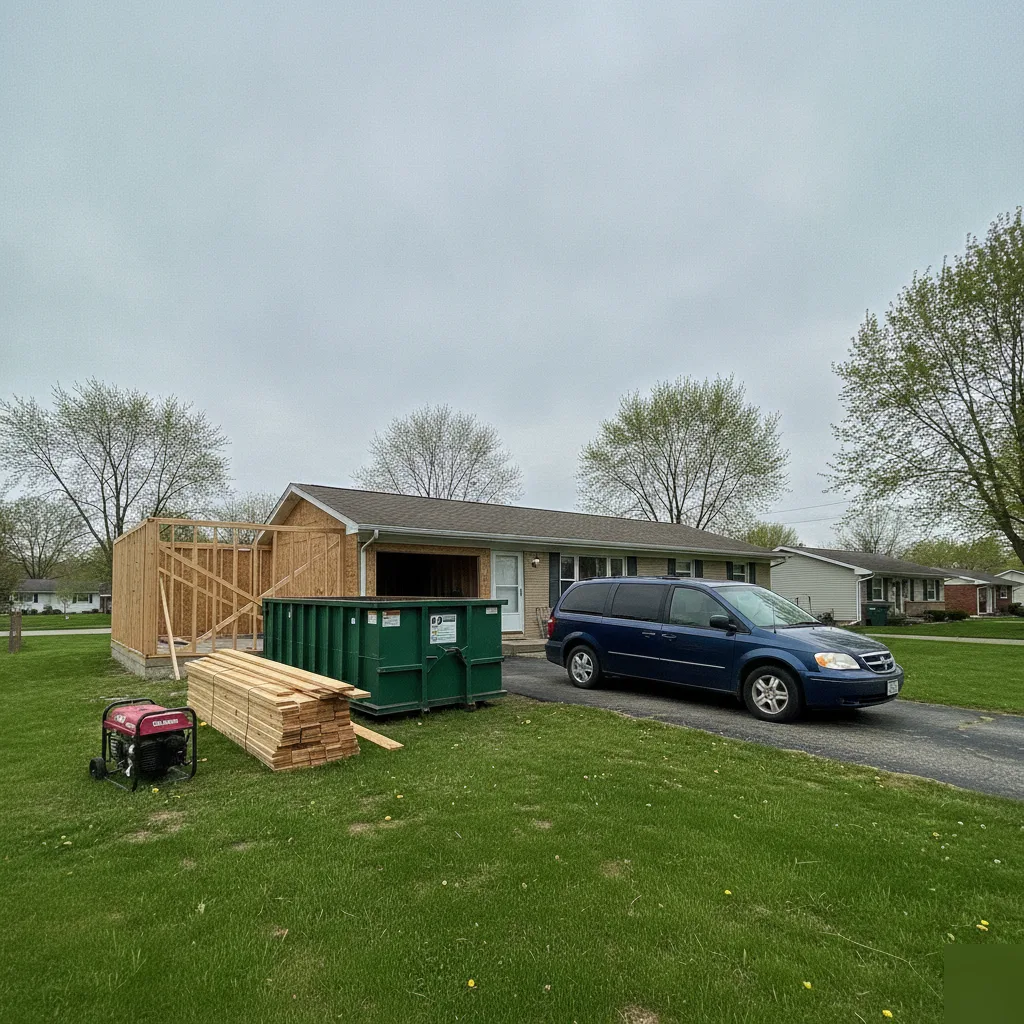
The location of the addition matters more than most homeowners expect. A rear addition off the back of the house, common in older Brownsburg neighborhoods near Arbuckle Acres Park, usually keeps the crew working outside your main living space for weeks before they ever open an interior wall. That gives you time to plan around the noisy parts instead of living inside them.
- Where the tie-in point is located - a kitchen bump-out disrupts daily life more than a rear family room addition.
- How your utilities are routed - moving plumbing or electrical panels often means short shutoffs, not full displacement.
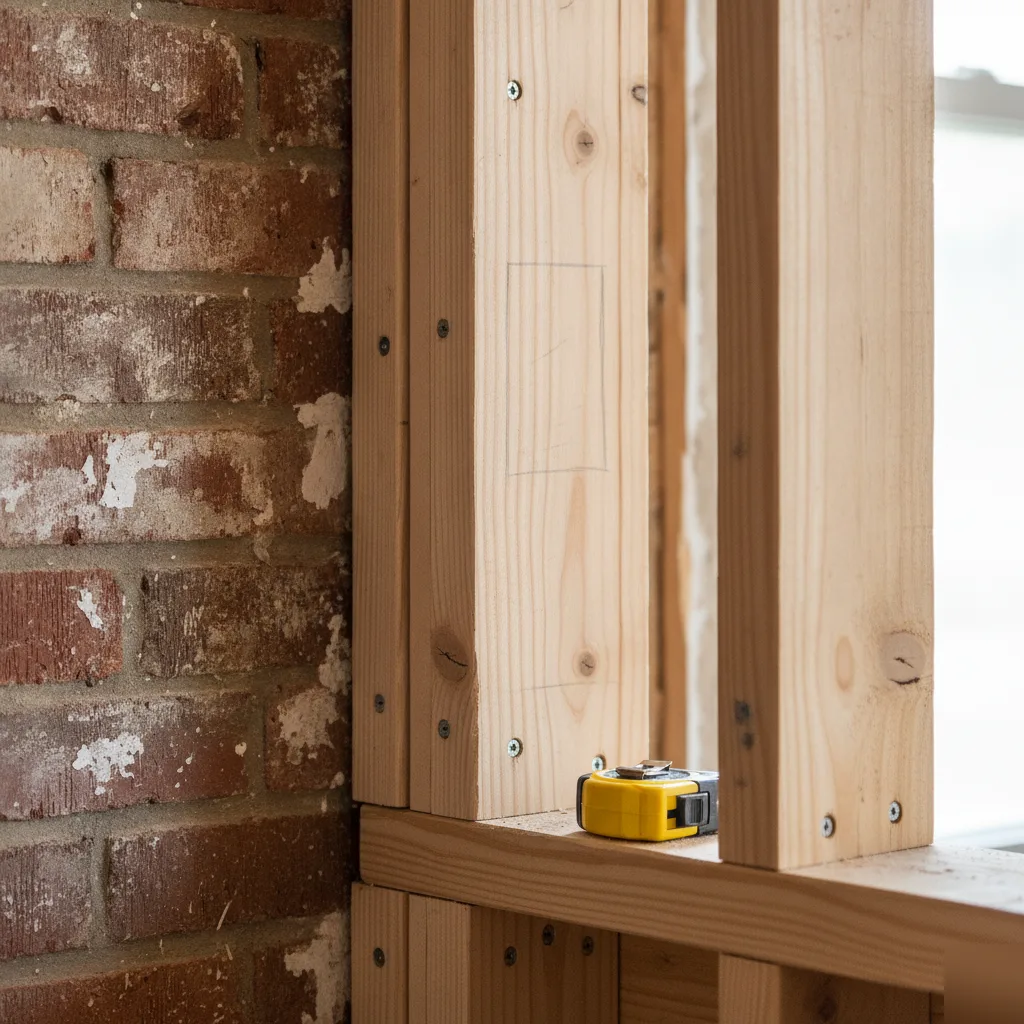
- Your home's age - older Brownsburg homes sometimes reveal surprises once walls open up.
- How many bedrooms or bathrooms stay usable during the framing and drywall phase.
- Whether your HVAC system needs temporary rerouting during the tie-in.
Here's something most people don't think about until it's too late. Tie-in day, when the crew cuts the opening between your existing house and the new addition, is usually the roughest single day of the whole project. Dust travels. Doors get blocked. For a homeowner with young kids or pets, that one day alone can make staying home feel like more trouble than it's worth.
One family in a Brownsburg subdivision near the schools stayed home through their entire addition, but they set up a temporary kitchen in the garage for about ten days. That's the kind of planning that turns staying home into something realistic instead of miserable.
So the real question isn't just whether you can stay, it's what you're willing to work around. A good contractor will walk the site with you and lay out exactly which weeks will be loud, which days require a shutoff, and where the dust barriers will go up. That conversation should happen before a single permit gets pulled.
Scenarios: How Much Disruption Should You Expect
Not every addition disrupts your home the same way. A small bump-out on the back of a ranch house feels nothing like a full second-story addition. We've built both types in Brownsburg neighborhoods like Stone Prairie and Sugar Creek, and the difference in day-to-day disruption is huge.
Take a bump-out addition for a bigger kitchen. The crew opens one exterior wall, most of the work happens outside, and your home stays mostly livable the whole time. Dust drifts into nearby rooms, sure. But you can usually still cook dinner and sleep in your own bed every night without much trouble.
Now picture a second-story addition. That's a different animal entirely.
The crew has to tie into your existing roof structure, which often means opening up ceilings below. Electrical and sometimes plumbing lines get rerouted. Dust travels through the whole house, not just one room. Noise starts early and doesn't let up. We've seen families with young kids move out for two to three weeks during this phase, then move back once the noisy work wraps up.
- Size and location of the addition - a rear bump-out disrupts far less than a second story or full footprint expansion.
- Whether utilities need to shut off - water and power interruptions push most families toward a short-term move.
- Season and weather - winter builds in Hendricks County often mean more temporary walls and heat loss indoors.
- Household members - homes with babies, elderly residents, or pets usually need cleaner air quality and quieter conditions.
- How much of the existing home connects to the new space - shared walls and hallways mean more dust and access issues.
Here's a scenario we ran into on a Brownsburg project near Arbuckle Elementary. The homeowners wanted an in-law suite addition on the first floor and planned to stay home the entire time. That worked fine for the first month while the crew framed and roofed the addition. But once the crew needed to cut through into the existing hallway to connect the spaces, the family spent about ten days at a relative's house. Dust control tarps and negative air machines helped, but that phase just isn't comfortable to live through.
So the honest answer depends on your project's connection points, not just its size. A detached garage conversion barely touches your daily life. A great room addition that ties into your kitchen and living room will touch almost everything you do at home.
If you're not sure which category your project falls into, we can walk your specific plan and give you a realistic picture before you commit to anything.
How Contractors Keep Dust, Noise, and Safety Risks Contained
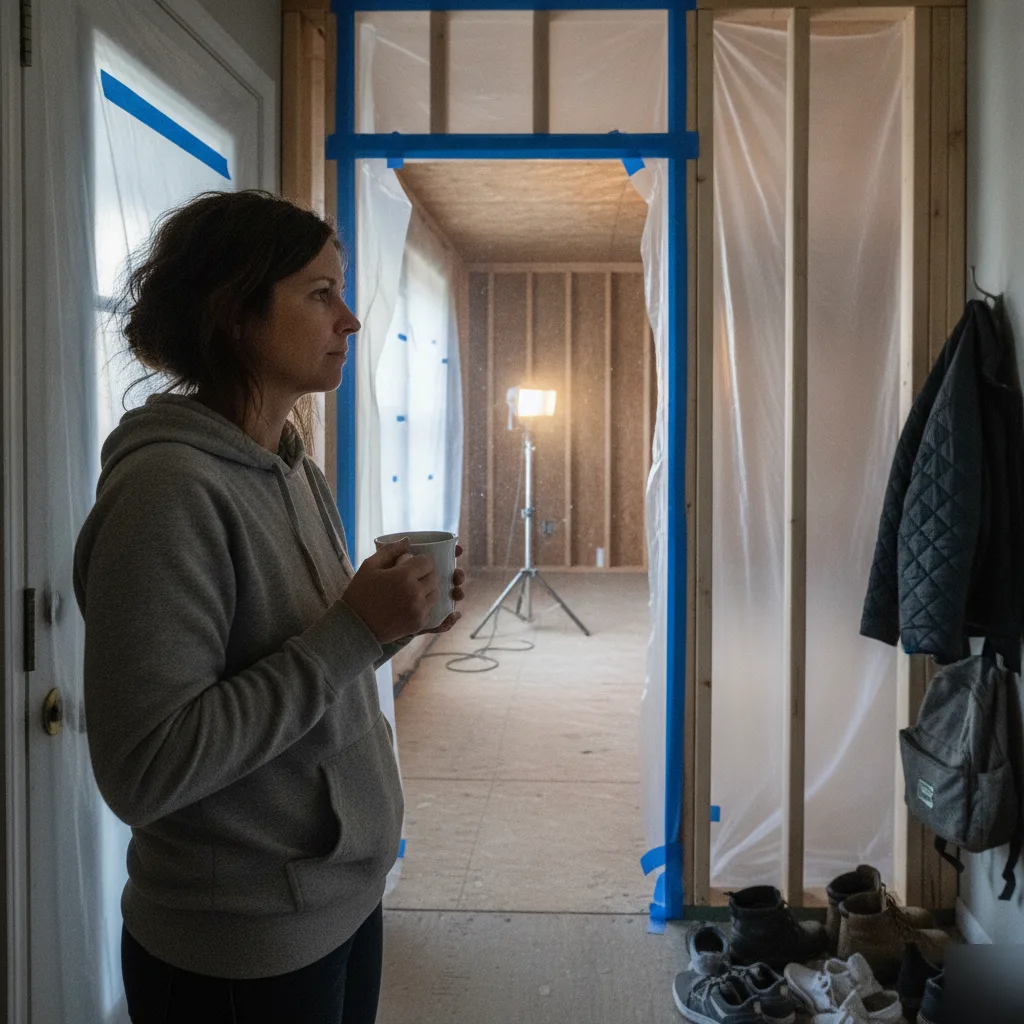
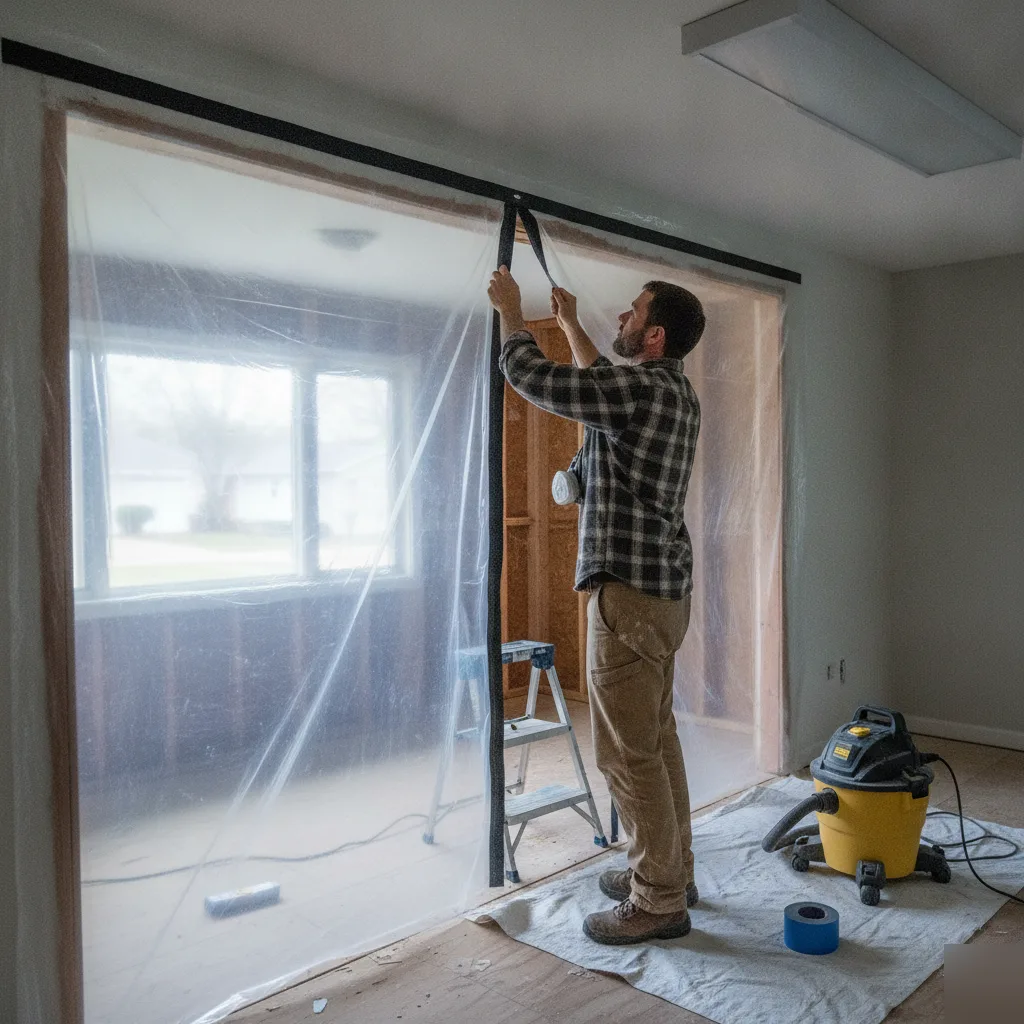
Good containment starts before the first hammer swings. On most Brownsburg additions, the crew builds a temporary barrier where the new space connects to the old one. Usually that means plastic sheeting taped over a wood frame, sometimes a full zip-wall system with a sealed door flap. It's not fancy, but it works.
Dust is sneaky. It finds gaps around outlets, sneaks under doors, and works its way through your HVAC vents if nobody thinks to close them off.
- Sealed plastic barriers taped at every seam between the work zone and living space.
- HVAC vents in the construction area covered or shut off so dust doesn't travel through the ductwork.
- A dedicated construction entrance, usually through a garage or side door, so crews never track through your kitchen.
- Daily sweep-downs and a shop vac pass before the crew leaves for the day.
- Plywood walk paths or drop cloths over flooring the crew needs to cross.
Noise is harder to block completely, but timing helps a lot. Most crews save the loud work, framing, nail guns, saw cuts, for the middle of the day, and reserve early morning and late afternoon for quieter tasks like finish work or cleanup. If you've got a toddler napping or you work from home, a heads-up on the day's schedule goes a long way.
Safety is where things get serious.
Open framing, exposed nails, and temporary power cords are real hazards for kids and pets. A crew that's done this work for years will fence off the site with temporary barriers, cover any exposed foundation trenches, and lock up tools each night so nothing walks off or gets grabbed by curious hands. On additions with a torn-open exterior wall, expect a temporary weather seal too, something to keep rain and cold air out during Indiana's unpredictable spring and fall stretches.
We've worked jobs where the family had a five-year-old and two dogs in the house the entire time. It worked because the containment plan was clear from day one, and everyone stuck to it.
One thing homeowners don't always think about: electrical panels sometimes need temporary access for the new addition's wiring. A good crew will schedule any panel work for a specific window and tell you exactly when the power might blink off. That's the kind of detail that separates a well-run job site from a chaotic one.
Curious how this containment plan would work for your specific floor plan? That's a conversation worth having early.
Frequently Asked Questions
How long does the disruptive part of an addition project usually last?
Most of the noisy, messy work happens in short bursts, not the whole project. Framing and roofing stay mostly outside your living space. The roughest stretch is tie-in day and the week or two after, when crews open walls between old and new spaces. For a typical Brownsburg addition, that tough window runs about one to three weeks. The rest of the build stays fairly livable if barriers and dust control are set up early.
Do I have to move out completely during addition construction?
No, most Brownsburg homeowners do not need to move out completely. Many families stay home the entire time, especially with rear or side additions that have their own entry point. Some only leave for a short stretch during the tie-in phase, when dust and noise peak. A few families set up a temporary kitchen or bedroom instead of leaving. The real decision comes down to how much of your existing home the crew needs to open up.
Does Brownsburg's older housing stock make staying home harder?
Yes, older homes near areas like Arbuckle Acres Park sometimes reveal surprises once walls open up. Outdated wiring, older plumbing, or unexpected framing issues can add extra days to the disruptive phase. Newer Brownsburg subdivisions tend to have more predictable wall and utility layouts, which can shorten the rough patch. Either way, a contractor familiar with local home ages can spot likely surprises before work starts, which helps you plan around them.
What's the difference in disruption between a bump-out and a second-story addition?
A bump-out keeps most work outside one wall, so your daily routine barely changes. A second-story addition ties into your existing roof and often opens ceilings below, which spreads dust and noise through the whole house. We've built both types in Brownsburg neighborhoods like Stone Prairie, and families almost always find second-story projects harder to live through. Knowing which category your project falls into helps you set realistic expectations before construction starts.
How do contractors keep dust from spreading into the rest of the house?
Contractors seal off the work zone before opening any wall. This usually means taped plastic sheeting or a zip-wall system at the connection point. Crews also cover or shut off HVAC vents in the work area, since dust can travel through ductwork fast. These steps do not eliminate all mess, but they keep most of it contained to the addition itself, which makes staying home far more manageable.
What should I ask a contractor before deciding to stay home during construction?
Ask exactly which weeks will be loud, which days need a utility shutoff, and where dust barriers will go up. A good contractor walks the site with you and lays this out before any permit gets pulled. If you're still weighing whether to stay home or plan a short move-out, our guide on addition construction in Brownsburg breaks down what to expect based on your specific layout and project type.