
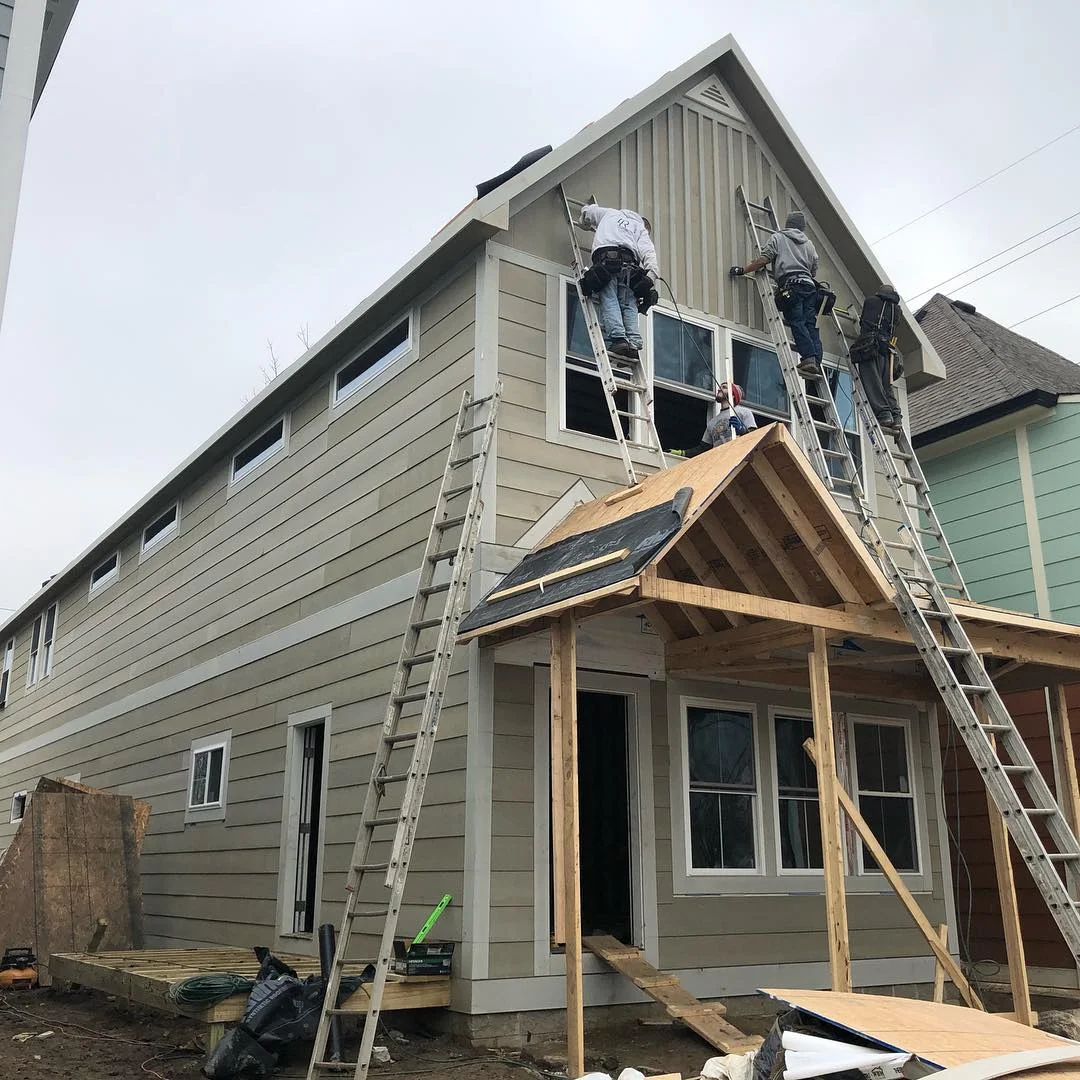
This page covers metal roofing installation: panel types, gauge selection, underlayment systems, ventilation, fastening methods, and what separates a correct installation from one that fails early. You'll learn how metal roofing works, what goes under the panels, and what mistakes cause the most common metal roof problems in Indiana. A licensed Brownsburg remodeler installs metal roofing systems that are properly detailed, correctly fastened, and built to perform through decades of Hendricks County weather.
What Is the Proper Way to Install Metal Roofing in Brownsburg?
- Inspect and prepare the roof deck — metal roofing requires a flat, structurally sound substrate with no soft spots, rotted decking, or uneven sheathing that creates panel waviness after installation.
- Install a high-temperature self-adhering underlayment or synthetic underlayment rated for metal roofing — standard felt paper is not appropriate under metal panels in Indiana's temperature range.
- Install an air gap or vented underlayment system where condensation management is required — especially on Brownsburg homes without adequate attic ventilation.
- Install eave trim, rake trim, and all perimeter flashings before any panels go down — trim installation sequence determines whether water is directed off or under the panel edge.
- Begin panel installation at the eave, working upslope with correct fastener type, spacing, and penetration depth for the panel gauge and profile specified.
- Install valley, ridge, and penetration flashings with proper lap and sealant — these details are where most metal roof leaks originate when installed incorrectly.
- Cap the ridge with a vented ridge cap system that allows attic heat to escape without allowing water or pest entry under the metal.
What Metal Roofing Installation Covers for Brownsburg Homeowners
Metal roofing installation is a complete system — not a simple swap from asphalt to metal. A professional installation covers deck preparation, high-performance underlayment, an air gap where required, perimeter and penetration flashing, panel installation with correct fastening, ridge ventilation, and all trim and transition details. Every component works together. A failure at any single point compromises the entire system's performance and lifespan.
Brownsburg's climate creates a specific challenge that warmer-state metal roofing guides don't address. Indiana's temperature swings — from below zero in winter to over 90°F in summer — cause metal panels to expand and contract substantially. Fastening systems and panel profiles must accommodate that thermal movement. A system that doesn't is one that loosens fasteners and develops oil-canning in the panel field over time.
What Goes Under a Metal Roof — Underlayment, Air Gap, and Deck Prep Done Right
Standard felt paper is inadequate under metal roofing in Indiana's temperature range. Felt degrades from heat trapped between the panel and the deck. The correct answer is synthetic underlayment rated for metal roofing or a self-adhering membrane — and a licensed remodeler will specify the right one before a single panel is ordered.
Brownsburg's mixed-humid climate also requires attention to condensation on the underside of metal panels. An air gap or vented underlayment system manages that moisture and prevents it from accumulating against the deck. Homes in Country Brook, Timber Creek, and other 1990s–2000s Brownsburg subdivisions frequently have limited attic ventilation. When an air gap system is skipped on those homes, deck rot develops from below — with no visible interior leak to alert the homeowner. We assess attic ventilation as part of every metal roofing specification, not as an afterthought.
How Metal Roofing Installation Works From Deck to Ridge
The process begins with a full deck inspection. Soft spots, rotted sheathing, and uneven substrate are corrected before anything else goes down. Underlayment and air gap layers follow, then perimeter trim and eave flashing — installed in the correct sequence so water is directed off the edge, not under it.
Panel installation starts at the eave and works upslope with correct fastener type, spacing, and penetration depth for the specified panel profile and gauge. Valley, ridge, and penetration flashings go in with proper lap and sealant. The ridge is capped with a vented system that exhausts attic heat without allowing water or pest entry. Metal roofing installation takes longer than asphalt work because every detail matters. Hendricks County building inspections cover fastening patterns, underlayment type, and flashing at all penetrations. We install to code from the first panel and schedule the required inspection before the project closes out — something contractors unfamiliar with local requirements sometimes skip, creating costly panel removal and reinstallation after a failed inspection.
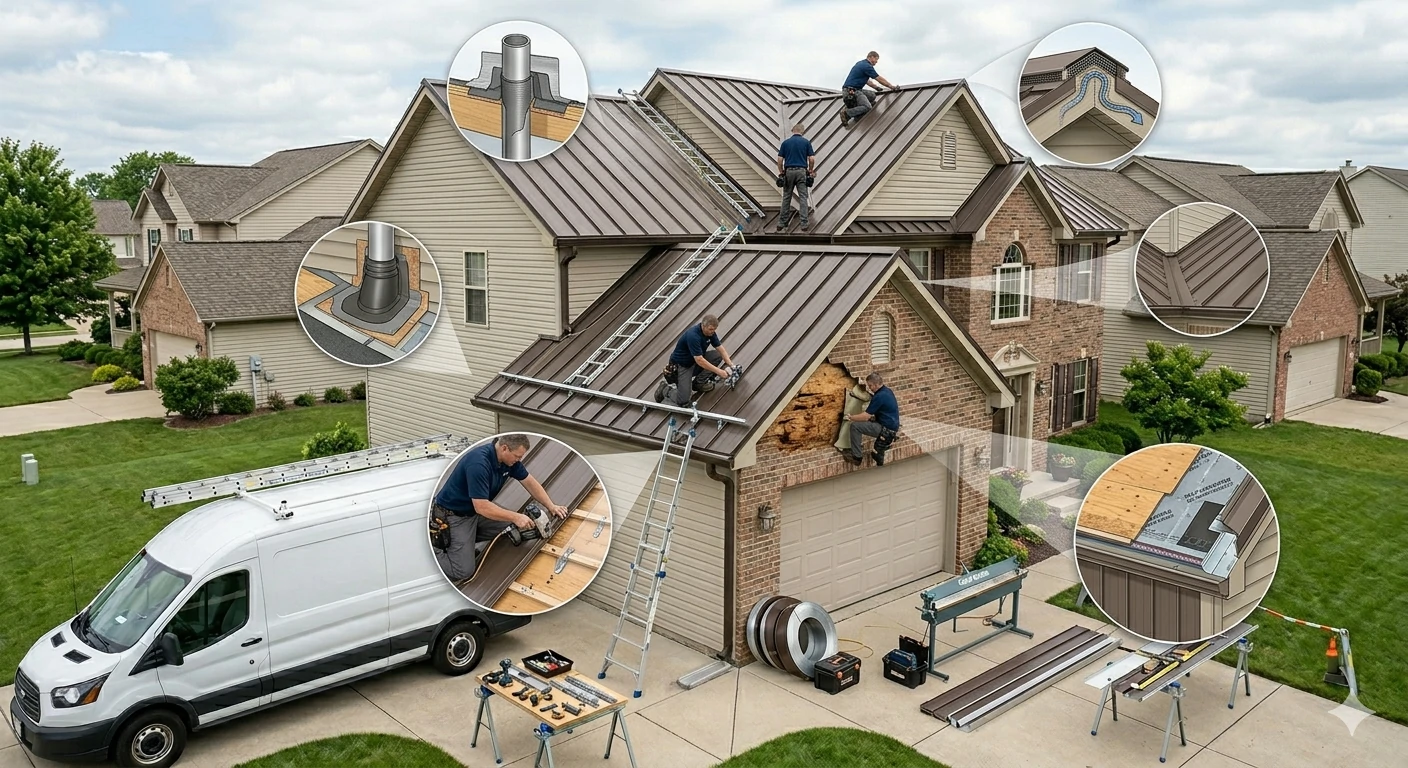
Biggest Metal Roofing Problems — and How Correct Installation Prevents Them
Brownsburg roof replacement and repair experts will tell you that most metal roof failures are installation problems, not product defects. Oil-canning develops when panels are improperly handled during installation or when fasteners are over-driven, creating surface distortion in the panel field. Leaks at ridges and penetrations come from inadequate flashing lap or the wrong sealant type — not from the panels themselves. Condensation and deck rot develop when air gap systems are skipped. Thermal noise results from panels fastened too rigidly, without allowance for expansion. Every one of these failures is preventable — which is exactly why choosing Brownsburg roof replacement and repair experts with a proven installation process matters more than the panel brand you pick.
Indiana's freeze-thaw cycle adds a fastener-specific risk for Brownsburg homes. Repeated thermal expansion and contraction over multiple seasons can back out fasteners that were improperly selected or over-torqued at installation — creating water entry points that don't appear until years after the job is done. We specify the correct exposed or concealed fastener system for each panel profile and torque fasteners to manufacturer specification, not to feel.
24 Gauge vs. 26 Gauge Metal Roofing — Which Is Right for Brownsburg
24 gauge metal roofing is thicker, stiffer, more dent-resistant, and less prone to oil-canning than 26 gauge. 26 gauge is lighter and lower in upfront cost, but it's more susceptible to hail denting and panel waviness in wider profiles. Over a 40–70 year roof lifespan, the performance difference is significant.
In Brownsburg's hail corridor, gauge selection is a performance decision — not just a budget one. After a moderate hail event, 26 gauge panels show visible dimpling that 24 gauge resists. Dimpled metal affects your home's resale presentation and can complicate insurance claim evaluations in Hendricks County's active storm market. We recommend gauge based on the specific panel profile, roof pitch, and Brownsburg's documented hail frequency — not by defaulting to the lower-cost option on every bid.
How to Prepare Your Brownsburg Home for Metal Roofing Installation
Before the crew arrives, clear the driveway and staging area for panel delivery and equipment access. Move vehicles away from the structure during installation to protect them from falling trim offcuts and fasteners. Inside the home, take down fragile wall art and light fixtures near the roofline that may be disturbed by fastening vibration. Cover attic storage with tarps and plan for installation noise during fastening sequences.
If your neighborhood has an HOA, confirm metal roofing approval requirements before material is ordered and delivered. Communities like Prestwick and Arbor Grove in Brownsburg have exterior material approval requirements that cover panel color, profile type, and finish reflectivity. Discovering a restriction after panels are on order creates costly restocking fees and project delays. We flag HOA requirements during the estimate and specification phase — before anything is purchased — so your installation proceeds without that risk.
Related Roofing Services in Brownsburg
Considering asphalt instead, or need storm damage repair first? See our complete Brownsburg roofing contractor services:
- Roof replacement — full tear-off, decking inspection, and new shingle installation
- Roof repair — leak diagnosis, flashing repair, and shingle replacement
- Storm damage roof repair — insurance documentation, adjuster support, and claim-backed repairs
- Gutter installation — seamless gutters sized and pitched to protect your foundation