
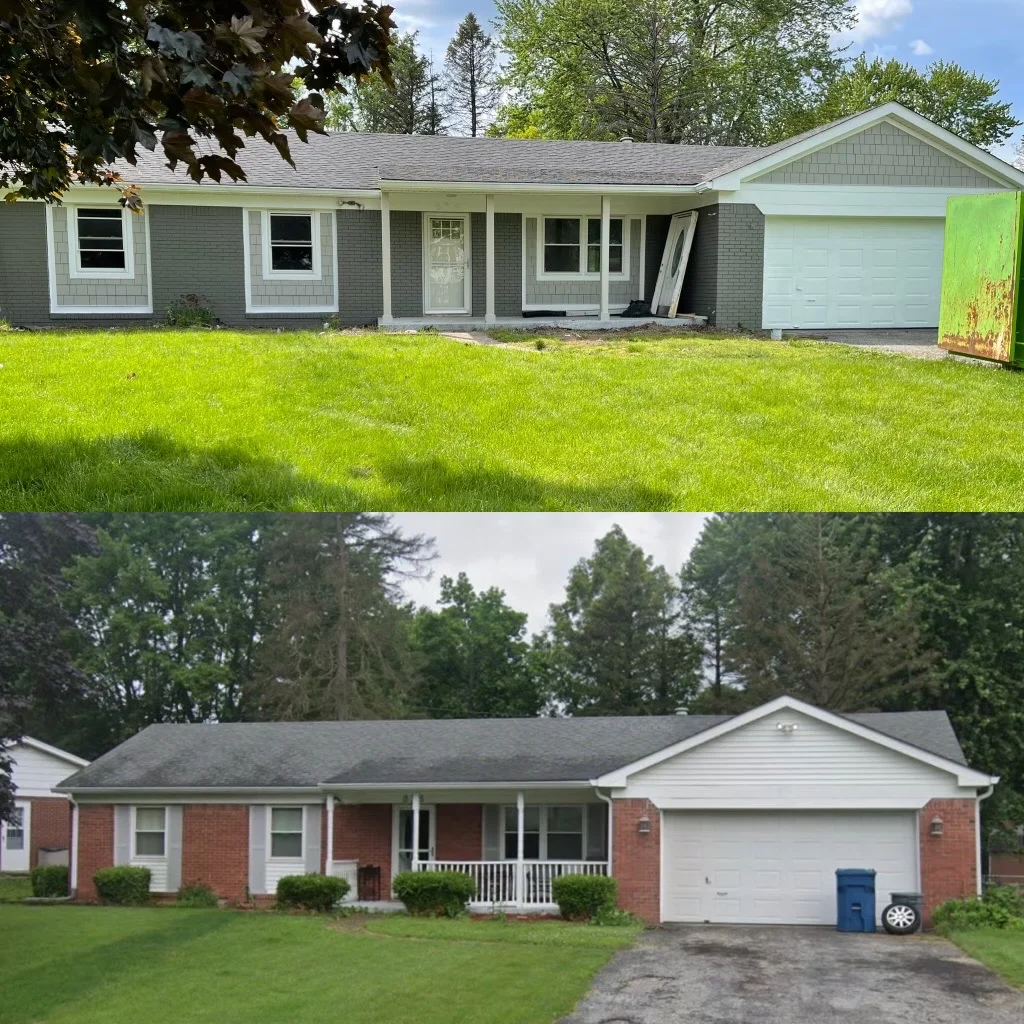
The most common mistake we see with roof leaks in Brownsburg is treating the interior symptom without finding the exterior source. A homeowner caulks around a skylight from the inside. The leak continues. They caulk more. The water is not coming in at the skylight — it is coming in at the step flashing six feet away and traveling to the skylight opening before it drips. The caulk does nothing. The interior damage keeps building.
This page covers roof repair — leak diagnosis, shingle replacement, flashing repair, storm damage patching, and when repair is the right call versus replacement. We find the real source of the problem and fix it correctly.
What Roof Repair Covers for Brownsburg Homeowners
Here is how to find and fix a roof leak in Brownsburg — the correct sequence from interior symptom to exterior repair:
- Identify interior water entry points — ceiling stains, wet insulation, or dripping in the attic mark where water is arriving inside, not necessarily where it is entering the roof
- Trace water travel uphill from the interior entry point — water travels along rafters and sheathing before dripping, so the leak source is almost always higher on the roof than where it appears inside
- Inspect flashing first — chimneys, skylights, pipe boots, and valley metal are responsible for the majority of Brownsburg roof leaks, not shingle field failure
- Check for lifted, cracked, or missing shingles in the area above the interior stain — Indiana wind events frequently break shingle seals and create direct water entry points
- A licensed roofing contractor in Brownsburg IN performs an on-roof inspection to confirm the entry point and assess surrounding shingle and decking condition before any repair is made
- Repair is completed with matched materials, proper flashing integration, and sealant — a temporary patch is not a permanent fix and will fail before the next rain season
Professional roof repair covers isolated shingle replacement, flashing repair and replacement, pipe boot and penetration sealing, valley repair, ridge cap replacement, and minor decking repair where damage is contained. A roofing contractor in Brownsburg IN determines whether repair is appropriate based on whether the surrounding roof field is still structurally sound and the damage remains localized.
Common roof repair situations in Brownsburg:
Single or multiple shingles blown off in a wind event · Flashing failure at chimney base, step flashing, or skylight · Pipe boot cracking from UV exposure and Indiana's temperature cycling · Valley metal separation where caulk has replaced proper flashing · Ice dam damage driven back under shingles by eave ice formation
How to Find the Real Source of a Roof Leak in Brownsburg
Water in a house does not travel straight down. It travels along whatever path gives it the least resistance — and that path is almost never straight from the entry point to where you first notice it.
The interior stain or drip point is where the water gave up on traveling and fell. The entry point is somewhere else — usually uphill from the interior symptom, and often at a penetration or transition rather than in the flat shingle field.
The most commonly misdiagnosed roof leak in Brownsburg: Chimney leaks. A homeowner sees a stain on the ceiling adjacent to the chimney. A handyman or inexperienced contractor applies caulk to the chimney cap or crown from the outside. The leak continues. The actual problem is step flashing — the metal pieces that redirect water away from where the chimney meets the roof slope. Caulk on the chimney cap does not address step flashing failure. The water keeps running in the same path it always has.
The three places to look first on a Brownsburg roof with an active leak:
- Flashing — step flashing at chimneys and walls, skylight flashing at the head and jambs, pipe boot seals, and valley metal are responsible for the majority of Brownsburg roof leaks. Flashing does not last as long as shingles. On a 20-year-old roof, the shingles may have years of life left while the flashing has already failed.
- Pipe boots — every plumbing vent stack that exits through the roof has a rubber boot around it. Those boots crack from UV exposure and Indiana's freeze-thaw cycling. A cracked pipe boot is a direct water entry point at every rain event. They are inexpensive to replace and are one of the most common sources of active leaks in Brownsburg homes.
- Wind-lifted shingles — Indiana wind events break the adhesive seal on individual shingles or groups of shingles. A shingle that has been lifted and returned to its position often looks intact from the ground but is no longer sealed. Water runs under it at every rain event. Only an on-roof inspection identifies this.
The ice dam situation specific to Brownsburg:
Brownsburg's freeze-thaw cycles create a leak source that does not exist in warmer climates. When attic heat melts snow on the roof, that meltwater runs down toward the cold overhang and refreezes as ice at the eave. The ice backs up, water pools behind the ice dam, and eventually that pooled water is driven back up under the shingles and into the wall cavity. This is ice dam damage — and it is a distinct repair category from storm or flashing-related leaks. The fix involves both the roofing entry point and the attic ventilation situation that allowed the ice dam to form.
How Roof Repair Works From Diagnosis to Completed Fix
A permanent roof repair is not a tube of caulk and a spare shingle. Here is what a thorough professional repair looks like.
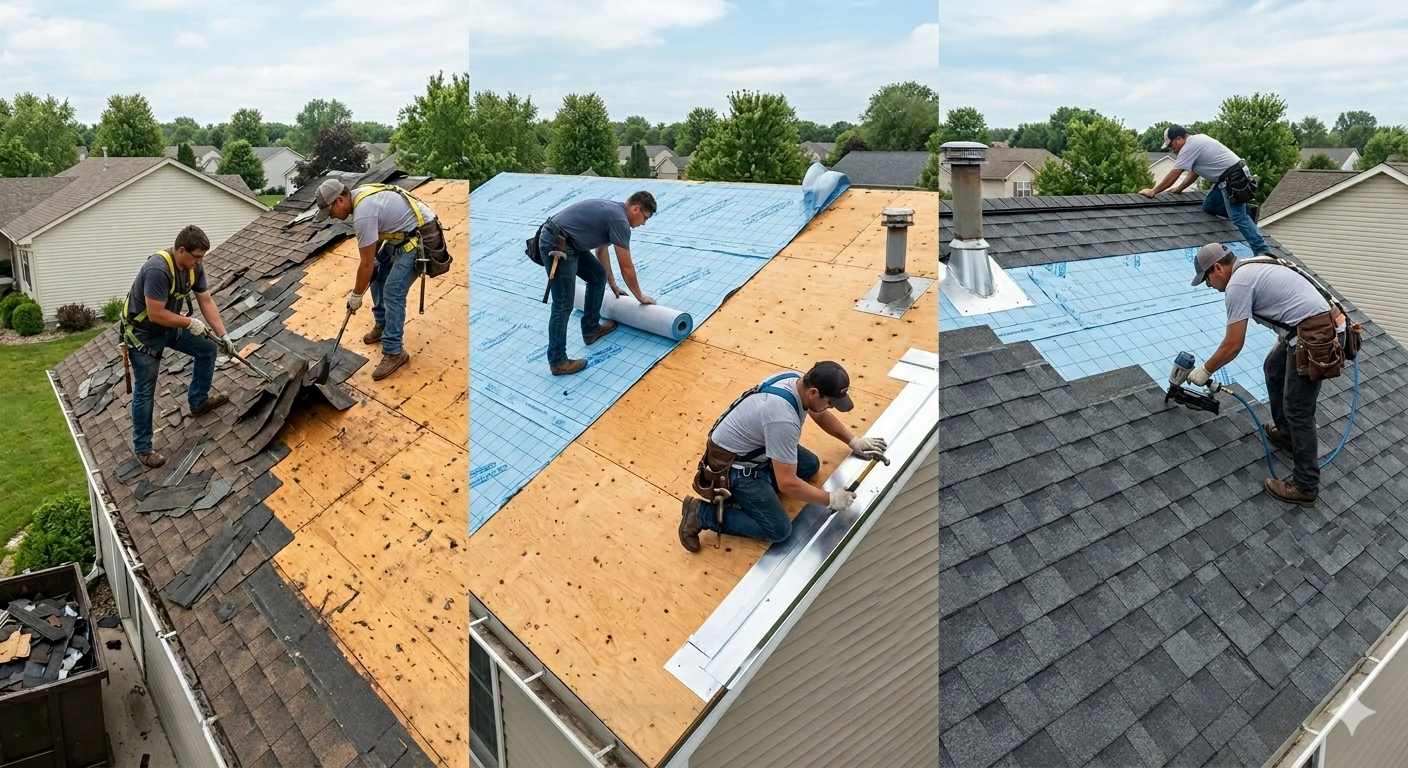
On-roof inspection — the remodeler gets on the roof and inspects the area above the interior symptom. The entry point is confirmed — not assumed. Surrounding shingles are checked for granule loss, brittleness, and broken seals. The decking is checked for soft spots that indicate underlying moisture damage.
Assessment of surrounding conditions — a repair that fixes the active entry point but is surrounded by shingles that will fail within a season is not a repair that solves the homeowner's problem. We assess whether the surrounding field supports a repair or whether the damage pattern suggests a replacement conversation is coming soon regardless.
Damaged material removal — cracked or failed flashing is removed, not caulked over. Lifted or damaged shingles are removed. Any compromised decking in the repair area is replaced with new material.
Underlayment and substrate — new underlayment or ice and water shield goes in where required before new flashing or shingles are installed. A repair that puts new material on top of compromised underlayment is a repair that will need to be done again.
Matched material installation — new shingles are matched to the existing color and profile as closely as possible. New flashing is installed with correct integration — not just caulked at the edges. Pipe boots are replaced with new rubber boots rated for Indiana's UV and temperature range.
Sealant at all penetrations — after all material is installed, penetrations are sealed appropriately. Sealant is the last line of defense, not the primary one. Proper flashing and material integration come first.
Hendricks County building code requires permits for roof repairs that involve decking replacement above a certain square footage threshold. We know the trigger point and pull required permits before any decking work begins — not as an afterthought after the job is done.
Repair or Replace — How to Make the Right Call on Your Brownsburg Roof
This is the question we get asked most often — and the one where conflicting contractor recommendations leave homeowners feeling uncertain. Here is an honest framework.
When repair is the right call: The damage is localized to one area. The surrounding shingle field is structurally sound with meaningful remaining service life. The repair cost represents clear value relative to a replacement that is not yet needed. A single flashing failure on a seven-year-old roof is a repair situation. A missing shingle on a roof that otherwise has ten years of life left is a repair situation.
When replacement makes more sense: The roof is past 20 years. Damage covers more than 30% of the total surface. Multiple repairs have already been made to the same roof. The decking shows widespread moisture damage that a shingle repair will not solve. At that point, repeated repair spending is deferring an inevitable replacement — and the deferred replacement is often more expensive because the interior damage accumulates while decisions are postponed.
The insurance claim dimension specific to Brownsburg:
Brownsburg's storm season frequently produces hail and wind damage that meets the insurance threshold for full replacement coverage. When that threshold is met, a repair that the homeowner pays out of pocket is not the right financial decision — a properly documented replacement claim is. We document damage thoroughly, communicate with adjusters professionally, and help homeowners understand whether their situation qualifies for a claim before committing to a repair scope that insurance would cover as a replacement.
Common Roof Repairs Brownsburg Homes Need After Storm Season
Here is what to look for after a significant weather event in Hendricks County — and what each type of damage actually involves.
Hail damage — Brownsburg sits in a high-frequency hail corridor. Hendricks County receives significant hail events multiple times per decade. Quarter-size and smaller hail does not create obvious punctures — it knocks granules off shingles, exposing the asphalt layer to direct UV and weather. That exposure accelerates shingle aging by years. The damage is functional, not cosmetic, and insurance carriers evaluate functional loss when determining whether a storm claim justifies replacement.
What hail damage looks like up close: random circular impact marks on shingles with granule displacement around each impact. Soft bruising on the shingle surface in the center of the impact. Dented metal — pipe boots, flashing, gutters, ridge vent covers — are the most reliable indicators of hail impact size and coverage area.
Wind-lifted shingles — Indiana wind events lift individual shingles or groups of shingles, breaking the adhesive seal. Lifted shingles that have returned to their position look intact from the ground. From the roof, the broken seal is visible — the shingle can be lifted by hand where it should not be. Each lifted shingle is an active water entry point at every rain event until it is re-secured or replaced.
Pipe boot cracking — rubber pipe boots crack from UV exposure and Indiana's temperature cycling. A cracked pipe boot leaks at every rain event. They are inexpensive and fast to replace. They should be checked after every significant storm and as part of any roof inspection.
Chimney flashing separation — step flashing and counter flashing at the chimney base are the most common source of active leaks in Brownsburg homes with chimneys. When step flashing separates from the chimney face or when counter flashing lifts, water runs directly behind the flashing and into the wall cavity.
Branch strikes and punctures — tree branches that fall on or strike the roof create direct punctures or crack shingles at the impact point. Any puncture is an immediate repair priority — it is a direct water path with no protection.
How to Prepare Your Brownsburg Home for Roof Repair
Most roof repairs are scheduled within a few days of the initial inspection. A few things done before the crew arrives make the work start faster and stay on schedule.
If you have active water entry while waiting for the repair appointment: place buckets under active drip points. Use plastic sheeting to protect flooring and furniture below the leak area. Do not assume the attic insulation is handling it — wet insulation loses its thermal value and provides a growing environment for mold. If the active leak is significant, call us about emergency tarping before the next forecasted Indiana rain event.
What to have done before the repair crew arrives:
- Clear the driveway and the area around the affected side of the house — ladders and material need access to the repair area without vehicles or equipment in the way
- Move vehicles away from the work side of the house — falling debris during removal of damaged material can reach further than it looks from the ground
- Cover attic belongings directly below the repair area with tarps — dust and small debris fall through during material removal
- Mark the interior leak location clearly — the specific ceiling stain, drip point, or wet insulation location helps the crew correlate the interior symptom with the on-roof inspection faster
- Note any previous repair attempts on the affected area — if a previous contractor applied caulk, installed a patch, or made any modification to the area, tell us before work begins; it affects how we approach the repair and what we find underneath
Related Roofing Services in Brownsburg
Facing storm damage or considering a full replacement? See our complete Brownsburg roofing contractor services:
- Roof replacement — full tear-off, decking inspection, and new shingle installation
- Storm damage roof repair — insurance documentation, adjuster support, and claim-backed repairs
- Metal roofing installation — long-lasting panels installed correctly for Indiana's climate
- Gutter installation — seamless gutters sized and pitched to protect your foundation