
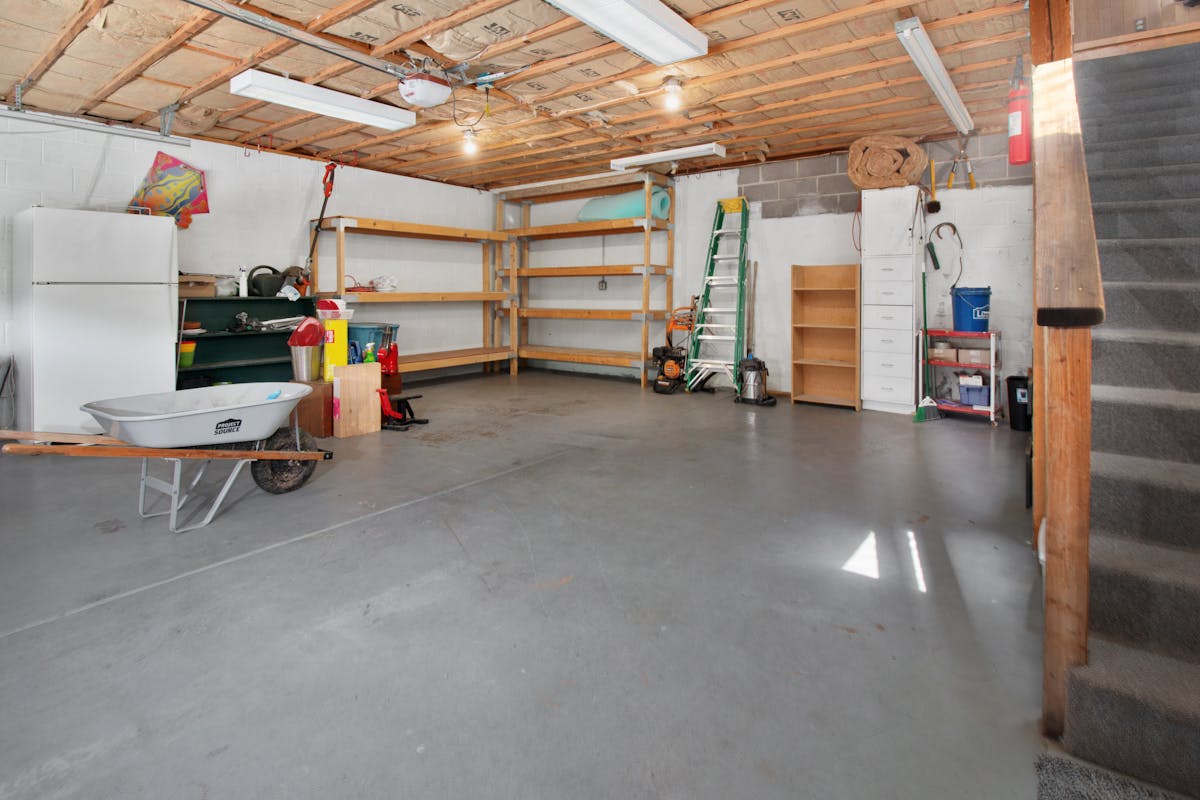
The concrete was not properly prepared. Either it was acid-etched instead of mechanically ground, or the moisture was not tested, or it was a big-box single-coat kit applied to a slab that needed professional-grade product and surface preparation. Six months later the coating is peeling up in sheets, and the homeowner is calling us to figure out what happened.
For Brownsburg garages and basements, professionally installed epoxy flooring is worth it when the concrete is properly prepared and the right coating system is selected for Indiana's temperature range. Epoxy delivers a seamless, chemical-resistant, easy-to-clean surface that outperforms bare concrete for decades when installed correctly. Peeling and failure are not epoxy problems — they are surface preparation problems that a licensed installer eliminates before the first coat goes down.
Epoxy flooring is worth it when:
The concrete is mechanically ground and moisture-tested before any coating is applied · A full broadcast or metallic system is chosen over thin single-coat paint products sold at big-box stores · The project is installed by a licensed remodeler who warranties the bond and finish against peeling
What Epoxy Flooring Covers and Where It Performs Best in Brownsburg
Epoxy flooring is a two-part resin coating that chemically bonds to prepared concrete. Hardwood and luxury vinyl flooring in Hendricks County are selected based on how the space will be used, but epoxy is often used in garages and utility areas because, when properly installed, it creates a seamless, chemical-resistant surface that handles vehicle traffic, oil exposure, and heavy use without the wear patterns seen in bare concrete.
It performs best where concrete is the substrate and durability is the priority:
- Garages — the most requested application in Brownsburg; epoxy handles vehicle traffic, oil drips, road salt, and the thermal cycling that comes with Indiana winters better than any other DIY floor coating option
- Finished basements — seamless surface that is easy to clean, water-resistant on top, and significantly more attractive than bare concrete; frequently combined with area rugs and furniture in finished basement spaces
- Commercial kitchens and food service spaces — seamless surface with no grout joints to harbor bacteria; easy to sanitize; required in many food service facility configurations
- Warehouses and light industrial spaces — handles forklift traffic, pallet jacks, and chemical exposure better than most flooring alternatives
- Utility rooms and laundry rooms — easy to clean; handles water spills without damage
Brownsburg's active garage culture and growing number of finished basement spaces in neighborhoods like Arbor Grove, Williams Park, and Wynbrooke make garage and basement epoxy the two most common applications we install in Hendricks County. A local remodeler knows which coating systems hold up through Indiana's freeze-thaw cycles without delaminating at the bond line.
How Epoxy Flooring Installation Works From Surface Prep to Final Coat
The difference between a professional epoxy installation and a big-box kit is almost entirely in the surface preparation. The product itself matters — but product applied to improperly prepared concrete fails regardless of quality. Here is the full sequence.
Concrete inspection and moisture testing — before any work begins, we check the slab for cracks, previous coatings, oil contamination, and most importantly, moisture vapor emission. Moisture in the slab pushes up through the epoxy and breaks the bond from below. Brownsburg's clay soil causes seasonal slab shift and moisture migration — both of which have to be identified and addressed before any coating goes down.
Mechanical grinding — we grind the concrete surface rather than acid-etching it. Grinding opens the concrete profile — the surface texture that the epoxy bonds to — more effectively and more consistently than acid etching, and it does not leave acid residue that can interfere with adhesion. This is the single biggest technical difference between professional and DIY epoxy results in Hendricks County. Homeowners who use a big-box kit almost always skip or under-execute this step.
Crack and joint repair — cracks in the slab are filled with epoxy filler or polyurea joint compound before any coating goes on. Coating over an unfilled crack produces a crack that telegraphs through the epoxy surface and eventually opens at the coating as the slab moves.
Primer coat — penetrating epoxy primer applied to the prepared surface; it seeps into the open pores of the ground concrete and creates the foundation for the base coat bond.
Base epoxy coat — the primary coating layer; thicker than a primer, it provides the bulk of the chemical resistance and durability.
Decorative broadcast — colored flake chips or metallic pigment broadcast into the wet base coat; creates the visual finish that most Brownsburg homeowners associate with epoxy flooring; also adds texture that improves slip resistance.
Clear topcoat — the wear surface; polyaspartic or polyurea topcoat applied over the cured base and broadcast for UV stability and hot tire resistance.
Cure time:
Epoxy needs to cure before use. Light foot traffic after 24 hours. Vehicles should not return for five to seven days depending on the coating system and temperature conditions.
How Long Epoxy Flooring Lasts — and What Shortens Its Lifespan
A professionally installed epoxy system in a Brownsburg garage or basement lasts ten to twenty years with a quality topcoat and proper surface preparation. That is the realistic range — not a sales pitch number.
What we tell every Brownsburg homeowner asking about lifespan:
The installation quality determines the ceiling. A perfectly installed system on well-prepared concrete can last twenty years with minimal maintenance. A system applied with insufficient surface prep or the wrong product for the application may fail within a few seasons regardless of how expensive the product was.
What shortens epoxy lifespan in Brownsburg:
- Hot tire pickup — a specific failure mode where vehicle tires that are hot from driving cause the epoxy to soften, stick to the tire, and pull up from the slab when the vehicle moves. Brownsburg's cold winters make this worse: a vehicle driven in from frozen roads creates rapid temperature change between the cold slab and the hot tire. Standard epoxy is susceptible to this. Polyaspartic and polyurea topcoats are not. We specify the right topcoat for garage applications.
- UV exposure — standard epoxy yellows in direct sunlight. A garage with windows that get significant direct sun will show yellowing within a few years on standard epoxy. UV-stable polyaspartic topcoats prevent this.
- Moisture that was not addressed before installation — moisture vapor coming up through a slab that was not properly moisture-tested before installation will push the coating up from below over time. The failure looks like bubbling or delamination. The fix is to remove the coating and start over.
- Abrasive traffic without topcoat maintenance — the broadcast layer in a decorative system can wear in high-traffic areas over time. A periodic topcoat reapplication extends the system's life significantly without requiring full removal and reinstallation.
The Real Downsides of Epoxy Flooring — and When Not to Use It
We are direct about this because we have seen homeowners commit to epoxy in the wrong application and be disappointed. Epoxy has real limitations and they are worth knowing before you decide.
Our honest take:
Epoxy is the right choice for garages, basements, and commercial spaces with concrete substrates and no active moisture problems. It is the wrong choice for spaces with water infiltration that has not been corrected, for surfaces that cannot be mechanically ground, and for outdoor applications where UV and freeze-thaw cycling will attack the surface directly.
The real downsides of epoxy flooring:
- Slippery when wet without anti-slip additive — a smooth epoxy surface with no additive is genuinely slippery when it gets wet. In a garage where rain and snow melt drip from vehicles, this is a safety issue. We add anti-slip aggregate to every garage application. If a contractor is not discussing this, ask why.
- Yellowing in UV-exposed spaces — standard epoxy yellows in direct sunlight within a few years. A garage with significant window exposure, or any outdoor or sunlit application, requires a UV-stable topcoat. We specify it automatically for any space with direct sun exposure.
- Difficult to spot-repair — when epoxy is damaged in one area, matching the repair to the surrounding surface is difficult. The color, texture, and sheen of the repair almost never matches perfectly. Large-scale damage often requires a full resurfacing rather than a spot fix.
- Not suitable over active moisture — this is the most important limitation in Brownsburg's climate. Brownsburg basements with active water intrusion or high vapor emission from below-grade slabs are not epoxy candidates until the moisture source is corrected. Applying epoxy over a moisture-compromised slab in Hendricks County's wet spring is the leading cause of epoxy delamination failures in local residential projects.
Epoxy Flooring vs. Other Hard Floor Coatings for Brownsburg Properties
Epoxy is not the only hard surface coating option. Here is how the most common alternatives compare for Brownsburg applications.
- Standard epoxy — the baseline; strong bond to properly prepared concrete; best as a base coat rather than a finished surface on its own; susceptible to hot tire pickup and UV yellowing without the right topcoat
- Polyaspartic topcoat — cures faster than epoxy, resists UV yellowing, handles hot tire contact better; used as a topcoat over an epoxy base; higher cost per coat but extends the system's lifespan significantly in Brownsburg garages; the right finishing layer for nearly every Indiana garage application
- Polyurea — similar to polyaspartic but with even better hot tire and chemical resistance; often used in commercial applications and heavy-use garage floors; higher cost than standard epoxy systems
- Concrete stain — penetrating colorant rather than a surface coating; thinner, less protective, lower cost; does not provide the chemical resistance or durability of epoxy in a garage or commercial setting; appropriate for decorative basement applications where heavy traffic and chemical exposure are not factors
- Polished concrete — mechanical polishing of the concrete surface without any coating; produces a dense, hard surface with a stone-like appearance; durable but not chemical-resistant; appropriate in commercial spaces where the aesthetic fits and chemical exposure is limited
Our recommendation for Brownsburg garages:
A hybrid system — epoxy base coat with a polyaspartic topcoat over a decorative flake broadcast — delivers the best combination of bond strength, hot tire resistance, UV stability, and long-term durability through Indiana's seasonal extremes. It costs more than a single-product system and it is significantly better in every measurable way for the application.
How to Prepare Your Brownsburg Space for Epoxy Flooring Installation
A few things done before the crew arrives make the installation start on time and cure without contamination or failure.
The most common scheduling mistake in Brownsburg epoxy projects:
Booking too early in spring or too late in fall. Epoxy applied when the concrete surface temperature is below 50 degrees Fahrenheit will not achieve full chemical bond. The coating looks fine for a few weeks and then begins to delaminate as temperatures warm. We monitor the weather forecast and slab temperature before scheduling any outdoor or below-grade application — not just air temperature, but concrete surface temperature.
What to have done before installation day:
- Clear the entire floor area — everything needs to be off the floor: vehicles, shelving, storage, floor mats, and any equipment; the crew needs unobstructed access to the entire slab from the first pass of the grinder
- Identify and communicate oil stains — oil contamination requires specific degreasing treatment before grinding; the more information we have about where oil has dripped, the better we can prepare those areas
- Flag cracks you have noticed — even hairline cracks are worth pointing out before the crew arrives; they will find them during inspection, but knowing the history helps
- Plan for temperature stability during cure — the garage or basement needs to stay above 50 degrees Fahrenheit through the full cure period; Indiana's spring weather can swing significantly overnight; confirm the heating situation before scheduling
- Plan for vehicle absence of five to seven days — the coating cannot have vehicle traffic during cure; if the garage is the household's primary parking, make alternative arrangements before the installation date
Related Flooring Services in Brownsburg
Looking for flooring for finished living spaces? See our full range of Brownsburg flooring contractor services:
- Hardwood floor installation — solid and engineered hardwood, subfloor prep through final finish
- LVP flooring installation — waterproof, durable planks for kitchens, bathrooms, and basements
- Tile floor installation — kitchens, baths, and entryways installed flat, level, and sealed
- Floor refinishing and sanding — restore worn hardwood to like-new condition