
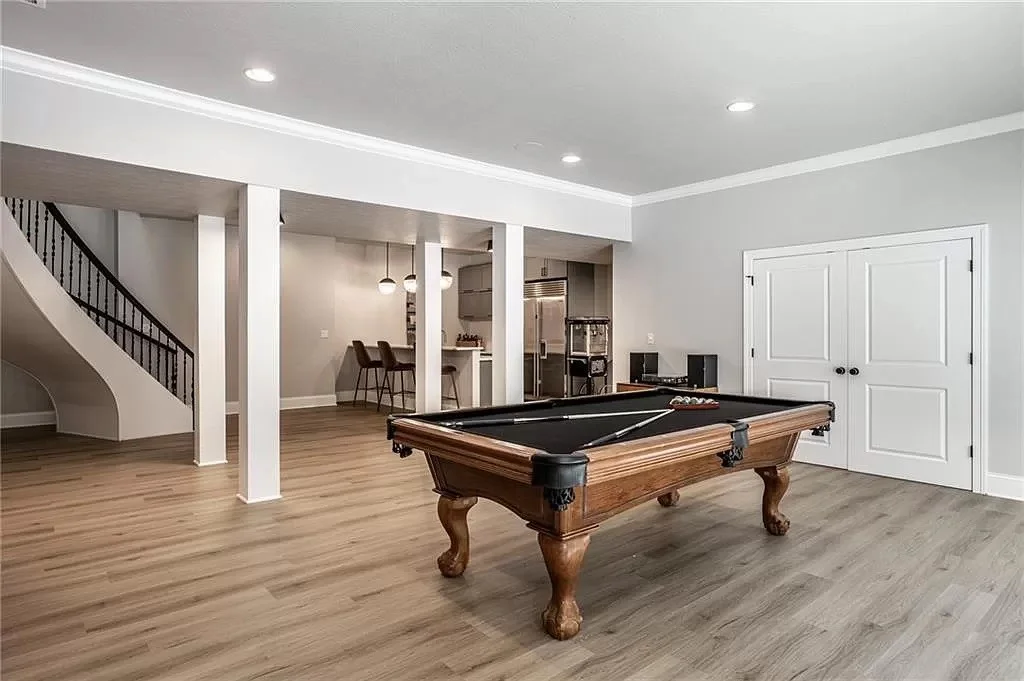
Subfloor moisture. It was not tested. Or it was tested and the reading was above the product's tolerance and the installer put it down anyway. Six months later the planks are bubbling, the joints are lifting, and the homeowner is calling us to figure out what went wrong.
We test before every installation. We address elevated readings before any product goes down. And we get the expansion gaps right for Indiana's seasonal humidity range — not the national standard that big-box installation crews apply regardless of where the job is.
This page covers LVP flooring installation — product selection, subfloor preparation, installation method, and what separates a professional result from one that fails within a year.
What LVP Flooring Installation Covers for Brownsburg Homeowners
Here is how LVP flooring installation actually works in Brownsburg from the first assessment to the final walkthrough:
- The remodeler inspects the subfloor for levelness, moisture, and damage — LVP requires a flat surface within manufacturer tolerance before any product goes down
- Existing flooring is removed and the subfloor is repaired, leveled, and cleaned completely
- LVP product is acclimated to your Brownsburg home's indoor temperature for 24 to 48 hours before installation
- Installation method is confirmed — floating click-lock or glue-down based on subfloor type, room use, and product specification
- Planks are laid with staggered joints and expansion gaps maintained at all walls and transitions
- Transitions, reducers, and thresholds are installed at doorways and flooring changes
- Baseboards or shoe molding are reinstalled and a final walkthrough confirms alignment, gaps, and finish quality
LVP looks simple to install. The product snaps together, the cuts are straightforward, and the tools are basic. A flooring contractor in Brownsburg IN knows the long-term performance depends on what happens before installation — subfloor preparation, leveling, and moisture management. Without that foundation work, floors can fail within the first year regardless of how well the planks are installed.
Brownsburg homes sit on slab, crawl space, and basement subfloors that carry very different moisture profiles. What works on a second-floor wood subfloor in Arbor Grove may fail on a basement slab in Timber Creek if the same product and method are applied without accounting for what is underneath.
What a professional LVP installation in Brownsburg covers:
Subfloor inspection · Existing flooring removal and subfloor repair · Product acclimation · Underlayment selection · Installation method selection · Plank layout and staggering · Expansion gaps at all walls and fixed objects · Transition pieces and thresholds · Baseboard or shoe molding reinstalled
How LVP Flooring Installation Works From Subfloor to Final Trim
Most LVP failures in Brownsburg homes are not product failures. They are installation failures — and they almost all happen at the subfloor prep phase that most homeowners cannot see.
Indiana's seasonal humidity causes subfloor movement that affects floating LVP installations over time. When expansion gaps are set to a national standard rather than to Indiana's actual seasonal humidity range, planks that had room to expand in summer compress together and buckle when the indoor humidity is higher than the gap was designed to handle. We set expansion gaps for Hendricks County's actual seasonal range — not for a drier climate.
Here is what each phase of an LVP installation looks like:
- Subfloor inspection — moisture meter readings taken at multiple points across the floor; readings above the product's published moisture tolerance require remediation before installation proceeds; levelness checked with a long straightedge
- Leveling and repair — high spots ground down, low spots filled with leveling compound and allowed to cure; any damaged subfloor sections replaced; the surface has to be flat to within the product's tolerance or floating planks will flex and the locking joints will break over time
- Acclimation — LVP stored in the rooms where it will be installed, at normal indoor temperature, for 24 to 48 hours; products that were stored in a cold garage before delivery need this time to reach indoor conditions
- Underlayment — attached underlayment that came with the product is used as specified; separate foam or moisture barrier added where the subfloor conditions or manufacturer requirements call for it
- Layout planning — the starting wall is identified, the layout is planned to avoid narrow slivers at the most visible walls, and the stagger pattern is established before the first plank is cut
- Installation — planks clicked or glued in place with consistent expansion gaps at all fixed surfaces; joints staggered a minimum of six to eight inches between rows
- Transitions — T-molding, reducers, and thresholds installed at every doorway and every point where LVP meets a different flooring material or a fixed surface like a cabinet base
- Baseboards — reinstalled after flooring is complete; shoe molding or quarter round added if needed to cover the expansion gap at the wall
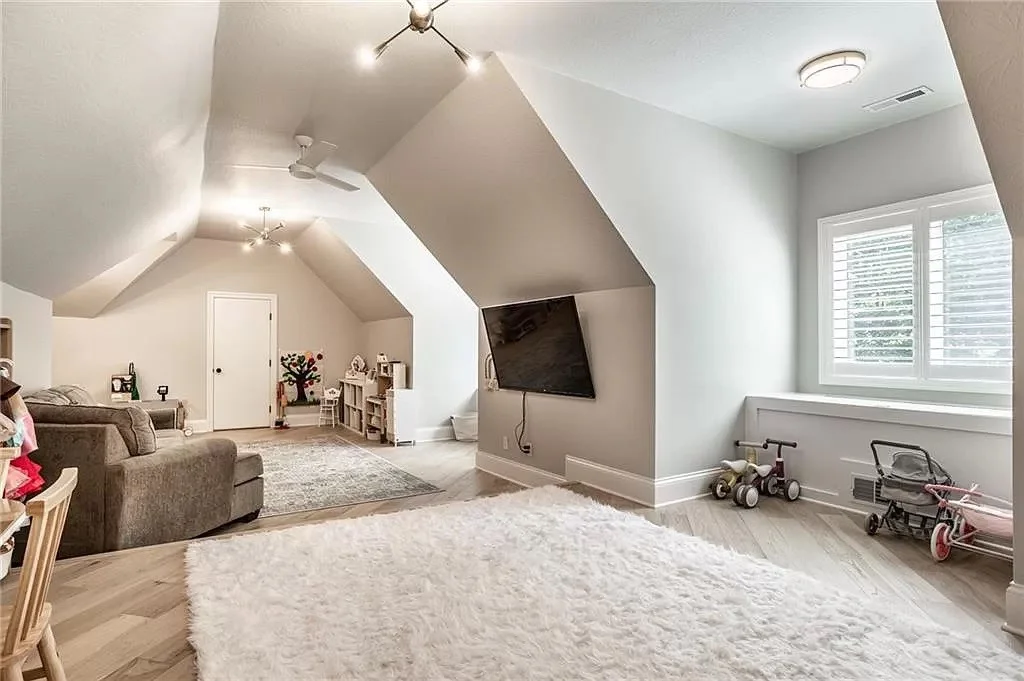
Glue Down vs. Float — Which LVP Installation Method Is Right for Your Brownsburg Home
This is the question most Brownsburg homeowners have not thought about before they call. Most people assume LVP just clicks together — which is true for floating installations. But it is not always the right method.
Floating click-lock — planks lock together and the entire floor floats over the subfloor as a connected system. Faster to install. Reversible if needed. Works over most subfloors with the right underlayment. Requires consistent expansion gaps because the entire floor moves together with temperature and humidity changes. More flexible underfoot than glue-down.
Glue-down — planks are adhered directly to the subfloor with flooring adhesive. More rigid underfoot — less hollow sound when walked on. Does not move with temperature and humidity because it is bonded to the subfloor. More disruptive to remove. Requires a very clean, flat, and dry substrate — adhesive does not bond well to a contaminated or uneven surface.
Our recommendation for most Brownsburg homes:
Floating click-lock for main-floor living areas over wood subfloors. Glue-down for below-grade basement slabs and for rooms with radiant heat where movement from floating planks creates problems over time. Both methods work well when used in the right application.
Brownsburg homes with radiant heat subfloors or below-grade concrete require products specifically rated for those conditions. Using a floating product rated for above-grade installation on a basement slab voids most manufacturer warranties and creates the conditions for moisture-related failure in Indiana's temperature-variable climate. We check the product specification against the subfloor type before any material is purchased.
Common LVP Installation Mistakes That Ruin Floors in Brownsburg Homes
These are the failures we see most often — in homes where someone else installed the floor and something went wrong, and in the conversations we have with homeowners before we start a project.
The most common LVP failure in Brownsburg homes:
Subfloor moisture that was not tested before installation. Crawl space homes and basement slabs in Hendricks County frequently carry elevated moisture readings that cause LVP to bubble, lift, and separate at the joints. Once the planks are down over high-moisture subfloor, the damage is not reversible. The floor has to come up, the subfloor has to be addressed, and new product has to go down. We test before every installation. Not after a problem appears.
Other mistakes worth knowing before you hire anyone or attempt it yourself:
- Skipping subfloor leveling — LVP that floats over a subfloor with high spots or depressions flexes when walked on. The locking joints are not designed to handle repeated flexing. They crack at the tongue and groove, creating gaps that collect debris and eventually come apart. The flatness standard is not a suggestion — it is what the product requires to perform.
- Not acclimating the product — LVP stored in a cold garage and brought inside to install immediately is not at indoor temperature equilibrium. It will expand slightly after installation as it warms up. If expansion gaps were set while the product was cold, the planks may close the gaps and buckle when the floor reaches normal indoor temperature.
- Using the wrong underlayment — some LVP products have attached underlayment. Adding a second layer of foam under them compresses the locking joints and causes the floor to feel soft and loose. Other products require a separate underlayment and will not perform without one. The underlayment decision follows the product specification — not the installer's preference.
- Cutting expansion gaps too small — LVP floats and moves with humidity and temperature. If the gap between the floor and the wall is too small to accommodate that movement, the floor will buckle during Indiana's humid summers. We set expansion gaps to the manufacturer's specification for the local climate range.
- Dragging heavy furniture across newly installed LVP — the protective wear layer on LVP resists surface scratches well. The edges of furniture legs dragged across the floor create gouges that go through the wear layer. Use furniture pads and lift rather than drag when returning items after installation.
What LVP Flooring Does Well — and Where Its Limits Are
LVP is genuinely good at several things. It is also honestly not the right choice for some situations. Here is the balanced view.
What LVP does well in Brownsburg homes:
- Waterproof performance — true LVP is 100% waterproof; spills, pet accidents, and splashes from sinks and tubs do not damage the product itself; the risk is moisture coming from below, not above
- Scratch and dent resistance — a quality wear layer handles pet nails, dropped items, and high-traffic use better than hardwood and most laminate products
- Comfort underfoot — with the right underlayment, LVP is warmer and softer underfoot than tile and more comfortable than hardwood in cold Indiana winters
- Installation flexibility — goes over concrete, over wood subfloors, over existing tile in good condition, and over radiant heat systems when the correct product is specified
Our honest assessment of LVP for upper-tier Brownsburg resale:
LVP is broadly accepted by Hendricks County buyers in mid-range homes and adds real value over worn carpet or damaged tile. At the upper end of the Brownsburg market — homes where the buyer expects hardwood — LVP is acceptable but not preferred. If your home is in a price range where buyers expect hardwood floors as a standard feature, hardwood is worth the investment. For everything below that tier, quality LVP is a strong choice.
Where LVP has limits:
- Sharp point loads — furniture legs without pads, high heels, and chair casters can dent the wear layer or the core; furniture pads on all legs are not optional on LVP
- UV fading — direct sunlight through windows bleaches LVP over time; rugs, UV-blocking window film, or blinds in high-sun rooms extend the floor's color life
- Extreme heat — heating vents blowing directly onto the floor, or direct sunlight through glass in south-facing rooms, can cause floating LVP to expand beyond its gap allowance; direct vent placement matters
How to Prepare Your Brownsburg Home for LVP Flooring Installation
A few things done before the crew arrives make the installation start on time and stay on schedule.
The most important prep step for Brownsburg crawl space homeowners:
Inspect the crawl space for standing water or elevated humidity before scheduling the installation. Moisture migrating from below through the subfloor is the leading cause of LVP failure in Hendricks County homes — and it is fully preventable when it is identified and addressed before installation day rather than after the floor is down and the damage has already started.
What to have done before installation day:
- All furniture removed from installation areas — LVP installation requires clear floor space throughout; the crew cannot work around furniture
- Existing flooring removed if not included in the contract scope — confirm this before the project starts; some installations include removal and disposal, some do not
- Subfloor soft spots or high spots communicated in advance — flagging these before the crew arrives allows them to bring leveling materials and plan for the repair time
- Indoor temperature stabilized between 65 and 85 degrees Fahrenheit — LVP acclimation happens at normal indoor temperature; the HVAC should be running at its normal operating level for at least 24 hours before delivery
- Plan for 24 to 48 hours before returning heavy furniture to glue-down installations — adhesive needs cure time before it is loaded; floating installations can be walked on immediately but benefit from a brief settling period before heavy pieces are moved back
Related Flooring Services in Brownsburg
Looking for a different flooring product? See our full range of Brownsburg flooring contractor services:
- Hardwood floor installation — solid and engineered hardwood, subfloor prep through final finish
- Tile floor installation — kitchens, baths, and entryways installed flat, level, and sealed
- Floor refinishing and sanding — restore worn hardwood to like-new condition
- Epoxy flooring — seamless, tough garage and basement floor coatings